

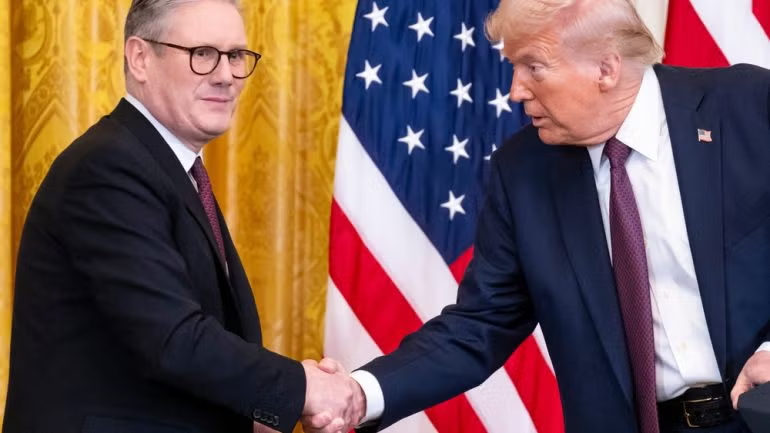
Priority status in U.S. tariff policy Despite a lackluster environment for foreign direct investment (FDI) in the UK, the nation’s pharmaceutical industry is poised for a renaissance following new trade agreements with President Donald Trump’s administration. In December 2025, the UK became the first country to secure a zero-tariff deal on pharmaceuticals exported to the US. In contrast, the European Union (EU) has faced a 15% tariff rate on similar products since July 2025.
Reciprocal commitments and domestic reforms In exchange for the three-year tariff exemption from the US, the British government has made significant commitments to reform its domestic medicine market:
-
Increased spending on new medicines: The National Health Service (NHS) will increase the net price paid for new treatments by 25%. The National Institute for Health and Care Excellence (NICE) is expected to raise its cost-effectiveness threshold (QALY) from £20,000 – £30,000 to £25,000 – £35,000 per quality-adjusted life year.
-
Rebate mechanism reform (VPAG): The rebate rate that pharmaceutical companies pay back to the NHS will be capped at a maximum of 15% for the 2026-2028 period (a significant decrease from the previous rate of over 23%).
-
Long-term budgetary goals: The UK has committed to doubling its pharmaceutical spending from 0.3% to 0.6% of GDP over the next decade.
Market impact and reactions The deal is expected to reverse the trend of declining investment in the UK. Following MSD’s cancellation of a £1 billion expansion plan, new commitments from Moderna, Bristol Myers Squibb (BMS), and BioNTech have provided a wave of optimism. BMS anticipates investing upwards of $500 million in the UK over the next five years. However, some experts warn that the increased drug prices could impose a budgetary burden of up to £3 billion on the NHS by 2029, forcing the service to reallocate resources from other essential medical activities.