

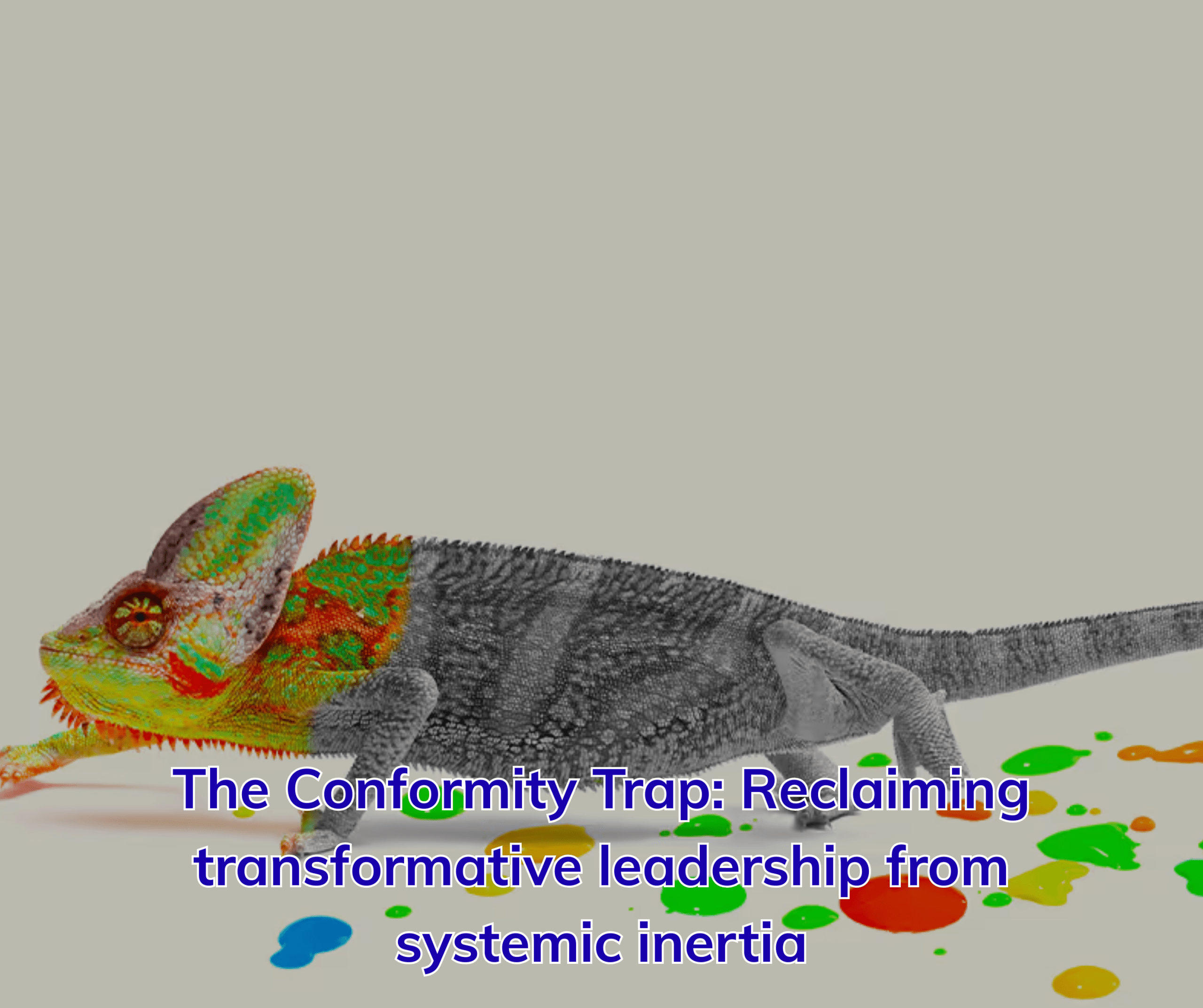
Organizations frequently recruit bold, high-impact leaders to act as catalysts for transformation. Yet, a recurring and costly pattern emerges: even the most courageous hires eventually start to self-censor, conforming to the very status quo they were brought in to disrupt. This phenomenon is rarely a failure of individual character; rather, it is a systemic rejection. Much like a biological organism, an organization’s “immune system” tends to neutralize perceived threats to its equilibrium, forcing newcomers to adapt or face isolation.
The research highlights that a leader’s retreat into caution is a rational response to three underlying systemic pressures:
1. Diagnosing the Environmental Signals When a once-bold leader begins to defer to legacy peers and speaks less in strategic forums, they are usually responding to subtle cues of risk. This transition from “offense to defense” indicates that the organizational friction has become too high.
To address this, CEOs must employ a “Force Field Analysis”—systematically mapping the driving forces of change against the restraining forces of legacy power dynamics and low psychological safety. Understanding that behavior is a byproduct of the system allows executives to fix the environment rather than blame the individual.
2. Overhauling the Structural Architecture Incentives dictate action. If an organization’s KPIs continue to reward legacy behaviors while framing innovation as high-risk, leadership drift is inevitable. To counteract this, companies must implement a “Strategic Support Triangle”:
-
Executive Sponsor: To provide high-level political legitimacy and vision protection.
-
Trusted Insider: To decode unwritten cultural norms and navigate the informal power map.
-
Peer Ally: To build cross-functional momentum and reduce cultural isolation.
By streamlining decision-making pathways and eliminating redundant bureaucratic gatekeepers, the organization provides the “structural permission” necessary for the leader to execute their mandate.
3. The 90-Day Reset and “Political Air Cover” A deliberate, time-bound relaunch is essential to restore a leader’s agency. This 90-day reset involves co-creating critical short-term outcomes and explicitly reaffirming decision rights that may have been eroded by internal resistance.
Most crucially, the C-suite must provide “Air Cover”—a commitment to absorb political pushback and shield the leader from the systemic friction that inevitably accompanies true transformation. This reset is not a correction of the leader, but a restoration of the authority and confidence required to lead the change they were hired to deliver.
Source: https://hbr.org/2026/02/when-the-bold-leader-you-hired-starts-to-conform?ab=HP-latest-text-2