

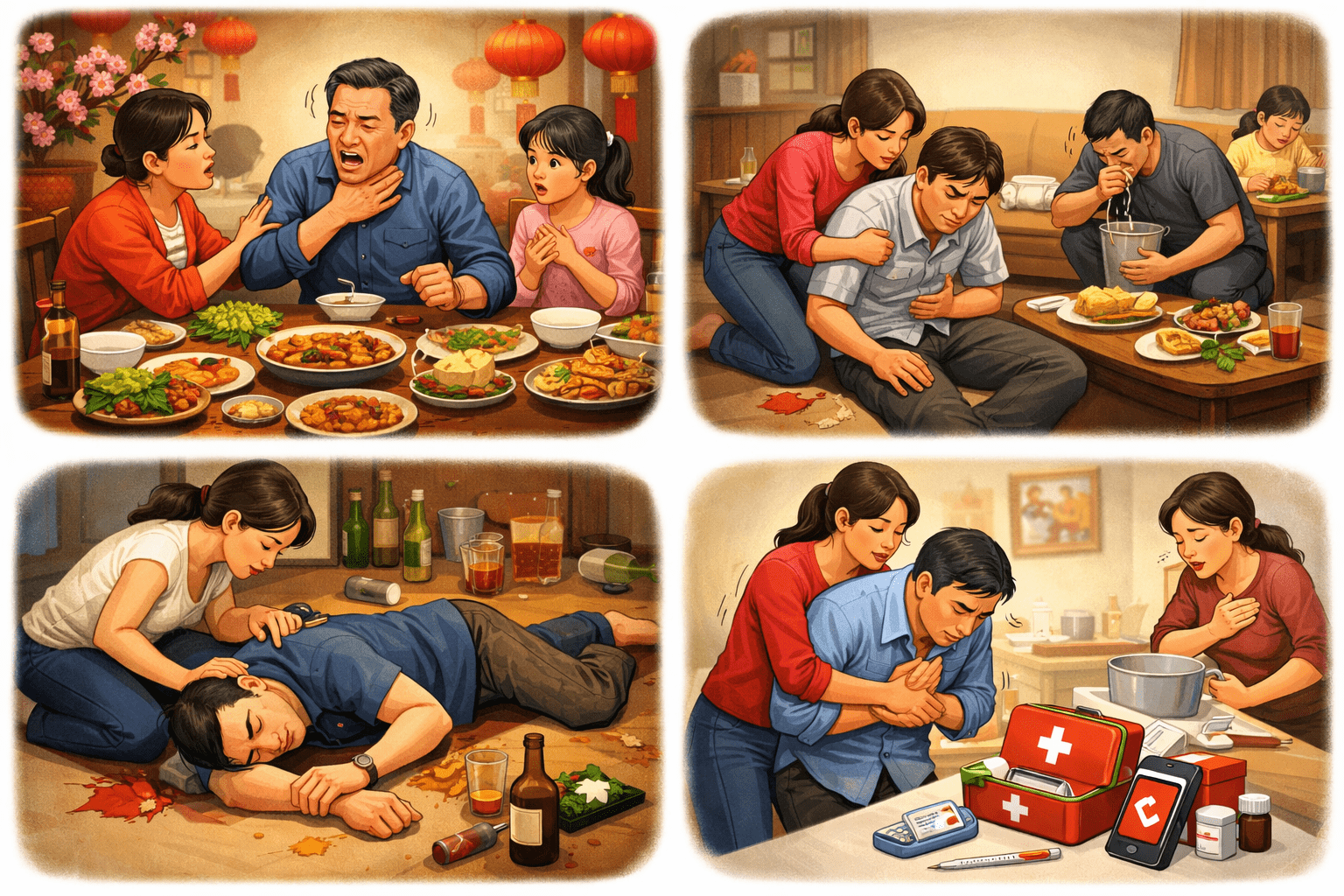
Traditional Tet is a time when meals last longer, gatherings are larger, and alcohol consumption is higher than usual.
As a result, food- and alcohol-related emergencies occur more frequently—yet they are often underestimated.
- Someone suddenly choking during a crowded family meal
- A family experiencing food poisoning after a party
- A person heavily intoxicated, vomiting, and difficult to awaken
These are not simply cases of “eating something that didn’t agree” or “normal drunkenness.”
Common Food- and Alcohol-Related Emergencies During Tết
- Choking due to eating quickly, talking while eating, or alcohol consumption
- Food poisoning caused by improper food storage or unsafe preparation
- Severe alcohol intoxication, loss of consciousness, and risk of aspiration
- Dehydration and electrolyte imbalance from prolonged alcohol intake
These situations often occur at home, where immediate medical support may not be available.
Essential Initial Response Skills
1. When Someone Is Choking
- Do not insert fingers into the throat if the object is not visible
- Do not give water while the person is choking
- If the person can cough or speak → encourage strong coughing
- If the person cannot breathe or speak:
- Call for help immediately
- Perform back blows and abdominal thrusts (Heimlich maneuver) if properly trained
2. When Food Poisoning Is Suspected
- Stop eating immediately
- Do not self-administer anti-diarrheal medication
- Do not “wait it out” if symptoms do not improve
- Monitor for warning signs:
- Persistent vomiting
- Continuous diarrhea
- Abdominal pain, fever, severe fatigue
Seek medical care if:
- Symptoms are severe
- The patient is a child, an older adult, or has underlying medical conditions
3. When a Person Is Heavily Intoxicated and Unconscious
- Place the person in the recovery position
- Monitor breathing and level of consciousness
- Do not give more alcohol, coffee, or unverified medications
- Do not allow the person to lie on their back while vomiting
Call emergency services if:
- Breathing is slow or irregular
- The person cannot be awakened
- There are seizures or repeated vomiting episodes
Quick Checklist – Safe Response to Food & Alcohol Emergencies During Tết
What to Do
- Stay calm and perform a rapid assessment
- Ensure the airway remains clear and safe
- Closely monitor for abnormal signs
- Transport the patient to a medical facility when necessary
Common Mistakes
- Underestimating symptoms that “seem mild”
- Using unverified folk remedies without medical basis
- Delaying medical care because “it will probably be fine”
Prevention – Be Proactive for a Safer Tết
- Eat slowly, chew thoroughly, and limit excessive alcohol intake
- Store and reheat food properly
- Do not pressure others to drink alcohol
- Closely observe older adults and children during meals
Eating and drinking are essential parts of Tết celebrations. However, food safety and responsible alcohol use are key to protecting the health of the entire family. Proper response in the first few minutes can prevent serious consequences.