

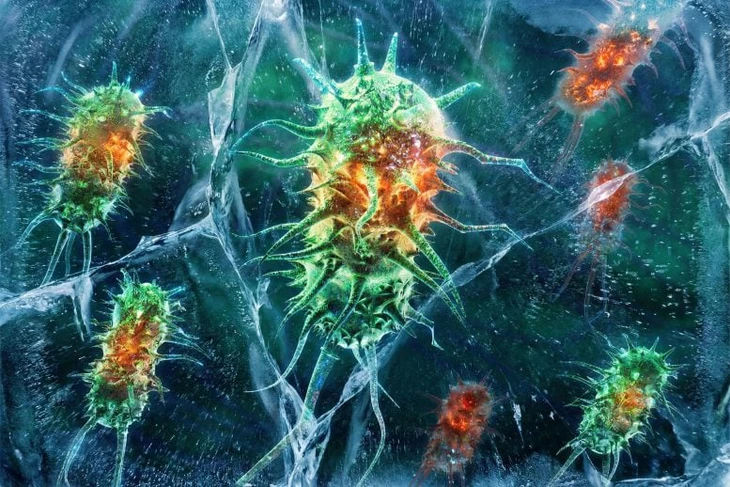
A recent study published in the journal Frontiers in Microbiology has identified a bacterial strain named Psychrobacter SC65A.3 within the ice cores of the Scarisoara cave. Despite being isolated for five millennia at a depth of 25 meters, this microorganism possesses natural defense mechanisms against various modern 21st-century antibiotics.
Scientists from the Institute of Biology Bucharest discovered over 100 genes related to drug resistance within this strain’s genome. Through testing against 28 antibiotics from 10 different classes, the results showed that the ancient bacteria could neutralize at least 10 common drugs, including those used to treat tuberculosis, urinary tract infections, and sepsis, such as rifampicin and vancomycin.
This finding reinforces the hypothesis that antibiotic resistance is a natural evolutionary trait that existed in the environment long ago, rather than being solely a consequence of modern medical overuse. It raises concerns that climate change and melting ice could release ancient antibiotic-resistant gene pools into current ecosystems.
However, the research also paves the way for new biotechnological advancements. The Psychrobacter strain contains nearly 600 genes with unknown functions and 11 genes capable of inhibiting contemporary pathogens, suggesting the potential to develop next-generation antibiotics from these ancient microbial resources.