

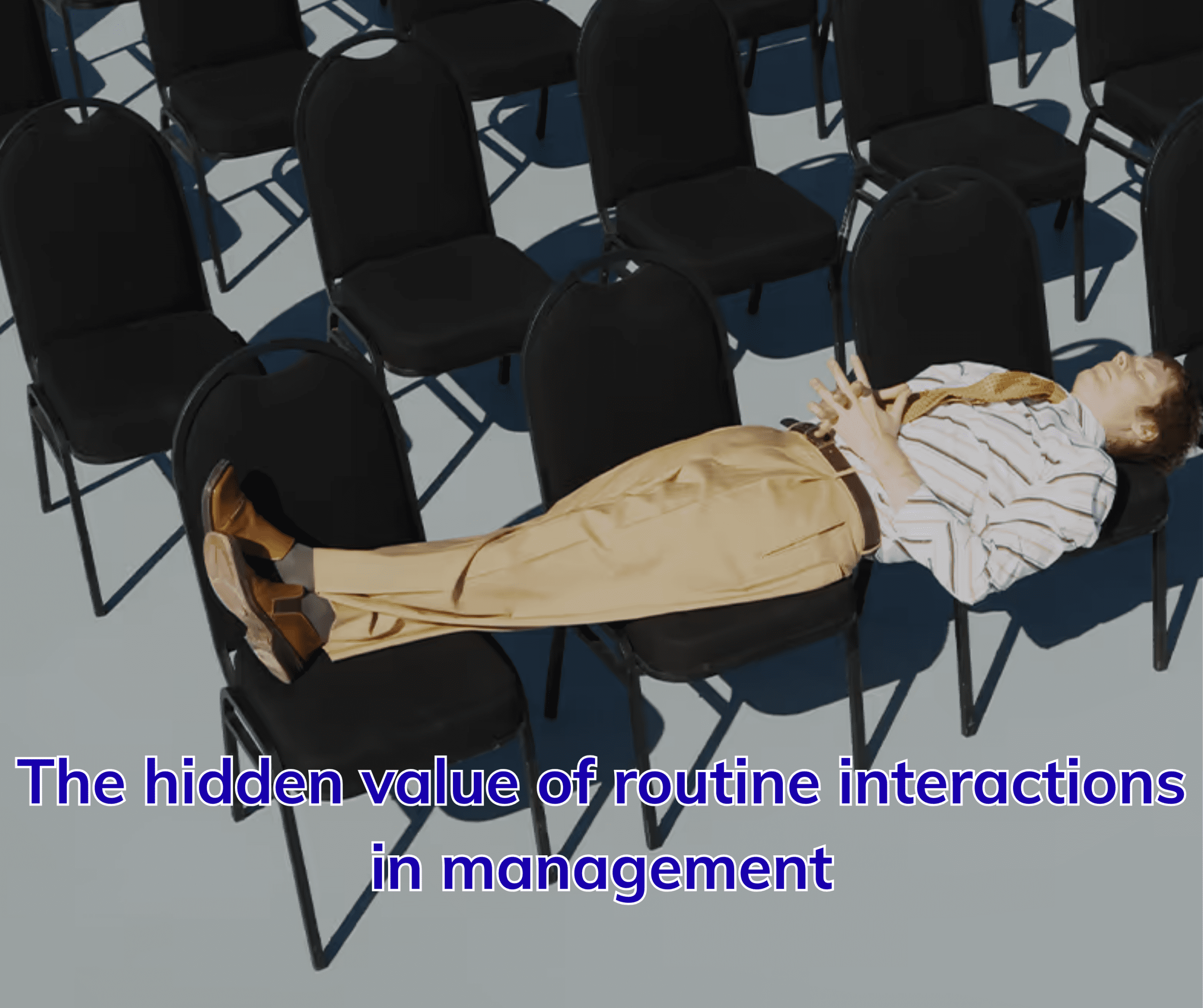
Recent research (forthcoming in the Journal of Personality and Social Psychology) suggests that senior leaders systematically miscalculate the value of meetings based on how interesting a topic appears. Disengaging or multitasking during “boring” sessions not only leads to missed information but also weakens organizational bonds.
Core empirical findings
Through experiments in both laboratory and real-world workplace settings, the researchers identified a psychological barrier termed “engagement forecasting bias”:
-
Expectation vs. Reality: Participants consistently predicted that conversations on administrative or routine topics would be dull. However, once engaged in live interaction, their actual enjoyment and interest levels significantly exceeded their forecasts.
-
Active Interaction vs. Passive Consumption: The study compared real-time dialogue with passive methods like reading transcripts or listening to recordings. Findings showed that only active, back-and-forth interaction generated unexpected engagement. Passive consumption remained as dull as predicted.
-
The Persistence of Bias: Interestingly, experiencing a surprisingly engaging “boring” meeting did not correct the bias; participants continued to underestimate the value of future routine interactions.
Implications for leadership
When executives “check out” mentally from operational updates, they face two major risks:
-
Information Bottlenecks: Subordinates often self-censor or withhold early warning signs if they perceive a leader is disinterested in routine reports.
-
Depletion of Psychological Resources: Contrary to the belief that routine meetings drain energy, high-quality social interaction can actually replenish persistence and overall performance.
Strategic recommendations
Rather than filtering meetings solely by topic, managers should shift their approach:
-
For Discretionary Meetings: Instead of asking “Is this topic exciting?”, ask “What relational or informational upside might emerge?”.
-
For Mandatory Meetings: Move from a mindset of “endurance” to “curiosity.” Maintaining full presence and asking follow-up questions is precisely what transforms a mundane subject into a dynamic and fruitful exchange.
Source: https://hbr.org/2026/03/you-should-take-that-boring-meeting?ab=HP-hero-featured-1