

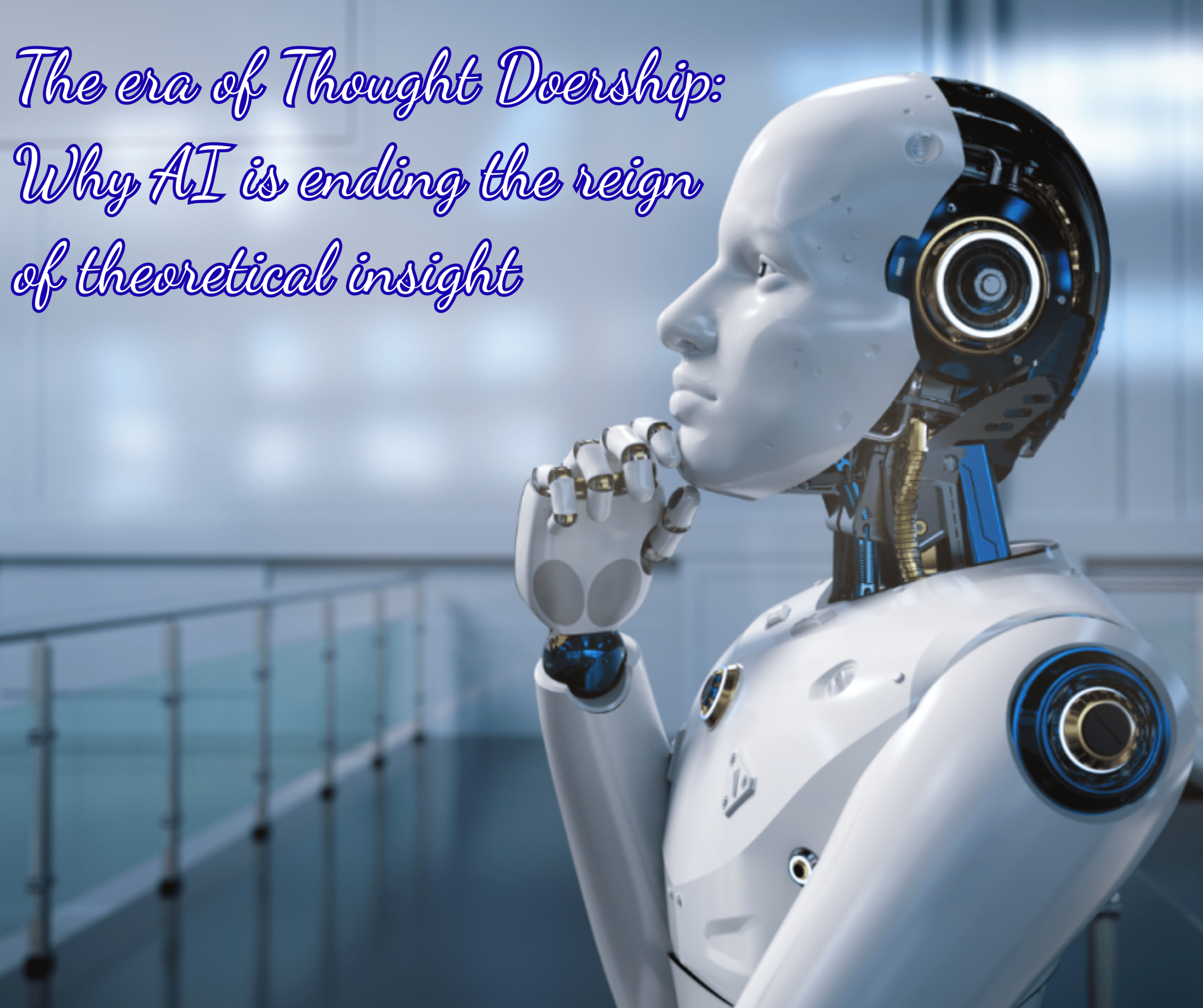
Executive Summary: The saturation of AI-generated content is devaluing traditional strategic frameworks. This analysis explores the inevitable shift from “thought leadership” to “thought doership,” where value is defined by tangible execution rather than polished rhetoric.
The proliferation of Generative AI has effectively eliminated the barrier to entry for perceived expertise. As large language models enable anyone to produce sophisticated analysis, authority based solely on content is eroding. Consequently, organizations are suffering from “insight paralysis”—possessing a wealth of strategy but lacking the operational muscle to execute.
The rise of the “Thought Doer” model
The fundamental distinction between a traditional thinker and a “thought doer” lies in their proximity to reality. Rather than offering static frameworks from a distance, thought doers engage with the “messy middle” of implementation.
-
Commitment & Accountability: Unlike consultants who exit after delivering a deck, thought doers embed themselves in pilots, troubleshoot failures in real-time, and share skin in the game regarding outcomes.
-
Empirical Progress: They prioritize rapid prototyping and iterative testing over long-form theoretical planning.
Identifying the “Faux-Expert” in the AI age
As AI makes it possible to simulate expertise, the article outlines five metrics for authenticating professional competency:
-
Operational “Scar Tissue”: Real operators possess detailed narratives of projects that failed. A narrative consisting only of wins and clean frameworks is often a sign of performance rather than reporting.
-
Fluidity Across Altitudes: Genuine experts can pivot seamlessly from macro trends to ground-level operational details (e.g., procurement bottlenecks, API integrations, or P&L month-over-month shifts).
-
Granularity over Generality: Experiential knowledge is specific and nuanced. Faux expertise relies on platitudes and “high-altitude” buzzwords that lack the weight of lived experience.
-
Plausible Accrual of Expertise: Be skeptical of experts whose “leadership” on a topic predates any plausible period of hands-on work in that specific domain.
-
Mental Model Evolution: In a hyper-fast technological landscape, a static viewpoint over several years suggests a focus on brand preservation rather than learning from the field.
Restructuring the Engagement Model
To stay competitive, organizations must evolve how they source and utilize external expertise:
-
Shift the Inquiry: Move from asking for “perspectives” to requesting documented accounts of systems built and decisions made under uncertainty.
-
Redesign Interventions: Replace one-off keynotes with embedded 8-week sprints. The expert should act as an “operating partner” integrated into the team’s workflow rather than a distant advisor.
-
Validate via Accountability: Prioritize individuals with a history of operational accountability—those who have led companies or products—over those who have only counseled them.
Conclusion: The future does not belong to those who describe it best; it belongs to those who build it first. In the AI era, execution is the highest form of thought.
Source: https://hbr.org/2026/03/has-ai-ended-thought-leadership?ab=HP-hero-featured-1