

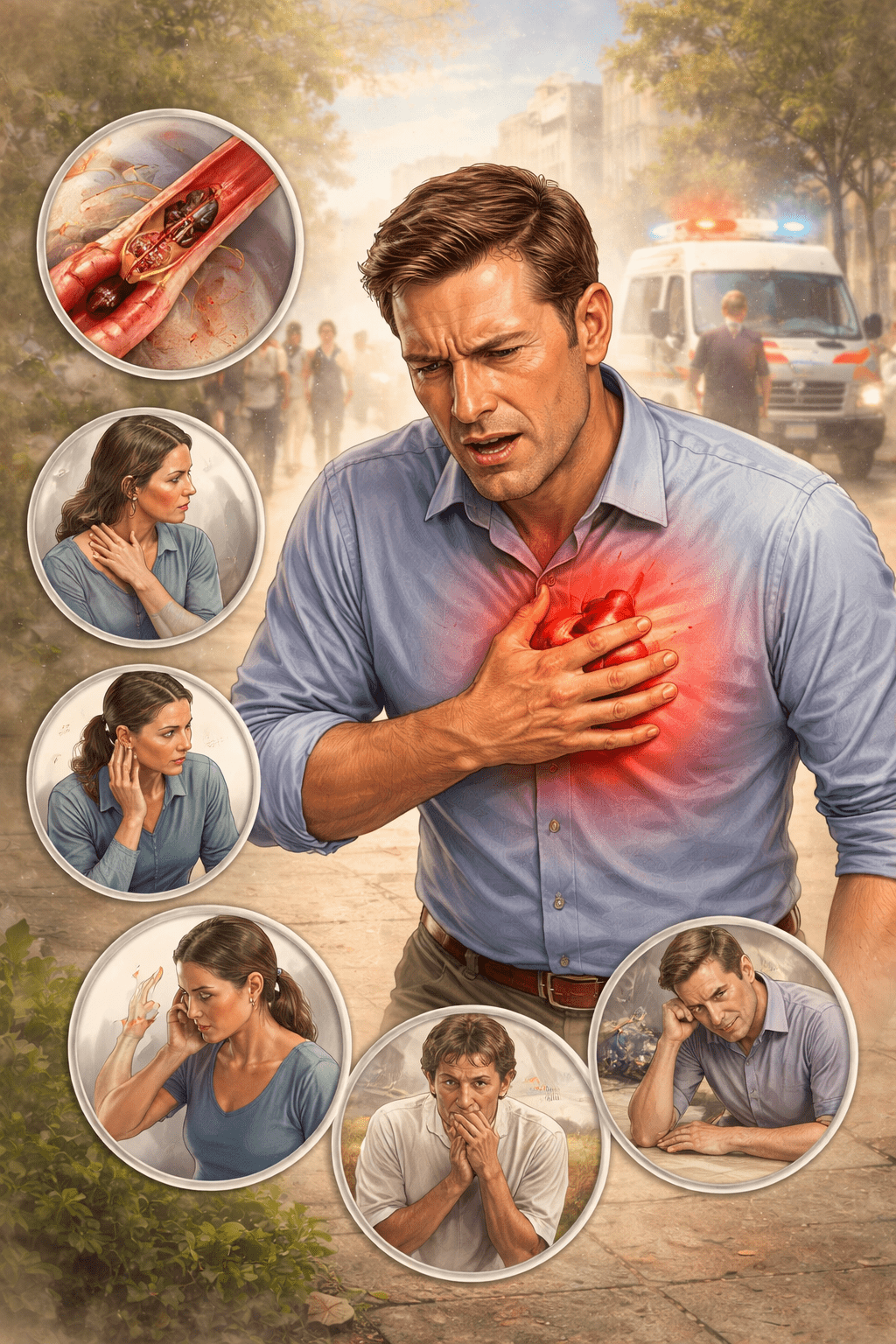
A seemingly healthy person can collapse within minutes due to a heart attack. Would you recognize the warning signs in time?
What is a Heart Attack?
A heart attack (myocardial infarction) occurs when blood flow to the heart muscle is blocked, most commonly by a blood clot in a coronary artery. When the heart does not receive enough oxygen:
- Heart muscle cells begin to be damaged
- It may progress to cardiac arrest if not treated promptly
Warning Signs
1. Typical Symptoms
- Chest pain or discomfort (pressure, tightness, squeezing sensation)
- Pain radiating to:
-
- Left arm or both arms
- Shoulder, neck, or jaw
- Shortness of breath
- Cold sweating
- Nausea or dizziness
2. Atypical Symptoms (often overlooked)
- Unusual fatigue
- Mild chest discomfort
- Back pain or epigastric pain
- Mild shortness of breath
3. More common in:
- Women
- Older adults
- People with underlying conditions (e.g., diabetes, cardiovascular disease)
4. What Happens in the Body?
When a coronary artery is blocked:
- Blood flow to the heart muscle is reduced or stopped
- The heart muscle becomes deprived of oxygen (myocardial ischemia)
- Prolonged ischemia leads to myocardial infarction (tissue death)
Time is muscle – every minute of delay results in irreversible myocardial damage
5. Common Mistakes
- Assuming it is “indigestion” or fatigue
- Waiting for symptoms to resolve on their own
- Driving to the hospital instead of calling emergency services
- Taking unprescribed medication
These mistakes can delay life-saving treatment.
6. Who is at Higher Risk?
- Smoking
- Hypertension
- Diabetes
- High cholesterol
- Physical inactivity
- Chronic stress
What to Do if a Heart Attack is Suspected
1. Activate Emergency Medical Services (EMS) Immediately
- Do not delay
- Do not attempt to self-transport in severe cases
2. Keep the Person at Rest
- Sit or lie in a semi-reclined position
- Avoid physical exertion
3. Monitor the Condition
- Check responsiveness
- Observe breathing
4. Be Ready to Perform CPR if Needed
If the person:
- Becomes unresponsive
- Is not breathing or not breathing normally
Start cardiopulmonary resuscitation (CPR) immediately (if trained). Use an Automated External Defibrillator (AED) if available
5. When Does It Become More Dangerous?
A heart attack may rapidly progress to:
- Cardiac arrest
- Life-threatening arrhythmias
- Acute heart failure
This is why rapid response is critical
Key Messages to Remember
- A heart attack does not always present with severe chest pain
- Early recognition significantly improves survival
- Immediate and appropriate action can save lives
Do not wait for an emergency to happen.
Equipping yourself with first aid knowledge and skills can help you save the life of a colleague, a loved one, or even yourself.