

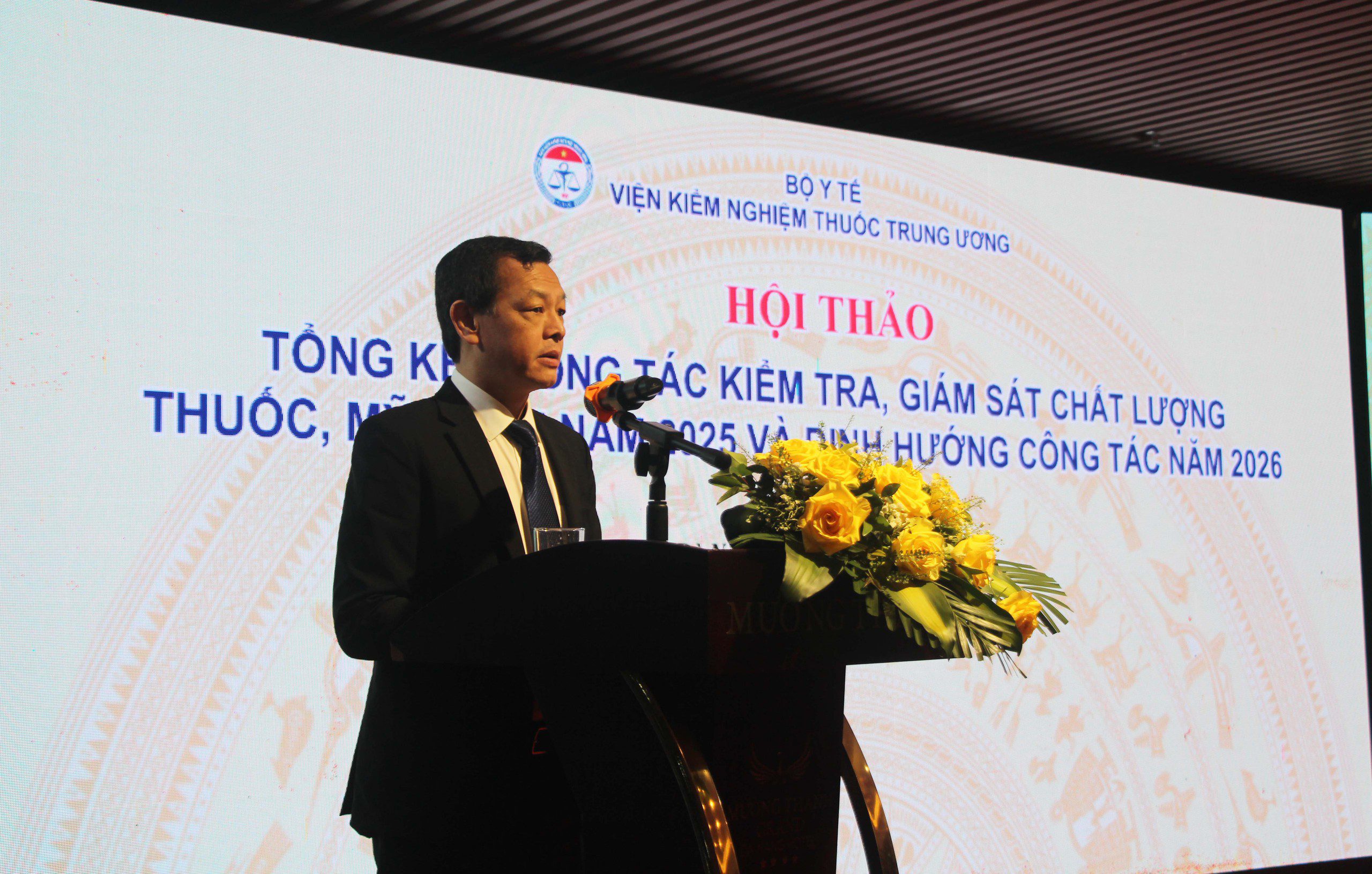
At a recent technical workshop in Da Nang, the National Institute of Drug Quality Control (NIDQC) announced its 2025 performance results with impressive figures. Despite structural reorganization challenges, the state testing system significantly exceeded its targets, playing a vital role in ensuring consumer safety.
Key operational highlights:
-
Expanded oversight capacity: A total of 41,556 samples were tested, reaching 117.4% of the assigned plan. Western medicines accounted for the largest share (over 31,500 samples), followed by cosmetics, traditional medicines, and herbal ingredients.
-
Violation findings: The non-compliance rate remained low at 0.63% of total samples (260 samples). Notably, authorities identified and handled 6 suspected cases of counterfeit drugs.
-
Strengthening specialized training: The leading institutes in Hanoi and Ho Chi Minh City are actively collaborating with universities to train high-level human resources (Masters and PhDs) in drug testing and toxicology to meet increasingly stringent technical requirements.
-
Management challenges: The system faces hurdles following the merger of provincial testing centers into Centers for Disease Control (CDC). Additionally, cosmetic sampling remains difficult due to non-compliance from some businesses and limited access to product quality dossiers.
Ministry of Health representatives pledged to soon issue unified standards for the functions and duties of testing centers nationwide to optimize surveillance efforts in 2026.