

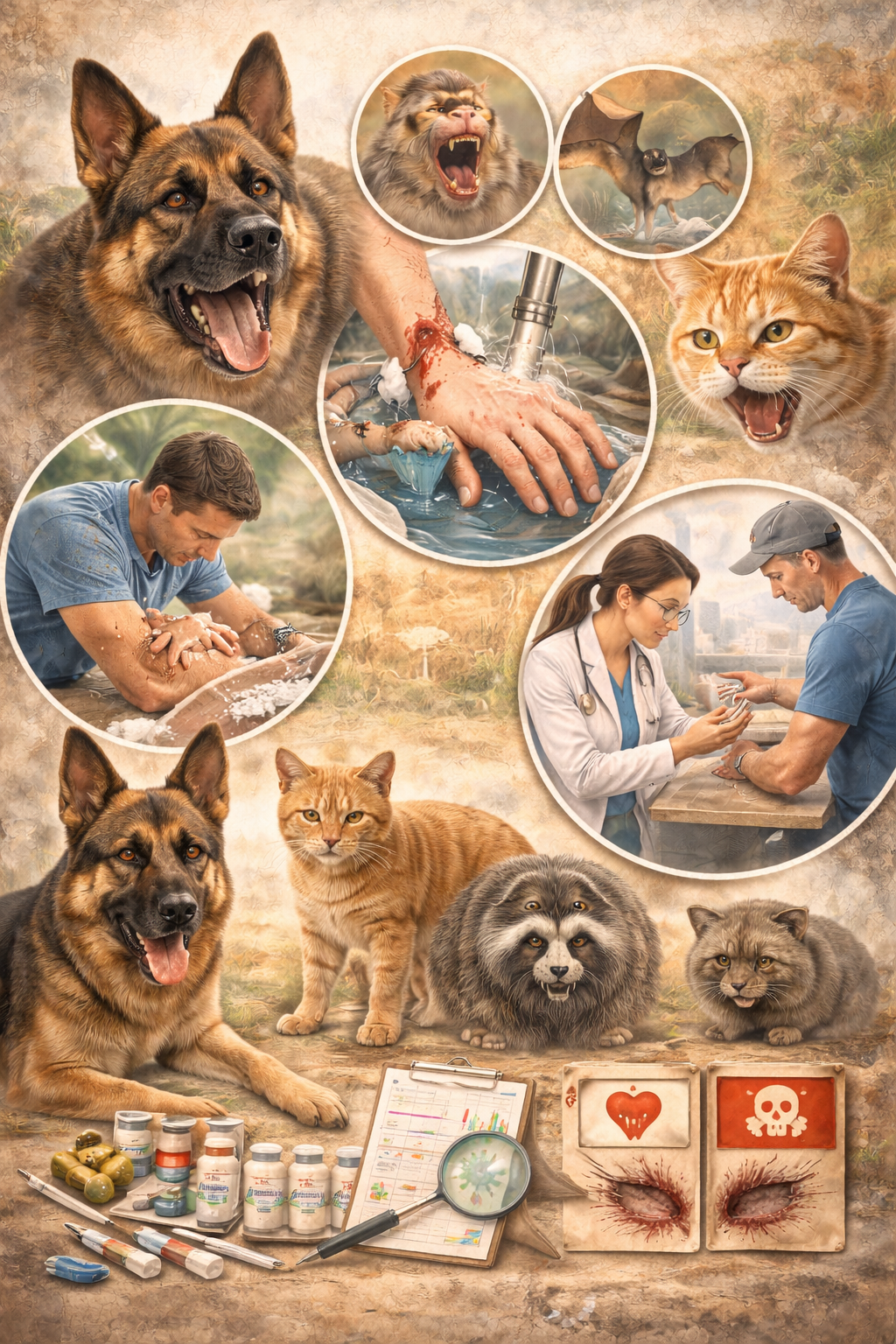
A small bite from a dog or cat may not seem serious… but improper first aid can lead to life-threatening consequences.
Why Are Animal Bites Dangerous?
Animal bites can cause:
- Wound infection
- Tissue and nerve damage
- Risk of rabies infection
Rabies is almost always fatal once symptoms appear.
Common Animals Involved
- Dogs
- Cats
- Monkeys
- Bats
- Wild animals
Higher risk if:
- Unknown or stray animals
- Unvaccinated animals
- Abnormal or aggressive behavior
Common Mistakes
- Not washing the wound immediately
- Applying traditional remedies (leaves, toothpaste, etc.)
- Cleaning superficially only
- Ignoring small wounds
These increase the risk of infection and rabies.
What to Do Immediately After a Bite
1. Wash the wound immediately (MOST IMPORTANT STEP)
- Rinse under running water for at least 15 minutes
- Use soap if available
This significantly reduces rabies virus load.
2. Disinfect the wound
- Use antiseptics (e.g., povidone-iodine, chlorhexidine)
3. Manage the wound properly
- Do not close the wound immediately unless medically indicated
- Apply a clean dressing if needed
4. Seek medical care as soon as possible for:
- Rabies risk assessment
- Rabies vaccination (post-exposure prophylaxis – PEP)
- Rabies immunoglobulin (RIG) if indicated
- Tetanus prophylaxis
- Antibiotics if required
5. Animal Observation
Observe the animal for at least 10 days
- If the animal remains alive and healthy after 10 days → the risk of rabies transmission at the time of the bite is extremely low
- If the animal:
- Dies
- Stops eating
- Shows abnormal behavior (aggression, excessive salivation/foaming, paralysis, etc.)
This indicates a high risk of rabies exposure, requires immediate medical evaluation and post-exposure prophylaxis (PEP)
Rabies Exposure Risk (Simplified)
- Low risk: contact with intact skin → no treatment needed
- Moderate risk: superficial scratches → vaccine required
- High risk: bites or broken skin → vaccine + RIG required
When to Seek Immediate Care
- Deep or bleeding wounds
- Bites on face, neck, or hands
- Unknown or stray animals
- Signs of infection (redness, swelling, pus)
Key Message
- If possible, observe the animal for 10 days
- Do not delay treatment while waiting for observation
- Do not underestimate even small bites
- Immediate washing can be life-saving
- Timely vaccination can prevent rabies completely
Do not wait until symptoms appear. At that stage, rabies is almost always fatal.