

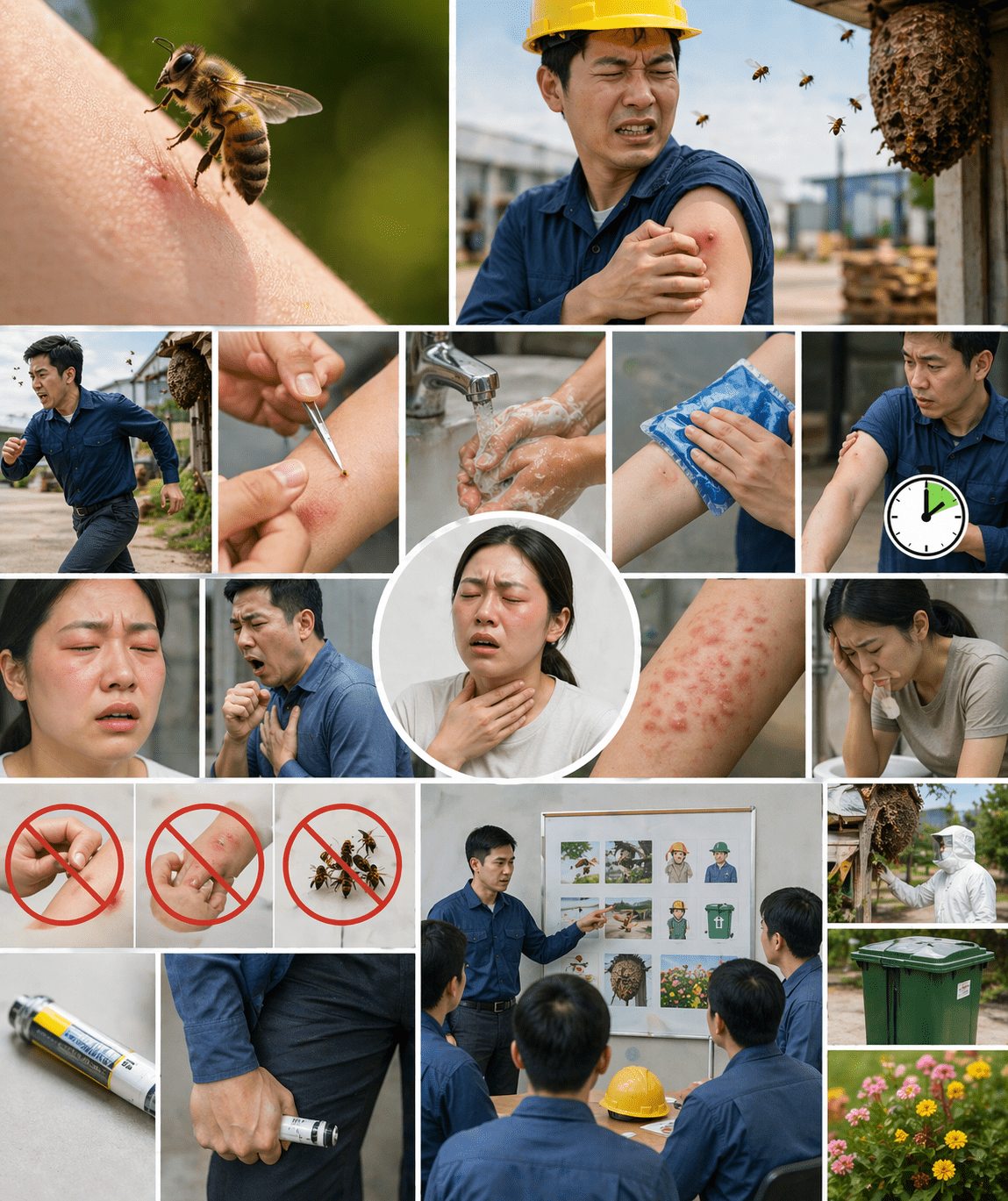
Bee stings are often considered minor incidents—however, in certain cases, especially with severe allergic reactions or multiple stings, the situation can escalate rapidly and become life-threatening.
Why Should Bee Stings Be Taken Seriously?
Bees can be found in various environments, including factories, construction sites, green areas, and outdoor storage spaces.
Bee venom can cause:
- Local pain, swelling, and inflammation
- Allergic reactions
- Anaphylaxis – a life-threatening emergency
- Systemic toxic reactions from multiple stings
Important note: Some individuals may develop anaphylaxis within minutes, even without any prior history of allergies.
Recognizing Warning Signs
Reactions to bee stings can range from mild to severe.
Common reactions:
- Localized pain or burning sensation
- Mild swelling
- Itching
Warning signs of a serious reaction:
These may indicate anaphylaxis and require immediate action:
- Swelling of the face, lips, or eyes
- Difficulty breathing or wheezing
- Widespread hives
- Dizziness or low blood pressure
- Nausea or vomiting
Proper First Aid – What to Do in the First Minutes
DO:
- Move away from the area immediately to avoid further stings
- Remove the stinger (if present) by scraping it off (do not squeeze)
- Clean the affected area with soap and water
- Apply a cold compress to reduce pain and swelling
- Monitor for allergic symptoms for at least 30 minutes
- Seek emergency medical help if severe symptoms occur
- Individuals with known allergies should carry an epinephrine auto-injector (EpiPen) and know how to use it
- In cases of multiple stings, seek medical attention immediately for monitoring—even if no severe symptoms are present.
DO NOT:
- Do not squeeze or pinch the stinger (this may release more venom)
- Do not scratch or rub the affected area
- Do not underestimate multiple stings
- Do not ignore symptoms if there is a history of allergies
Note: Proper first aid does not replace medical treatment—but it helps extend the “golden window” for survival.
Common Misconceptions
- “Bee stings are always minor”
- “Only children are at risk”
- “If I’ve never had allergies, I’m safe”
In reality, severe reactions can happen to anyone.
Prevention in the Workplace
- Regularly inspect and safely remove bee nests
- Avoid approaching or disturbing hives
- Wear appropriate protective clothing when working outdoors
- Maintain a clean environment to avoid attracting bees (sweets, waste, etc.)
- Train employees to recognize and respond to allergic reactions
Bee stings can range from mild to critically severe, especially in cases of allergy or multiple stings.
The key difference lies in early recognition and proper response.
Move away – Remove the stinger – Monitor – Be ready to act.