

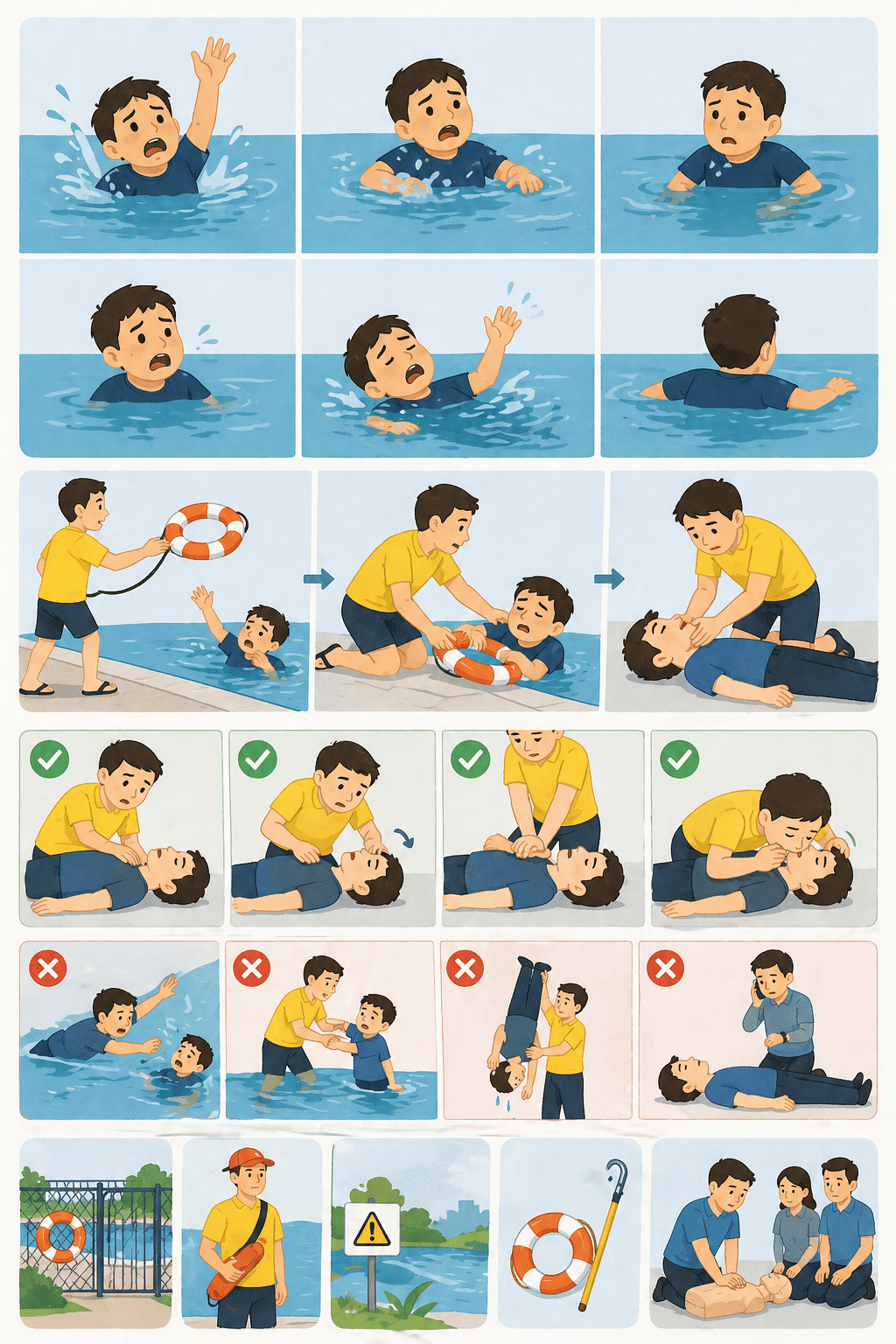
Drowning is one of the most dangerous emergencies—but also one of the most misunderstood. it’s often silent, quick, and easy to miss.
Why is drowning so dangerous?
Drowning doesn’t only happen in rivers, lakes, or the ocean. Many incidents occur in:
- Swimming pools
- Water tanks or reservoirs
- Construction sites with water pits
- Flooded areas after heavy rain
When water blocks the airway, the body is deprived of oxygen. The brain can begin to suffer damage within 4–6 minutes without oxygen.
What’s important to remember: Drowning is usually fast—and very quiet.
Recognizing it early isn’t easy
A drowning person often cannot call for help. Instead, you may notice:
- Struggling to keep their head above water
- Weak, uncoordinated arm movements
- Mouth barely above the surface trying to breathe
- Vertical body position, unable to kick effectively
- Slipping under the water repeatedly
If you see these signs, don’t wait—act immediately.
First Aid – The first few minutes matter most
DO:
- First, make sure you are safe (Do not jump into the water without proper skills or equipment)
- Try to assist from a safe distance: Call – Reach – Throw – don’t rush in
- Get the person out of the water as quickly and safely as possible
- Check responsiveness and breathing:
- If not breathing or breathing abnormally → start CPR immediately
- Provide chest compressions and rescue breaths if trained
- Call emergency services as soon as possible
- Even if the person regains consciousness, they still need medical evaluation (due to possible delayed breathing complications)
DO NOT:
- Do not attempt a rescue beyond your capability (you may become the next victim)
- Do not delay CPR if the person is not breathing
- Do not assume the situation is resolved once they are out of the water
- Do NOT hold the person upside down to “drain water”
- This does not remove water from the lungs
- It delays oxygen delivery and CPR
- It may cause aspiration and further airway damage
What the victim needs is oxygen—immediately, not “draining water.”
Common misconceptions
- “Drowning people will shout for help”
- “If you can swim, you’re safe”
- “Once they’re out, they’re fine”
- “Turn them upside down to get the water out”
In reality, many severe outcomes happen because of delayed or incorrect actions in the first few minutes.
Prevention is always better
- Install barriers and warning signs in high-risk areas
- Provide life-saving equipment (life buoys, poles, etc.)
- Avoid working alone near water
- Closely monitor high-risk zones
- Train staff in CPR and basic rescue techniques
Drowning is a time-critical emergency.Brain damage can occur within minutes without oxygen.
The outcome depends not on luck— but on how quickly and correctly people respond.
Stay safe – Get them out – Start CPR – Call for help.