

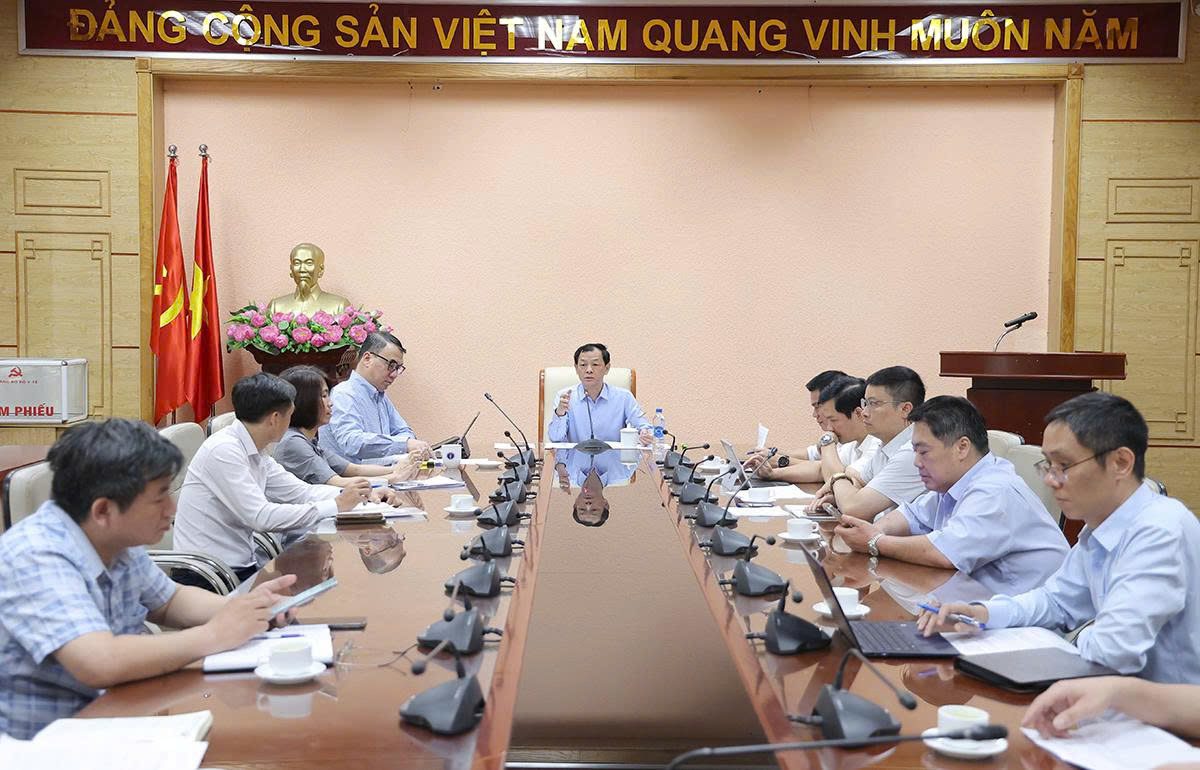
During a recent meeting to review science, technology, and digital transformation tasks, Deputy Minister of Health Nguyen Tri Thuc emphasized that leaders of Departments and Offices must be directly responsible for the quality and pace of the sector’s key projects.
Digitalizing databases and healthcare infrastructure The Ministry is focusing on finalizing 14 specialized databases in 2026. This process strictly adheres to the principle that data must be “accurate, sufficient, clean, live, unified, and shared.”
-
Electronic Health Records (EHR): Sustained efforts are being made to implement digital medical records effectively across the system, aiming for scientific and efficient health management.
-
Public service integration: System configurations have been completed to prepare for the provision of administrative procedures on the National Public Service Portal.
Promoting decentralization and procedural simplification The Ministry has achieved positive results in streamlining administrative processes:
-
Decentralization ratio: Out of 270 current administrative procedures, 65% (equivalent to 176 procedures) have been transferred to local authorities, meeting the targets set by the Government.
-
Paperwork reform: The simplification of citizen documents for 73 administrative procedures has been 100% completed.
Requirements for executive responsibility Deputy Minister Nguyen Tri Thuc required unit leaders to directly supervise and closely monitor the detailed progress of each specific task. Specialized units, such as the Department of Science, Technology, and Training and the National Health Information Center, must collaborate to clarify information structures and database source codes. The ultimate goal is to build a civilized and transparent digital health platform that is fully interconnected with the national management system.