

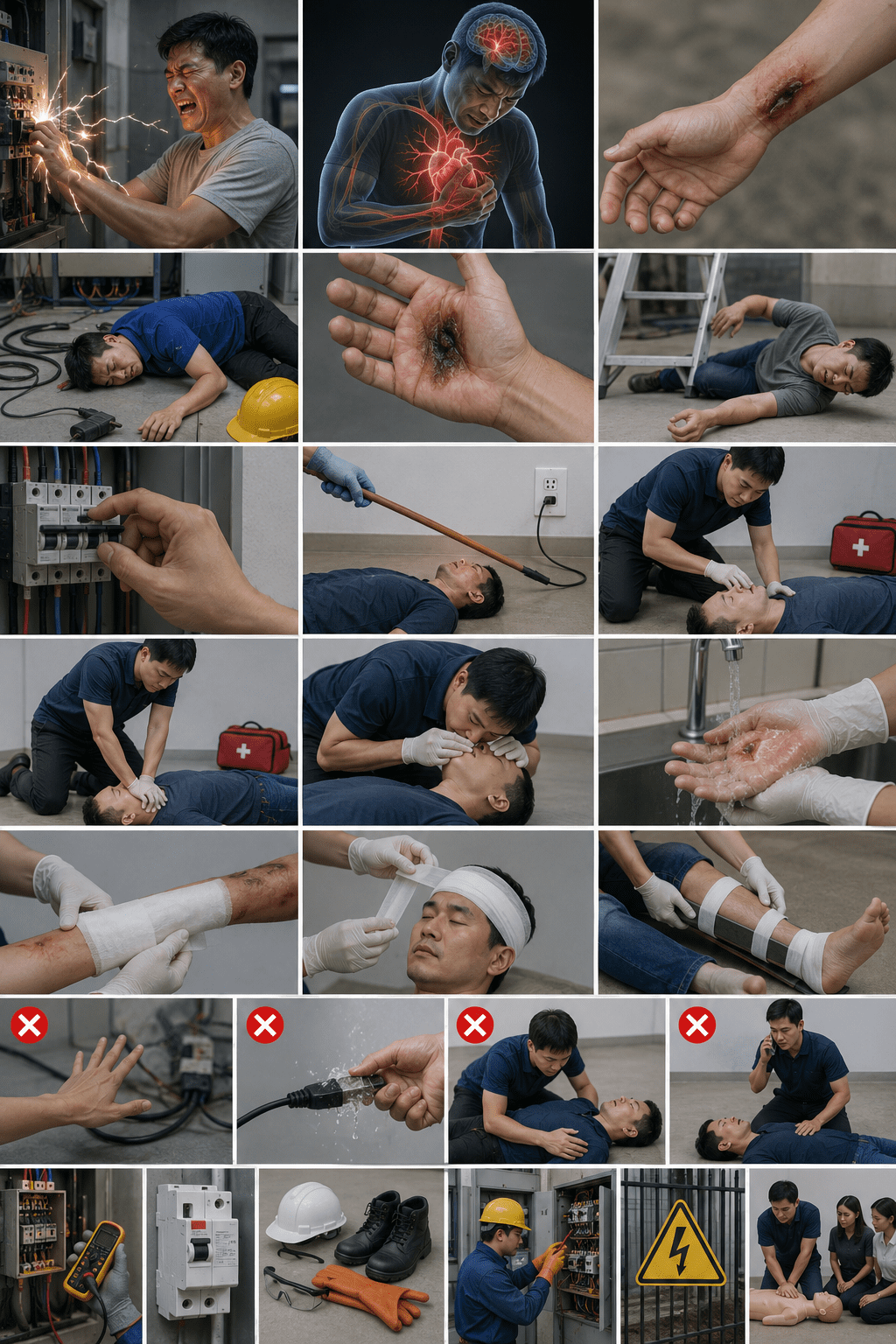
Electrical shock is the kind of accident that gives you no warning. It happens fast—and even a brief contact can lead to cardiac arrest or serious injury, including in situations that seem “low risk.”
Why is electrical shock so dangerous?
Electricity doesn’t just “shock” you. It affects the heart, muscles, and nervous system at the same time:
- Cardiac arrhythmia: can lead to sudden cardiac arrest
- Muscle contraction: the person may become “stuck” and unable to let go
- Electrical burns: may look minor outside but severe internally
- Nerve damage: affecting movement and sensation
Often overlooked:
- High voltage (industrial): causes deep burns and internal injury
- Household electricity: still strong enough to stop the heart if the current passes through the body
And importantly: wet environments increase conductivity, making incidents more severe.
Recognizing a dangerous situation
A person experiencing electrical shock may:
- Lose consciousness
- Not be breathing or breathing abnormally
- Be rigid or unable to release the source
- Show burn marks at contact points (hands, feet, etc.)
- Signs of trauma from impact or falls
Do not touch the person if they are still in contact with the electrical source.
First Aid – your safety comes first
DO:
Check the surrounding area for safety and shut off the power immediately (circuit breaker, switch, unplug)
If you cannot cut the power: Use a non-conductive object (dry wood, plastic, rubber) to separate the person and only approach when it is completely safe
Check responsiveness and breathing:
- If not breathing or breathing abnormally: start CPR immediately
- Call emergency services as soon as possible
Treat electrical burns:
- Cool with clean water (cool, not ice-cold)
- Do not apply ice directly
- Do not use creams or home remedies
- Cover with a clean, dry dressing
Manage injuries and wounds (if any):
- Control bleeding with proper wound dressing/bandaging
- Stabilize the cervical spine if the person has fallen from height
- Immobilize suspected fractures if broken bones are identified
- Check for other injuries or wounds
DO NOT:
- Do not touch the person before the power is disconnected
- Do not use bare hands or conductive materials
- Do not delay CPR if the person is not breathing
- Do not assume they are “fine” just because they are awake
Electrical injuries can be more serious than they appear.
Common misconceptions
- Household electricity isn’t dangerous
- No visible burns means no injury
- Quick contact is harmless
In reality, severe outcomes can occur in just seconds—and may worsen over time.
Prevention – simple but critical
- Regularly inspect electrical equipment
- Avoid using electrical devices with wet hands or on wet surfaces
- Use protective devices (circuit breakers, ELCB, etc.)
- Wear proper protective gear when working with electricity
- Avoid working alone in high-risk areas
- Train staff in electrical safety and basic first aid
Electrical shock happens in seconds, but the consequences can last a lifetime. What makes the difference is not luck, but how quickly and correctly you respond.
Cut the power – Stay safe – Check – CPR – Call for help.