

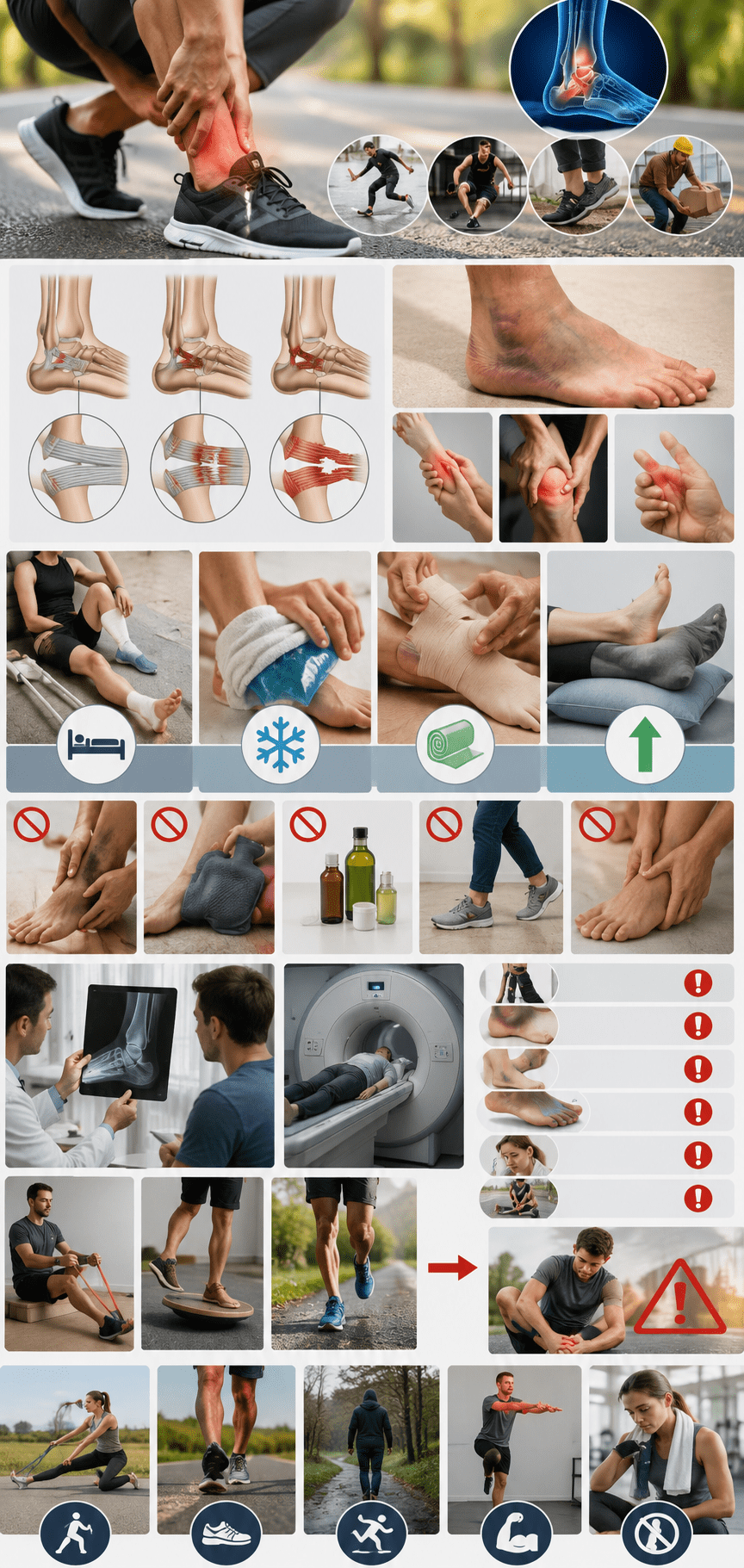
Sprains are among the most common injuries in daily activities, sports, and workplace environments. Many people treat them as “just a minor twist” and try to push through the pain. In reality, improper management can lead to prolonged recovery, repeated injuries, or long-term joint instability.
What is a sprain?
A sprain occurs when a ligament is stretched or torn due to excessive force or abnormal movement of a joint.
Ligaments are structures that help:
- Stabilize joints
- Prevent excessive movement
- Support normal motion during activity
Commonly affected areas include:
- Ankle
- Wrist
- Knee
- Fingers
Typical causes:
- Slipping or falling
- Landing awkwardly during sports
- Sudden twisting movements
- Carrying heavy loads or walking on uneven surfaces
Sprains can vary in severity
Not all sprains are the same.
- Grade I (mild): slight stretching of the ligament
- Grade II: partial tear of the ligament
- Grade III (severe): complete ligament rupture with significant joint instability
Severe sprains may require bracing, prolonged immobilization, or even surgery.
Common signs and symptoms
Symptoms usually appear immediately after the injury:
- Joint pain
- Swelling
- Bruising
- Limited movement
- Pain when standing or bearing weight
- Feeling of looseness or instability in the joint
Some people may hear or feel a “pop” at the moment of injury.
Not every swollen and painful joint is “just a sprain.” Severe pain, deformity, or inability to bear weight may indicate a fracture.
Proper first aid – early management matters
DO:
During the first 24–48 hours, follow the R.I.C.E principle:
R – Rest
- Limit movement of the injured area
- Avoid continuing sports or physical activity
I – Ice
- Apply cold packs for 15–20 minutes at a time
- Repeat several times throughout the day
- Always wrap ice in a towel—never place it directly on the skin
Cold application helps to reduce swelling, relieve pain and limit soft tissue bleeding
C – Compression
- Use an elastic bandage to support the joint and reduce swelling
- Wrap firmly but not too tightly
If the area becomes numb, cold, or discolored, loosen the bandage immediately.
E – Elevation
- Keep the injured area elevated above heart level when possible
- Helps reduce swelling and fluid buildup
In addition:
Temporary splinting or support may help stabilize the joint
Monitor swelling, pain, and mobility over the next few days
What NOT to do
- Do not massage the injury immediately after it happens
- Do not apply heat within the first 48 hours
- Do not use oils, alcohol rubs, or home remedies to “reduce bruising”
- Do not force yourself to walk it off
- Do not attempt to “adjust” the joint yourself
Early heat and aggressive massage can increase bleeding and swelling in the injured tissues.
When should you seek medical attention?
You should seek medical evaluation if:
- You cannot stand or walk
- Pain or swelling becomes severe
- The joint appears deformed
- There is numbness or loss of sensation
- Symptoms do not improve after a few days
- The injury keeps happening repeatedly
In some cases, doctors may recommend:
- X-rays: to rule out fractures
- MRI: to assess ligament, tendon, or cartilage injuries
Returning too early can make it worse
One common mistake is: “It feels better, so I can go back to normal.”
In reality, ligaments need time to heal properly. Returning to work, sports, or heavy activity too early may:
- Cause repeated sprains
- Lead to chronic joint instability
- Increase the risk of future injuries
“Less pain” does not always mean “fully healed.”
Prevention matters
Warm up properly before physical activity
Wear appropriate footwear
Be cautious on slippery or uneven surfaces
Improve muscle strength and balance
Avoid pushing through pain or fatigue
A sprain may start with a simple misstep—but poor management can lead to long-term problems.
The important thing is not how well you tolerate pain, but knowing when to stop and respond properly.
Rest – Ice – Compression – Elevation – Monitor for serious signs.