

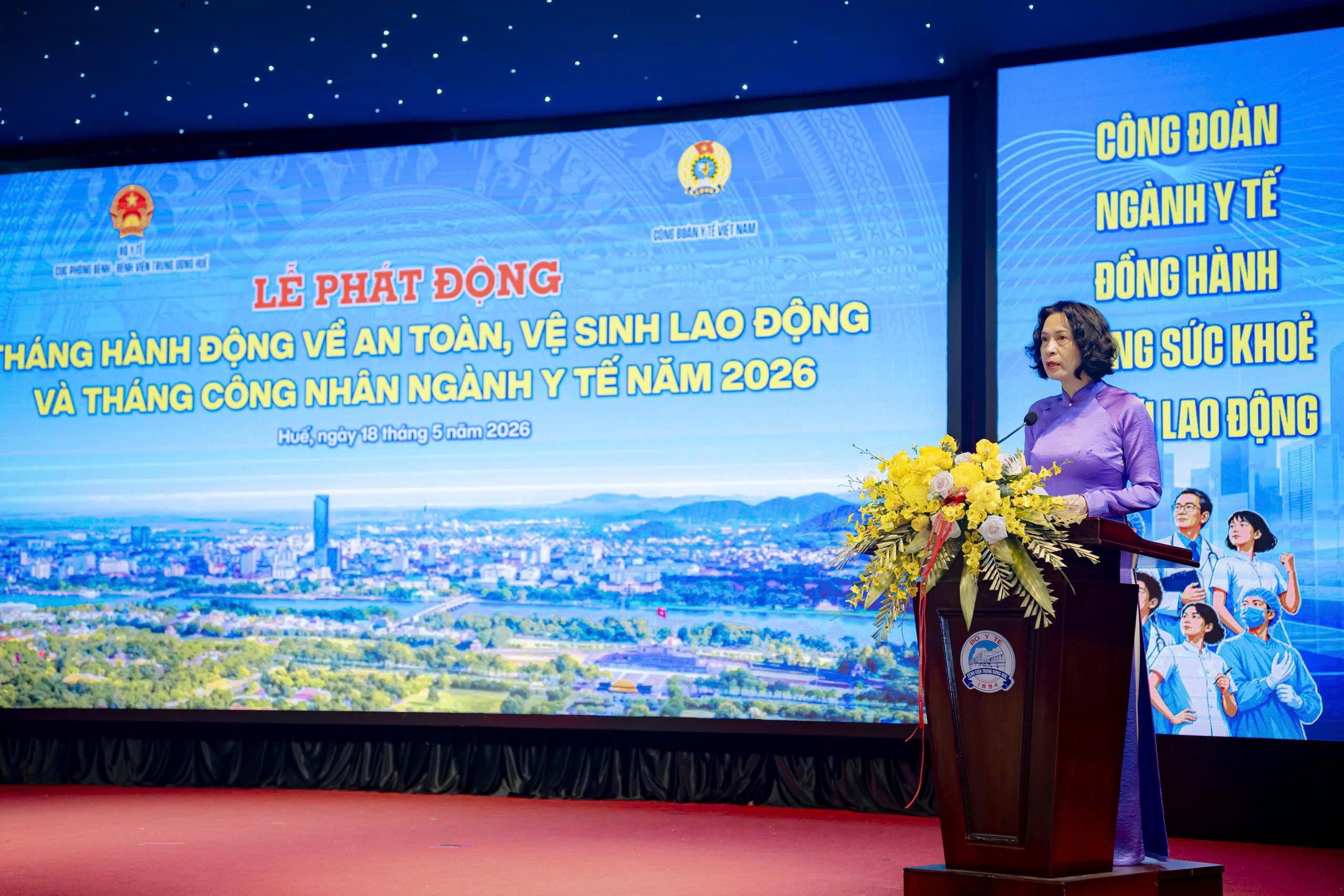
National Action Month Launched On May 18, 2026, the Medical Workers Union of Vietnam, in coordination with the General Department of Preventive Medicine and relevant bodies, inaugurated the Action Month for Occupational Safety and Health alongside the Medical Workers’ Labor Month at the Hue Central Hospital. The event marked the launch of the emulation movement titled “Medical Workers Union Accompanying Labors’ Health for the 2026-2030 Period”. As part of the program, organizers distributed financial aid to 10 healthcare workers from Quang Tri province suffering from occupational accidents or illnesses, and 13 union members facing severe financial distress or critical ailments.
Current Workplace Dynamics and Structural Challenges Regulatory assessments indicate that occupational safety protocols within the healthcare network have logged meaningful progress through structured measures:
-
A majority of medical facilities have set up internal Occupational Safety and Health Councils along with institutional hygiene networks.
-
Routine physical examinations and targeted screenings for occupational diseases are systematically maintained for staff members.
Nevertheless, the healthcare infrastructure continues to grapple with emerging modern complexities driven by climate change, accelerating digitization, and evolving employment paradigms. Suboptimal regulatory compliance remains an issue in certain medical centers, leaving persistent risks of workplace injuries and long-term occupational medical conditions.
Strategic Policy Revisions and High-Tech Integration Delivering directional instructions, Deputy Minister of Health Nguyen Thi Lien Hương urged institutional leaders across the country to prioritize operational updates aimed at generating resilient and sustainable work environments:
-
Regulatory Reforms: Authorities must refine underlying frameworks governing labor standards, employment security, and workplace safety to attract and preserve high-caliber medical professionals. Field audits and safety compliance checks must be intensified to preemptively eliminate hazardous operational environments.
-
Technological Modernization: Capital allocations should favor pioneering scientific research and technological integration, aligned with the Politburo’s Resolution No. 57-NQ/TW. The sector needs to integrate Artificial Intelligence (AI), blockchain, Big Data, and the Internet of Things (IoT) to maximize administrative output and enhance transparency across healthcare operations.
-
Union Engagements: Trade unions are directed to shift focus toward grassroots practical initiatives, cutting down on purely formal events. Strategic priorities include elevating digital and clinical skills for staff, expanding worker-management dialogue, and addressing legitimate employee grievances in a timely manner.