

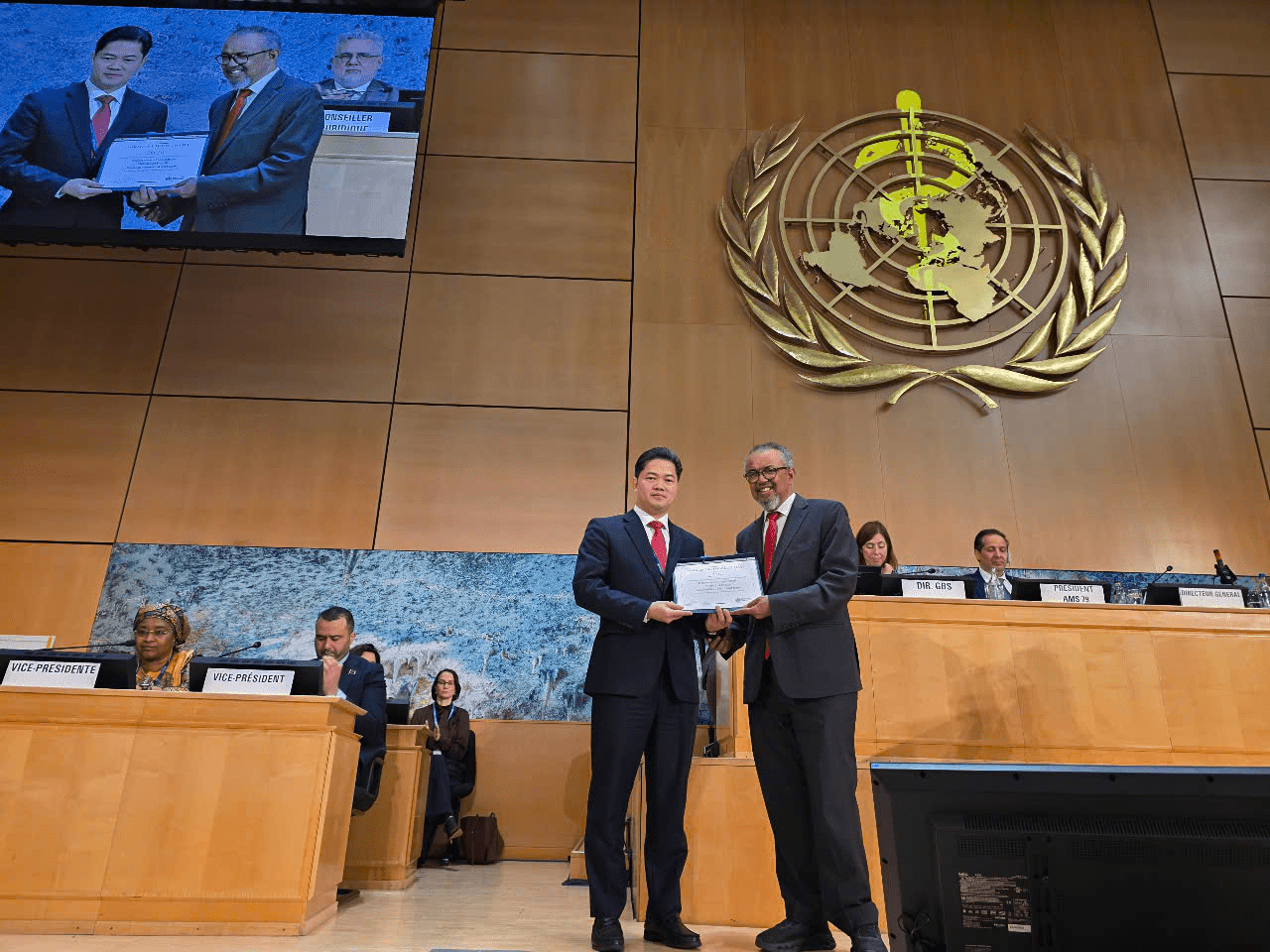
At the plenary session of the 79th World Health Assembly (WHA79) held in Geneva, Switzerland, the World Health Organization (WHO) hosted an official certification ceremony to recognize Vietnam’s substantial contributions and milestones in tobacco control. On behalf of the recognized organizations, Permanent Vice Minister of Health Vu Manh Ha accepted the World No Tobacco Day 2026 awards presented by WHO Director-General Dr. Tedros Adhanom Ghebreyesus. The four honored entities operating under the Ministry of Health include the Department of Legal Affairs, the Health Strategy and Policy Institute, the Poison Control Center at Bach Mai Hospital, and the Tobacco Control Fund.
This international commendation reflects Vietnam’s structured advancements in policy formulation, legislative updates, and public health communication campaigns designed to insulate communities from tobacco-related impacts. Key strategic policy milestones highlighted by international observers include:
-
Taxation Infrastructure Reform: In June 2025, the National Assembly of Vietnam approved a hybrid tax model, introducing a specific excise tax alongside the pre-existing ad valorem mechanism, structured with a progressive annual increase framework spanning from 2027 through 2031.
-
Socioeconomic Projections: According to statutory WHO estimates, the updated fiscal structure is projected to assist 2.1 million Vietnamese citizens in quitting or avoiding smoking by 2031; prevent roughly 700,000 premature deaths over the coming decades; and generate an additional 24 trillion VND in annual state budget revenue by 2031.
-
Regulation of New-Generation Tobacco: The prior enforcement of a total ban covering e-cigarettes and heated tobacco products serves as a robust regulatory complement to the tax updates, effectively restricting youth exposure to affordable, hazardous nicotine delivery channels.
The 2026 institutional honors follow the individual World No Tobacco Day 2025 award presented to Vietnam’s Minister of Health, Dao Hong Lan, who was commended for her decisive leadership in restricting novel tobacco variations. These consolidated legislative efforts establish a resilient health legacy, aiming to mitigate the substantial clinical and economic burdens within a nation currently registering over 15 million active smokers and more than 100,000 annual fatalities linked to direct and secondhand smoke exposure.