

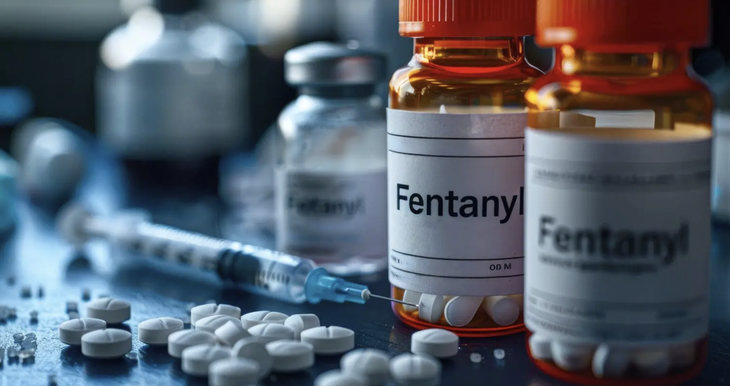
The Ministry of Health has issued an urgent directive to provincial people’s committees, municipal health departments, medical networks, and pharmaceutical enterprises, calling for intensified monitoring and tighter control over prescription drugs containing the active ingredient fentanyl. The regulatory update follows official alerts concerning the evolving activities of drug trafficking networks. Across Asia and Southeast Asia, law enforcement bodies have identified patterns where illicit syndicates mix fentanyl and its chemical derivatives into conventional narcotics to amplify psychoactive effects, posing immediate, life-threatening risks to users. Locally, specialized tactical units previously interdicted an illicit distribution loop in Hanoi, seizing six vials of 50mcg/10ml fentanyl solution.
To prevent the unauthorized diversion of these controlled substances into the wider consumer market, the health ministry has formulated a series of oversight guidelines:
-
Closed-Loop Institutional Monitoring: Multi-level hospitals and clinical centers must systematically audit their internal logistics, from primary physician prescription and clinical dispensing to secure storage. Crucially, the revised mandate enforces a 100% compulsory recovery rate for all used fentanyl ampoules, which must undergo strict biological destruction protocols to eliminate any leakage risks.
-
Targeted Wholesale Inspections: Regulatory bodies will compile a centralized tracking matrix to perform targeted compliance audits on pharmaceutical entities managing large volumes of addictive agents, psychotropic substances, and chemical precursors.
-
Emergency Escalation Mechanisms: In the event of an inventory breach or material loss of controlled substances, facilities are legally required to immediately notify local administrative authorities and health enforcement divisions to launch a coordinated response.
From a pharmacological and clinical toxicology perspective, medical experts classify fentanyl as an exceptionally potent synthetic opioid, demonstrating a biological affinity 50 times greater than heroin and 100 times stronger than morphine. Because of this severe potency profile, unauthorized distribution or exposure to minute traces of the compound can induce fatal respiratory failure. Consequently, the Ministry of Health has prohibited all non-compliant distribution channels, instructing medical and defense departments to ensure that this strictly monitored drug class is reserved exclusively for validated clinical and therapeutic environments.