

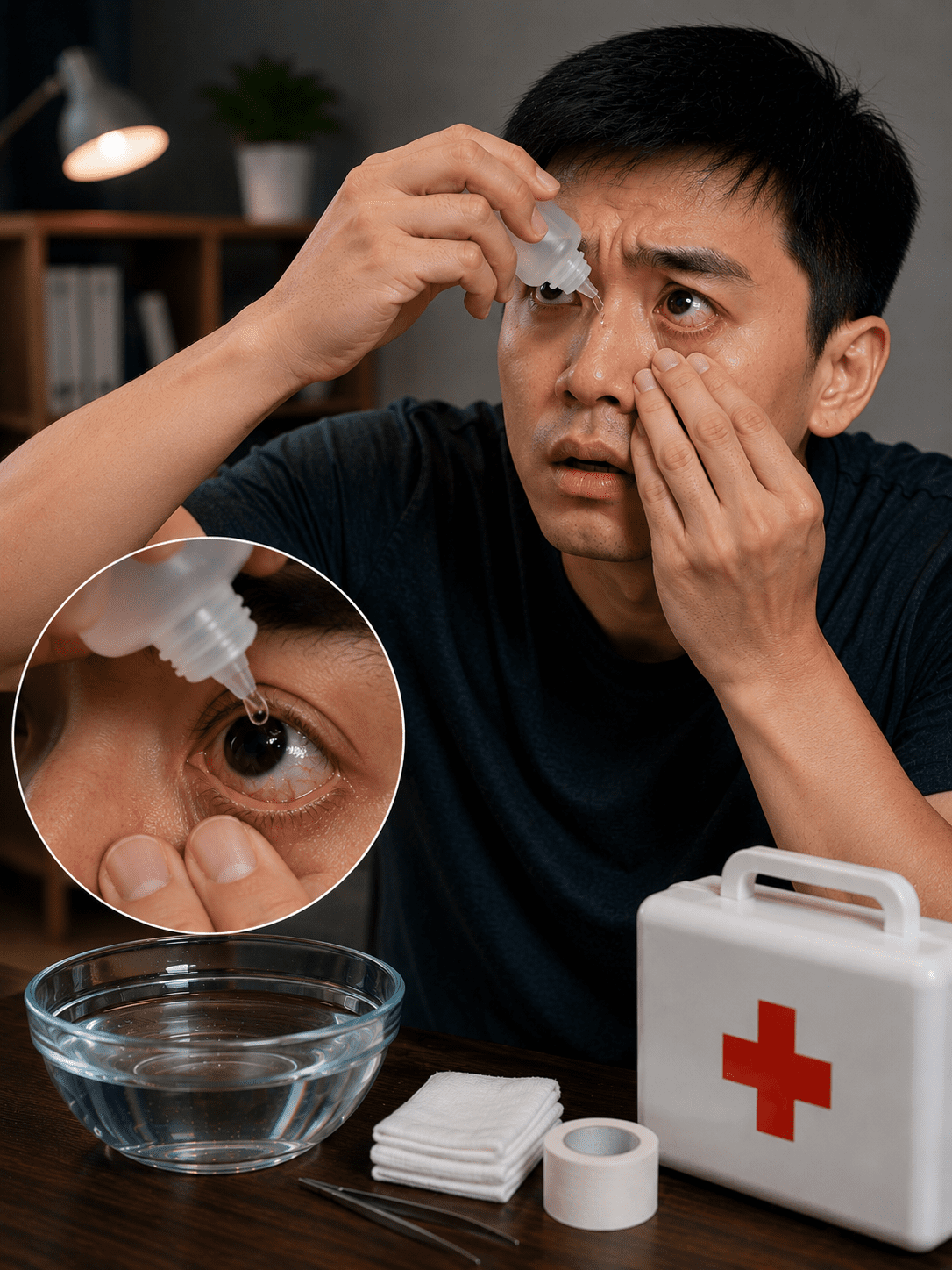
Eye injuries are common in occupational settings, sports activities, traffic accidents, and daily life. Although some injuries may initially appear minor, delayed or inappropriate management can result in infection, corneal injury, intraocular hemorrhage, permanent visual impairment, or loss of vision.
Common eye injuries include:
- Foreign bodies entering the eye
- Chemical exposure to the eye
- Blunt ocular trauma
- Penetrating eye injuries caused by sharp objects
- Thermal or chemical burns involving the eye
1. FOREIGN BODY IN THE EYE
Foreign bodies may include dust, sand, metal fragments, wood particles, glass shards, or other small debris.
Common signs and symptoms
- Foreign body sensation
- Eye pain or discomfort
- Excessive tearing
- Redness
- Sensitivity to light
- Blurred vision
First aid management
- Advise the person not to rub the affected eye
- Gently irrigate the eye with clean water or sterile saline solution
- Encourage blinking to assist removal of small loose particles
- If the foreign body is superficial and clearly visible, careful removal using clean sterile gauze may be attempted by trained personnel
Do NOT
- Use fingers, dry materials, or hard objects to remove the foreign body
- Attempt to remove an object embedded in the eye
- Apply pressure to the eye
- Use non-prescribed eye drops, especially corticosteroid-containing medications
Seek immediate medical evaluation if
- Pain is severe or persistent
- Vision is reduced or blurred
- The injury involves high-velocity particles, especially metal fragments
- Penetrating eye injury is suspected
- The foreign body cannot be removed after irrigation
2. CHEMICAL EXPOSURE TO THE EYE
Chemical eye exposure is a medical emergency requiring immediate intervention. Alkali substances, such as industrial cleaners or caustic agents, may cause severe ocular damage due to deep tissue penetration.
Common signs and symptoms
- Severe burning pain
- Excessive tearing
- Eyelid spasm
- Redness
- Blurred vision
- Burning sensation
First aid management
- Immediately irrigate the eye with large amounts of clean water or sterile saline solution using a gentle continuous flow
- Begin irrigation as quickly as possible
- Continue irrigation for at least 15–20 minutes or longer if symptoms persist
- Keep the eyelids open during irrigation
- Remove contact lenses if present and easily removable
- Refer the person for urgent medical evaluation
Early irrigation is critical and should not be delayed while waiting for medical personnel or searching for medications.
3. BLUNT OCULAR TRAUMA
Blunt ocular trauma may occur during sports, workplace incidents, traffic accidents, or physical impact injuries.
Possible signs and symptoms
- Periorbital swelling
- Bruising around the eye
- Eye pain
- Diplopia (double vision)
- Subconjunctival hemorrhage
- Reduced visual acuity
Severe injuries may include:
- Hyphema
- Retinal injury
- Globe rupture
First aid management
- Allow the person to rest
- Apply a cold compress gently around the eye for short periods
- Avoid pressure on the eyeball
- Monitor for worsening pain or visual changes
Do NOT
- Apply pressure bandages over the eye
- Allow the person to continue sports or physical activity
- Ignore symptoms even if initially mild
4. SUSPECTED PENETRATING EYE INJURY
A penetrating eye injury is a sight-threatening medical emergency.
Warning signs
- An object embedded in the eye
- Visible deformity of the eyeball
- Leakage of fluid or blood from the eye
- Significant visual loss
- Severe eye pain
First aid management
- Do not remove the embedded object
- Do not apply pressure to the eye
- Protect the injured eye with a loose protective covering if available
- Seek emergency medical care immediately
WHEN TO SEEK URGENT MEDICAL CARE
Urgent ophthalmologic evaluation is required if any of the following are present:
- Reduced or complete loss of vision
- Severe eye pain
- Double vision
- Bleeding from the eye
- High-velocity foreign body injury
- Chemical exposure to the eye
- Persistent symptoms after first aid
- Suspected penetrating eye injury
PREVENTION OF EYE INJURIES
In the workplace
- Use appropriate protective eyewear
- Follow workplace safety procedures
- Exercise caution during cutting, grinding, welding, and chemical handling
At home and in schools
- Keep chemicals out of the reach of children
- Avoid allowing children to play with sharp objects
- Teach children not to rub their eyes if foreign bodies enter the eye
During sports activities
- Use appropriate protective equipment
- Take precautions during high-impact sports
In eye emergencies, the first few minutes may determine the outcome for vision preservation. Early recognition, immediate first aid, and timely referral for medical evaluation can significantly reduce the risk of permanent visual impairment and long-term complications.