

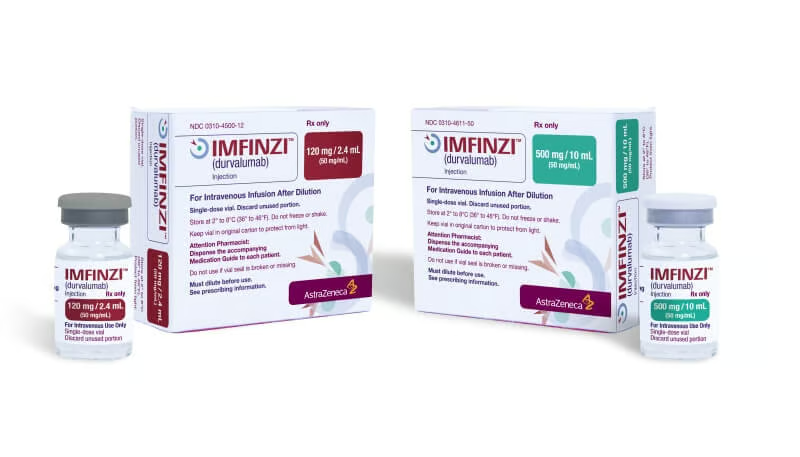
The United States Food and Drug Administration (FDA) has granted formal regulatory approval to AstraZeneca’s PD-L1 inhibitor, Imfinzi (durvalumab), for use as part of the first immunotherapy combination regimen cleared to treat adult patients navigating high-risk, non-muscle-invasive bladder cancer (NMIBC). The therapeutic clearance specifically targets individuals who have not previously received standard-of-care Bacillus Calmette-Guérin (BCG) treatment (BCG-naïve). The milestone regulatory green light introduces the premier immunotherapy combo to this curative-intent space, establishing the first meaningful clinical advancement for high-risk NMIBC in over three decades.
The underlying clinical parameters, trial efficacy metrics, and macroeconomic market profiles tracking the approval include:
-
Substantial Risk Reduction Profile: The federal agency’s decision was anchored in statistically significant evidence pulled from a pivotal Phase III clinical trial. The data demonstrated that adding one year of maintenance with Imfinzi to standard BCG induction and maintenance therapy reduced the objective risk of high-risk disease recurrence, progression, or death by 32% compared to maintaining the cohort on BCG treatment alone.
-
Sustained Disease-Free Survival Benefits: Across a mature median follow-up timeline of 61 months (exceeding five years), the structured Imfinzi-augmented regimen delivered an early and durable disease-free survival (DFS) advantage, with therapeutic separation materializing less than four months after initiating treatment. The overall safety and tolerability metrics of the biologic combination aligned cleanly with established clinical profiles.
-
Clinical Impact on Radical Organ Preservation: Neal Shore, M.D., head of the Carolina Urologic Research Center and co-principal investigator in the registration trial, highlighted that high-risk NMIBC patients historically endure frequent disease recurrences requiring iterative surgical interventions, often resulting in complete surgical removal of the bladder. According to AstraZeneca’s metrics, over 31,000 individuals in the U.S. were treated for high-risk NMIBC in 2024. Approximately half of those diagnosed with NMIBC are categorized as high-risk based on tumor grade, stage, and specific features, with up to 80% of high-risk patients experiencing recurrence within five years.
-
Sequential Regulatory Nodes and Market Positioning: The regulatory authorization establishes the second major bladder cancer milestone secured by Imfinzi. In March of last year, the antibody captured FDA approval to treat muscle-invasive bladder cancer (MIBC), deployed as a perioperative regimen alongside standard gemcitabine and cisplatin chemotherapy prior to surgery, followed by single-agent post-surgical maintenance. Furthermore, in the recent Phase III Volga trial, perioperative treatment with Imfinzi combined with Pfizer and Astellas’ antibody-drug conjugate Padcev demonstrated significant improvements in event-free survival (EFS) and overall survival (OS) for MIBC patients ineligible for or declining cisplatin-based chemotherapy.
The strategic product expansion solidifies Imfinzi’s operational role as a major macroeconomic asset for the British drugmaker, generating $6.1 billion in worldwide sales throughout 2025 — a 37% year-over-year surge propelled by global demand. Moving into the first quarter of 2026, Imfinzi sales jumped another 30% to reach $1.7 billion. This newly opened regulatory expansion supplementary intensifies AstraZeneca’s direct commercial competition against Merck’s blockbuster rival checkpoint inhibitor, Keytruda.
Source: https://www.fiercepharma.com/pharma/astrazeneca-gains-2nd-bladder-cancer-nod-key-expansion-imfinzi