

Summer is a time when children spend more time at home, are more energetic, and are always curious about exploring the world around them. It is also when the risk of household accidents rises significantly — including incidents where children accidentally drink or swallow chemicals.
A single bottle of cleaning solution left in the wrong place, or a chemical stored in a water bottle, can lead to serious consequences. Not only children, but adults too can accidentally ingest chemicals when they are stored in drinking bottles or left without clear labels.
Why Are Children Prone to Accidentally Ingesting Chemicals?
- Young children cannot yet distinguish between beverages and chemicals.
- Some chemicals have colors or scents that attract children’s curiosity.
- Chemicals are stored in places children can easily access.
- The habit of transferring chemicals into soda bottles or water bottles makes it easy for both children and adults to mistake them for drinks.
Common Household Chemicals
- Toilet bowl cleaner
- Floor cleaner
- Laundry bleach
- Drain unclogger
- Insecticides / pesticides
- Alcohol, gasoline, and solvents
- Dish soap or concentrated detergents
Warning Signs of Possible Chemical Ingestion
- Burning pain in the mouth or throat
- Unusual excessive drooling
- Coughing, wheezing, or difficulty breathing
- Vomiting
- Abdominal pain
- Burns or swelling of the lips or tongue
- Unusual fussiness, agitation, or sudden lethargy
Not every case will show symptoms immediately. Some chemicals can damage the digestive or respiratory tract even when the victim initially appears alert and shows no obvious signs.
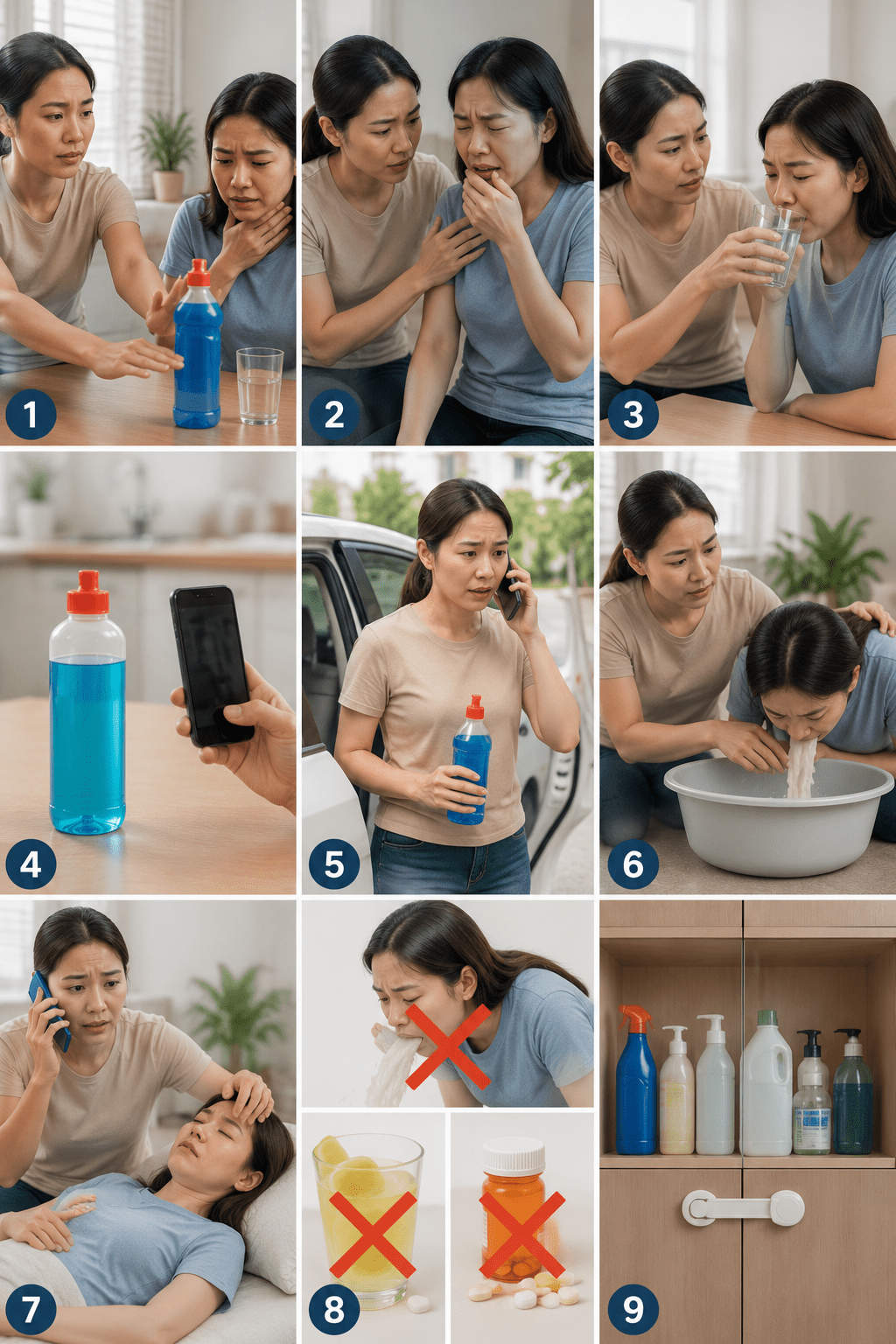
What to Do Immediately
- Move the chemical away from the victim and stay calm.
- Check whether the victim is conscious, responsive, and breathing normally.
- If the victim is conscious and cooperative, have them spit out any remaining chemical in their mouth and rinse gently with clean water.
- Keep the bottle, container, or packaging to provide information to medical personnel.
- If possible, bring the container or take a photo of the product label when going to a medical facility, to help identify the chemical and determine the appropriate treatment.
- Take the victim to the nearest medical facility or call emergency services when needed.
- If the victim has difficulty breathing, is having seizures, is drowsy, or is unconscious, call emergency services immediately.
- Even if no clear symptoms have appeared, the victim should still be evaluated by medical personnel if chemical ingestion is suspected.
What NOT to Do
- Do not induce vomiting.
- Do not attempt to neutralize the chemical with another chemical.
- Do not give the victim milk, lemon juice, medication, or any other substance as an “antidote” without guidance from medical personnel.
Prevention Is Always the Best Solution
- Always store chemicals in their original containers with clear labels.
- Never store chemicals in drinking bottles or food containers.
- Keep chemicals in a high place, under lock, or out of children’s reach.
- Read instructions and safety warnings carefully before use.
- Teach children never to drink or taste any liquid without an adult’s permission.
Chemicals do not need to be ingested in large quantities to cause harm. Even a small amount can burn the digestive tract, damage the respiratory system, or lead to serious complications.
In chemical poisoning cases, improper first aid can make the situation worse. Early recognition, correct first aid, and timely medical care are the key factors in minimizing harm.
Summer is a time for children to play and explore but safety must always come first. Just a few minutes spent checking how chemicals are stored at home today could prevent a serious accident tomorrow.