

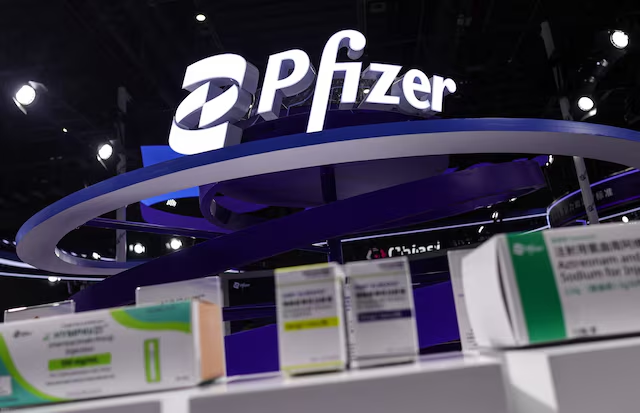
Pharmaceutical giant Pfizer has presented novel clinical trial data demonstrating that a monthly dose of its experimental obesity drug exhibits a similar side-effect profile to rival Novo Nordisk’s weekly injection, Wegovy. The compound was acquired through Pfizer’s strategic purchase of Metsera last year. The drugmaker targets this compound, named berobenatide, to become the inaugural GLP-1 weight-loss therapy commercialized as a monthly injection, establishing a structural product differentiation from blockbuster assets such as Wegovy and Eli Lilly’s Zepbound.
The documented clinical efficacy benchmarks, comparative adverse event metrics, and corporate portfolio strategies include:
-
Weight Reduction Metrics and Pharmacokinetic Profiles:
-
In February, Pfizer reported that berobenatide induced up to a 12.3% reduction in body weight among non-diabetic patient cohorts evaluated within its Phase II VESPER-3 clinical trial.
-
Jim List, Pfizer’s Chief Internal Medicine Officer, noted in an interview that due to the molecule’s exceptionally long half-life, berobenatide delivers a highly smooth pharmacokinetic profile compared to legacy weekly options. When administered on a monthly rotation, the physiological impact is heavily front-loaded and clustered close to the initial injection, rather than persisting continuously throughout the month.
-
-
Granular Adverse Event Metrics and Market Projections:
-
Data Readouts from the VESPER-3 Study: Data presented at the American Diabetes Association meeting in New Orleans indicated that the majority of enrolled patients experienced few or mild side effects. Gastrointestinal events were predominantly confined to early dosing timelines and manifested close to the injection event. The mean nausea rate tracked across all arms of the VESPER-3 study settled around 38%, while the mean vomiting rate logged at approximately 23,3%.
-
Comparative Analysis and Financial Expectations: The recorded vomiting incidence aligns with commercial viability forecasts published by JP Morgan analysts, who indicated investors were looking for a vomiting rate encapsulated within the 20-25% threshold or lower. For comparison, historical clinical data from Novo Nordisk’s landmark weight-loss trials revealed that approximately 25% of patients on Wegovy experienced vomiting, while roughly 44% reported nausea.
-
Protocol Refinements for Late-Stage Development: Because investigators observed a localized spike in adverse events when patients transitioned from a weekly titration to a monthly dose during the trial, Pfizer intends to adjust its downstream late-stage program to escalate the dosage parameters more gradually.
-
-
Strategic M&A Context and Pfizer’s Obesity Pipeline:
-
The investigational berobenatide asset forms the cornerstone of Pfizer’s revitalized obesity strategy, following its $10 billion acquisition of Metsera last year.
-
The corporate transaction successfully injected a new pipeline of metabolic therapies into Pfizer’s portfolio after the multinational drugmaker was forced to terminate two of its internally developed weight-loss candidates due to adverse liver safety signals.
-
Pfizer is leveraging the monthly dosing regimen of berobenatide to structurally differentiate its asset from prevailing weekly options on the market, arguing that reduced dosing frequency can optimize patient adherence and capture an alternative market segment of consumers.
-