

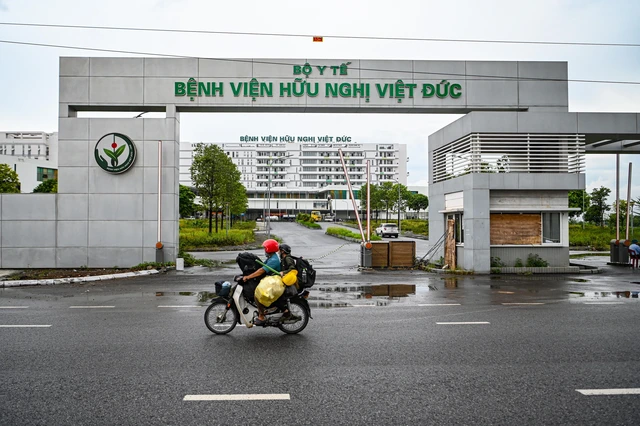
During a media briefing held on June 17, 2026, Dr. Duong Duc Hung, Director of Viet Duc University Hospital, announced that the hospital’s second campus, located in Ninh Binh Province (under the newly consolidated administrative boundaries), is projected to officially begin admitting patients by the end of this month. The large-scale medical complex has finalized all operational preparations regarding personnel, clinical workflows, and advanced equipment, holding the capacity to initiate comprehensive healthcare delivery within 12 hours of receiving its official regulatory license.
The documented phased bed-capacity strategies, rotating medical staff frameworks, and localized emergency surgical indicators feature:
-
Phased Bed Allocation Frameworks and Macro Healthcare De-escalation Goals:
-
Strategic Blueprint: Initiated in 2014 under a national sovereign directive to de-escalate patient volume pressures on central tier-one institutions, the second campus spans an expansive 21-hectare footprint with an ultimate design capacity of 1,000 beds. The infrastructure is engineered to lower clinical saturation at the primary Hanoi campus while providing high-tier specialized medicine closer to residents in the Red River Delta, thereby mitigating downstream travel and lodging costs for families.
-
Initial Scale Limitation: To ensure capital efficiency and prevent the underutilization of resources, the hospital will activate 300 beds during the introductory phase rather than launching the full 1,000-bed capacity. Executive leadership clarified that due to the specialized nature of a surgical institution, only 10% to 15% of presenting outpatients require immediate surgical intervention, with the remainder requiring internal medicine or active monitoring. The bed count will scale progressively in alignment with real-world patient volume trajectories.
-
-
Targeted Surgical Staging and Localized Trauma Emergency Integration:
-
Priority Indications: Prioritizing absolute patient safety, the newly established site will initially isolate and fast-track high-demand sub-specialties. These encompass emergency trauma, orthopedics, spinal medicine, gastroenterology surgery, and routine general surgical procedures.
-
Regional Care Optimization: Acute surgical emergencies—such as fractures and standard traumatic injuries occurring within the former Ha Nam zone and surrounding areas of the consolidated Ninh Binh Province—will be managed locally. This ensures clinical proficiency matching the main Hanoi site while eliminating critical transit delays previously incurred by emergency transfers to the capital.
-
-
Rotational Expert Clinical Pipelines and Final Regulatory Licensing Tracks:
-
Staffing Metrics: The operational model designates a staffing ratio of 1.2 to 1.5 physicians per active bed, establishing a rotating deployment matrix of approximately 400 senior doctors from the primary campus. Notably, the institution has proactively recruited and trained a specialized cohort of over 60 physicians over the past five years, specifically preparing them to operate independently across major surgical theaters at the new site.
-
Pending Legal Approvals: While internal logistics and medical frameworks are fully completed, inter-agency municipal authorities are finalizing the terminal legal procedures. These include compiling asymmetric as-built records, securing formal fire safety clearances, evaluating waste management systems, and approving localized clinical technique catalogs required for final licensure.
-