

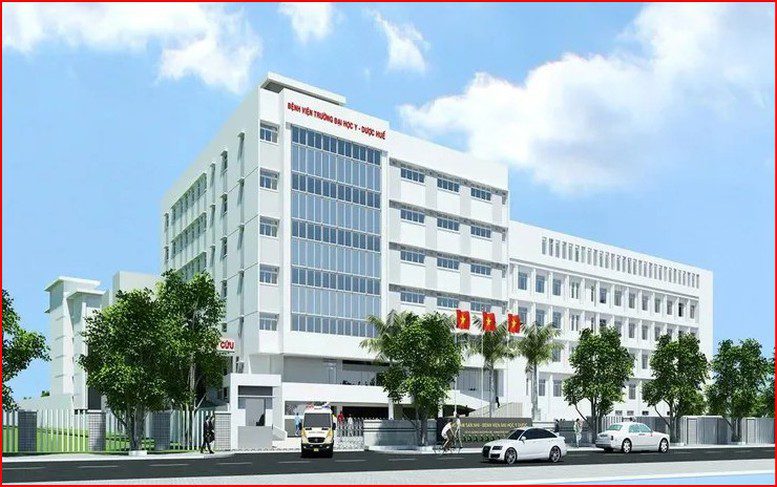
On behalf of the Government, Deputy Prime Minister Le Tien Chau has officially signed Decision No. 1096/QĐ-TTg dated June 19, 2026, ratifying the Master Plan to develop Hue University Hospital (under the University of Medicine and Pharmacy, Hue University). The strategic blueprint aims to transform the facility into a high-tech, specialized medical-academic institution, achieving advanced Southeast Asian hospital standards by 2030 and progressing toward international accreditation by 2045.
The documented two-phased bed capacity roadmaps, specialized organ transplantation/oncology matrices, and post-2035 financial autonomy targets feature:
-
Two-Phased Bed Capacity Roadmaps and Digitalization Targets for the 2030 Deadline:
-
The 2026 – 2030 Horizon: The hospital’s structural scale is projected to exceed 800 beds. The institution aims to secure the highest rating under the Ministry of Health’s hospital quality criteria, achieving national-tier excellence and regional-tier accreditation. Concurrently, 100% of clinical units must be integrated with advanced specialized equipment. The dual-appointment staff ratio is targeted at 30% to balance medical education, scientific research, and clinical delivery.
-
Digital Metrics: The hospital must execute at least 75% of approved technical portfolios and satisfy smart hospital criteria, shifting 100% of operational management and clinical workflows onto unified digital technology platforms.
-
The 2045 Long-Term Vision: The operational framework dictates expanding bed capacity to over 1,000 beds, establishing full modern specialties comparable to advanced nations, and achieving international standards.
-
-
Green Infrastructure, High-Quality Human Capital, and Financial Autonomy:
-
Land Expansion: The Government mandates expanding the hospital’s land reserves and optimizing spatial layouts. Structural blocks must undergo synchronized development focused on green, clean, safe, and convenient design principles.
-
Revenue Optimization: The hospital is ordered to diversify its legitimate revenue streams, targeting a minimum annual revenue growth of 10% to achieve full autonomy in both recurrent expenditures and capital investments after the 2035 fiscal milestone.
-
Human Resource Frameworks: The plan drives workforce expansion across clinical care, nursing, sub-clinical departments, infection control, information technology, and hospital governance. The institution will refine its incentive mechanisms and salary scales based on job descriptions and competencies, prioritizing international fellowships for staff in medically advanced nations.
-
-
Advanced Clinical Specialty Strategies and High-Tech Medical Transformations:
-
High-Acuity Interventions: Operational priority is granted to minimally invasive therapeutic procedures, high-tech clinical applications, and high-value diagnostic lab assays. The strategic clinical focus is strictly locked onto three vanguard areas: organ transplantation, oncology care, and the research and application of biomaterials.
-
Systemic Digitalization: The directive mandates integrating Artificial Intelligence (AI), advanced IT infrastructure, and medical big data management across clinical care, academic training, and administrative operations. The hospital quality management framework will strictly mirror advanced regional models, positioning patient safety as the absolute priority while maintaining rigorous, continuous infection control protocols.
-