

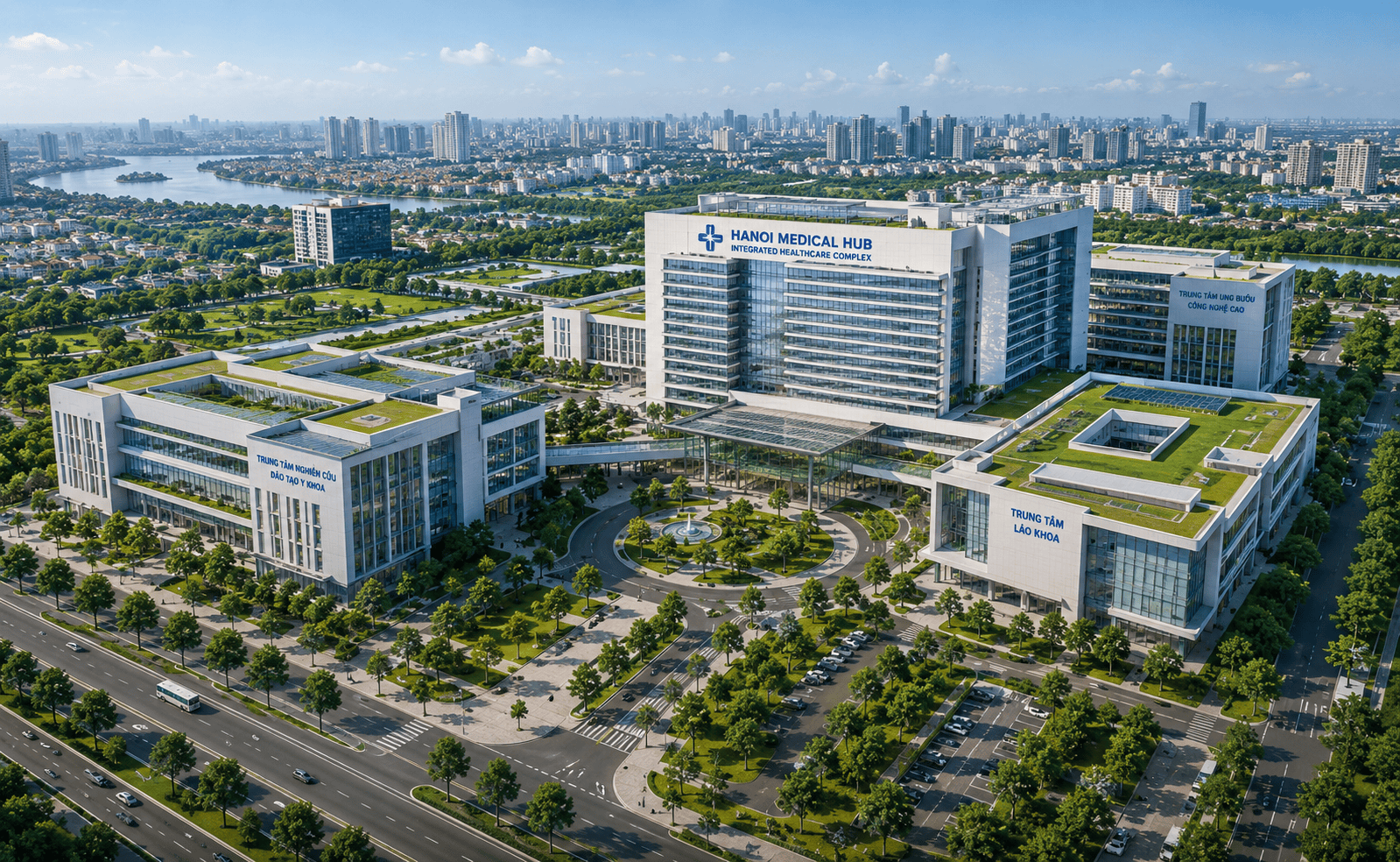
Hanoi is preparing for one of its most ambitious healthcare infrastructure transformations, with plans to develop five large-scale medical hubs at the city’s gateway areas alongside the construction of four new hospitals. The initiative is designed to expand healthcare capacity, improve access to specialized medical services and support the capital’s long-term urban development strategy.
Rather than simply increasing the number of hospital beds, the proposed medical hubs are intended to integrate multiple healthcare functions, including clinical services, medical education, scientific research, pharmaceutical development and specialized care. By distributing these resources across different parts of the city, Hanoi aims to build a more balanced and resilient healthcare network while easing pressure on overcrowded central hospitals.
The plan also reflects the city’s efforts to align healthcare infrastructure with projected population growth and rising demand for advanced medical services over the coming decades.
Moving beyond hospital expansion
Healthcare systems worldwide are increasingly shifting from isolated hospital projects toward integrated medical ecosystems capable of supporting treatment, innovation and workforce development simultaneously.
Hanoi’s proposed medical hubs represent this broader direction. By combining hospitals with research institutions, training facilities and healthcare-related industries, the city has the opportunity to strengthen collaboration across the healthcare value chain while improving access to comprehensive services for residents.
Expanding healthcare infrastructure outside the urban core may also improve regional accessibility, shorten travel times for patients and create more balanced utilization of healthcare resources across the metropolitan area.
Building capacity for future healthcare demand
Vietnam’s healthcare system is facing multiple long-term challenges, including population ageing, the growing burden of chronic diseases and increasing demand for highly specialized medical care.
Addressing these pressures requires more than additional hospital beds. Future healthcare systems will depend on integrated planning that supports prevention, diagnosis, treatment, rehabilitation, research and innovation within connected healthcare networks.
Investment in modern healthcare infrastructure also creates opportunities to accelerate the adoption of advanced medical technologies, strengthen clinical research capabilities and enhance the training of healthcare professionals.
Healthcare Insight Analysis
The significance of Hanoi’s plan extends beyond infrastructure development.
Globally, leading healthcare cities are moving toward integrated medical districts that bring together hospitals, universities, biotechnology research, pharmaceutical manufacturing and digital health innovation within interconnected ecosystems. Such models not only improve patient care but also foster medical innovation and attract investment.
Hanoi’s proposal reflects elements of this long-term approach. If implemented effectively, the medical hubs could become strategic platforms for expanding specialized care, supporting healthcare workforce development and strengthening Vietnam’s position within the regional healthcare landscape.
Equally important, distributing healthcare capacity across gateway locations may help address one of the country’s longstanding challenges—the concentration of specialized medical services in a limited number of tertiary hospitals. Improving geographic access could reduce patient congestion while allowing higher-level hospitals to focus on the most complex cases.
Market implications
The proposed expansion signals growing momentum for investment across Vietnam’s healthcare ecosystem.
Construction of integrated medical hubs is expected to generate demand for hospital development, medical equipment, digital health infrastructure, pharmaceutical services, laboratory networks and healthcare workforce training. The initiative may also create new opportunities for public-private partnerships as Vietnam continues modernizing its healthcare system.
As healthcare demand continues to rise, infrastructure projects that integrate clinical care, research and innovation are likely to become increasingly important in building a more sustainable, efficient and internationally competitive healthcare sector.