

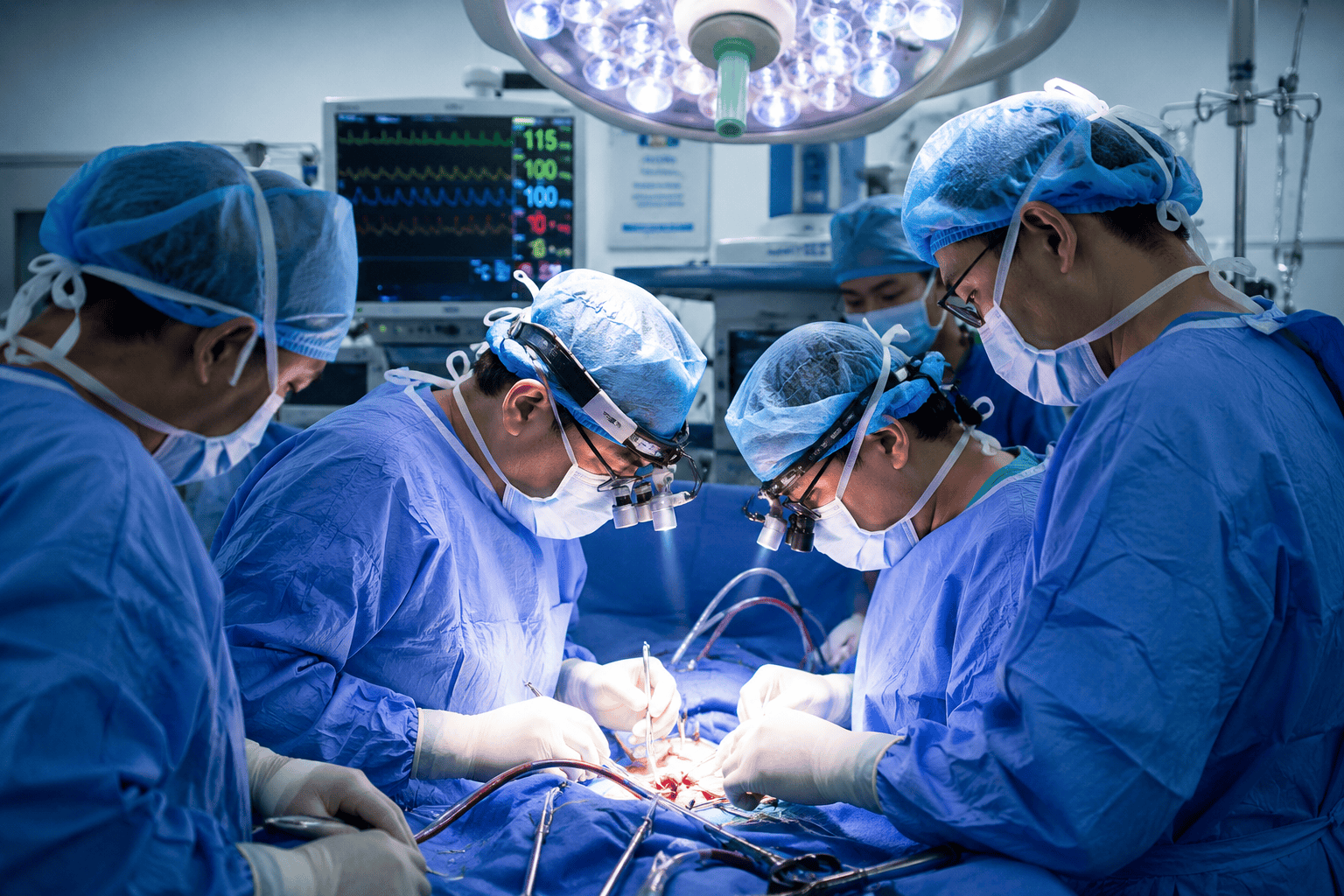
Vietnam’s heart transplant program has marked another important milestone as the University Medical Center Ho Chi Minh City successfully completed its fastest heart transplant to date, restoring circulation in just 65 minutes after the donor heart entered the operating room. The procedure saved the life of a 29-year-old patient with end-stage heart failure and represented the hospital’s 13th successful heart transplant.
The donor heart originated from a brain-dead donor at Viet Duc University Hospital in Hanoi before being transported urgently to Ho Chi Minh City through a coordinated nationwide organ donation and transportation network. The operation required seamless collaboration among the National Coordination Center for Human Organ Transplantation, multiple hospitals, aviation partners and traffic police to preserve the organ within the narrow transplantation window.
While the 65-minute surgical milestone has attracted public attention, healthcare experts emphasize that the achievement reflects years of investment in multidisciplinary transplant capabilities, standardized clinical protocols and highly coordinated logistics rather than surgical speed alone.
A stronger transplant ecosystem is taking shape
Heart transplantation is among the most complex procedures in modern medicine, requiring precise coordination from donor identification and organ allocation to transportation, surgery, intensive care and long-term post-transplant management.
Vietnam’s ability to perform increasingly sophisticated transplant procedures demonstrates that the country’s clinical capabilities are continuing to mature. Success now depends not only on surgical expertise but also on the efficiency of a nationwide ecosystem capable of connecting hospitals across regions within extremely limited timeframes.
The latest case illustrates how improvements in clinical coordination can significantly expand access to life-saving therapies for patients with advanced heart failure who have exhausted conventional treatment options.
More than a surgical achievement
Globally, leading transplant centers measure success through the strength of the entire transplant pathway rather than operating room performance alone.
Rapid organ transportation, standardized donor management, multidisciplinary collaboration and post-transplant intensive care all contribute directly to patient survival. Vietnam’s latest achievement demonstrates growing capability across each of these components, suggesting that the country’s transplant infrastructure is becoming increasingly integrated and resilient.
Equally important is the continuing expansion of public awareness surrounding organ donation. Every successful transplant reinforces the critical role of voluntary organ donation in increasing access to advanced therapies while encouraging broader participation in national donation programs.
Healthcare Insight Analysis
The significance of this case extends far beyond establishing a new institutional record.
It reflects the evolution of Vietnam’s transplant ecosystem into a more coordinated national network capable of linking donor hospitals, transplant centers, emergency transportation services and specialized clinical teams in real time. Such integration is essential for improving outcomes in organ transplantation, where every minute directly influences organ viability and patient survival.
As Vietnam continues investing in highly specialized medical services, transplant medicine is emerging as an important indicator of overall healthcare capability. Success in this field requires sustained investment in surgical expertise, critical care, laboratory medicine, logistics and national coordination mechanisms rather than excellence in a single department.
The achievement also highlights the growing importance of inter-hospital collaboration as Vietnam develops a more connected healthcare system capable of delivering complex, high-acuity care across geographical regions.
Market implications
The continued advancement of transplant medicine signals expanding opportunities across Vietnam’s healthcare ecosystem.
Growing transplant capacity is expected to increase demand for advanced surgical technologies, organ preservation systems, intensive care capabilities, laboratory diagnostics, immunosuppressive therapies and specialized workforce training. At the same time, strengthening the national organ donation and allocation network will remain a critical priority in expanding equitable access to transplantation.
For healthcare leaders, the latest milestone demonstrates that investment in integrated clinical networks can generate measurable improvements in both patient outcomes and the long-term capability of Vietnam’s healthcare system.