

Key Development
Cardiopulmonary resuscitation (CPR) remains one of the most critical emergency interventions available to the public, capable of sustaining blood circulation to the brain and vital organs during cardiac arrest until advanced medical care becomes available. Despite widespread awareness campaigns, uncertainty about when to initiate CPR continues to delay life-saving action.
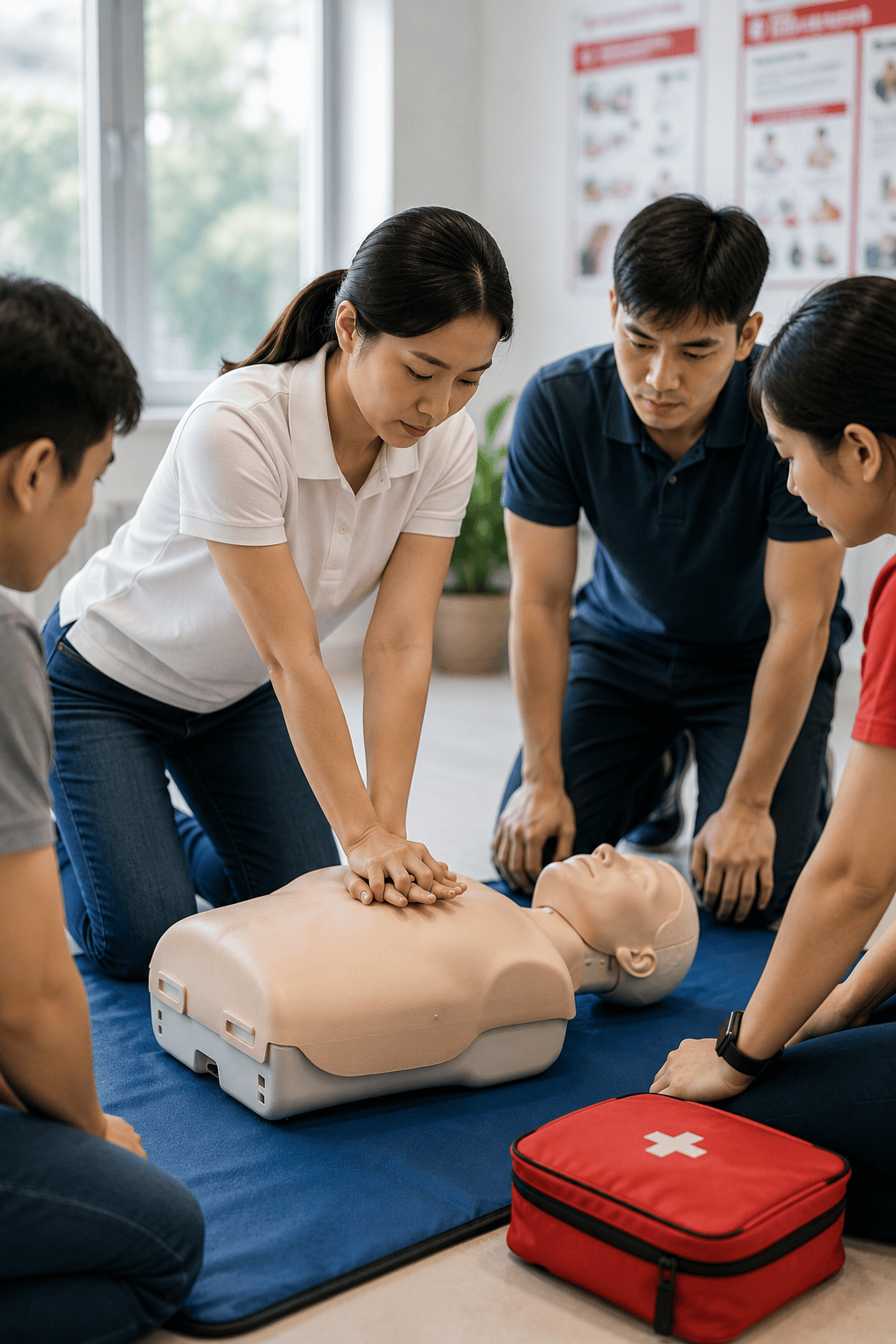
Current international resuscitation guidelines emphasize that CPR should begin immediately when two conditions are present simultaneously: the individual is unresponsive and is either not breathing or only gasping abnormally. Importantly, untrained bystanders are encouraged to perform Hands-Only CPR—continuous chest compressions without rescue breaths—for adults experiencing out-of-hospital cardiac arrest.
Equally important is recognizing situations where CPR is not appropriate. Loss of consciousness alone does not automatically indicate cardiac arrest, and unnecessary chest compressions may cause harm. Distinguishing cardiac arrest from other medical emergencies remains essential to effective first aid.
Why It Matters
• Early CPR can significantly improve survival by maintaining circulation until emergency medical services arrive.
• Delayed intervention remains one of the leading preventable factors associated with poor cardiac arrest outcomes.
• Hands-Only CPR has lowered barriers for public participation, increasing the likelihood that bystanders will intervene.
• Public education should emphasize recognizing cardiac arrest rather than memorizing complex resuscitation techniques.
• Expanding CPR awareness supports stronger community emergency preparedness and public health resilience.
Healthcare Insight Analysis
Out-of-hospital cardiac arrest continues to represent a major global public health challenge, with survival largely determined by the speed of recognition and immediate intervention rather than hospital treatment alone. Across many healthcare systems, the interval between collapse and the arrival of emergency responders remains the most vulnerable period in the “Chain of Survival.”
Healthcare organizations are therefore shifting their focus beyond professional emergency care toward strengthening community response capabilities. Simplified recommendations such as Hands-Only CPR reflect a broader strategy to remove psychological barriers that discourage bystander action. Research consistently demonstrates that immediate chest compressions, even when performed by individuals without formal medical training, are substantially more beneficial than taking no action while waiting for emergency services.
At the same time, public education increasingly prioritizes accurate recognition of cardiac arrest over procedural complexity. Many people mistakenly associate any unconscious individual with the need for CPR, while others delay intervention because they misinterpret gasping breaths as normal respiration. These misconceptions can lead either to unnecessary compressions or dangerous delays in treatment.
Healthcare Insight believes future improvements in cardiac arrest survival will depend not only on advances in emergency medicine but also on expanding health literacy across communities. Integrating CPR education into schools, workplaces, healthcare institutions, and public awareness campaigns can strengthen emergency preparedness while building public confidence to respond during the critical first minutes of an emergency.
The growing availability of Automated External Defibrillators (AEDs) in airports, shopping centers, offices, and public facilities further reinforces the importance of combining early recognition, immediate CPR, and rapid defibrillation as an integrated community response system.
Market Implications
As healthcare systems place greater emphasis on prevention and community resilience, CPR education is becoming an important component of population health strategies. Governments, hospitals, employers, educational institutions, and community organizations are increasingly investing in first-aid training, public-access AED programs, and digital learning platforms to improve emergency readiness.
For the healthcare ecosystem, these initiatives create opportunities for medical education providers, emergency response technology companies, simulation training organizations, and digital health platforms. Strengthening public capability to respond before professional care arrives not only improves patient outcomes but also enhances healthcare system resilience by extending life-saving capacity beyond hospital walls.