
Safety is not one person’s job — it is everyone’s responsibility
In any workplace, incidents can happen without warning: a minor workplace accident, someone fainting, a fire hazard, or simply a colleague needing urgent help. In those first critical minutes — before professional emergency responders can arrive — it is the people already at the scene who make the difference between a situation handled in time and a preventable tragedy.
This is why the concept of a “First Responder” has become increasingly important across organizations. It is not a role reserved for safety or medical teams — it is a capability that any employee can develop.
Who is a First Responder?
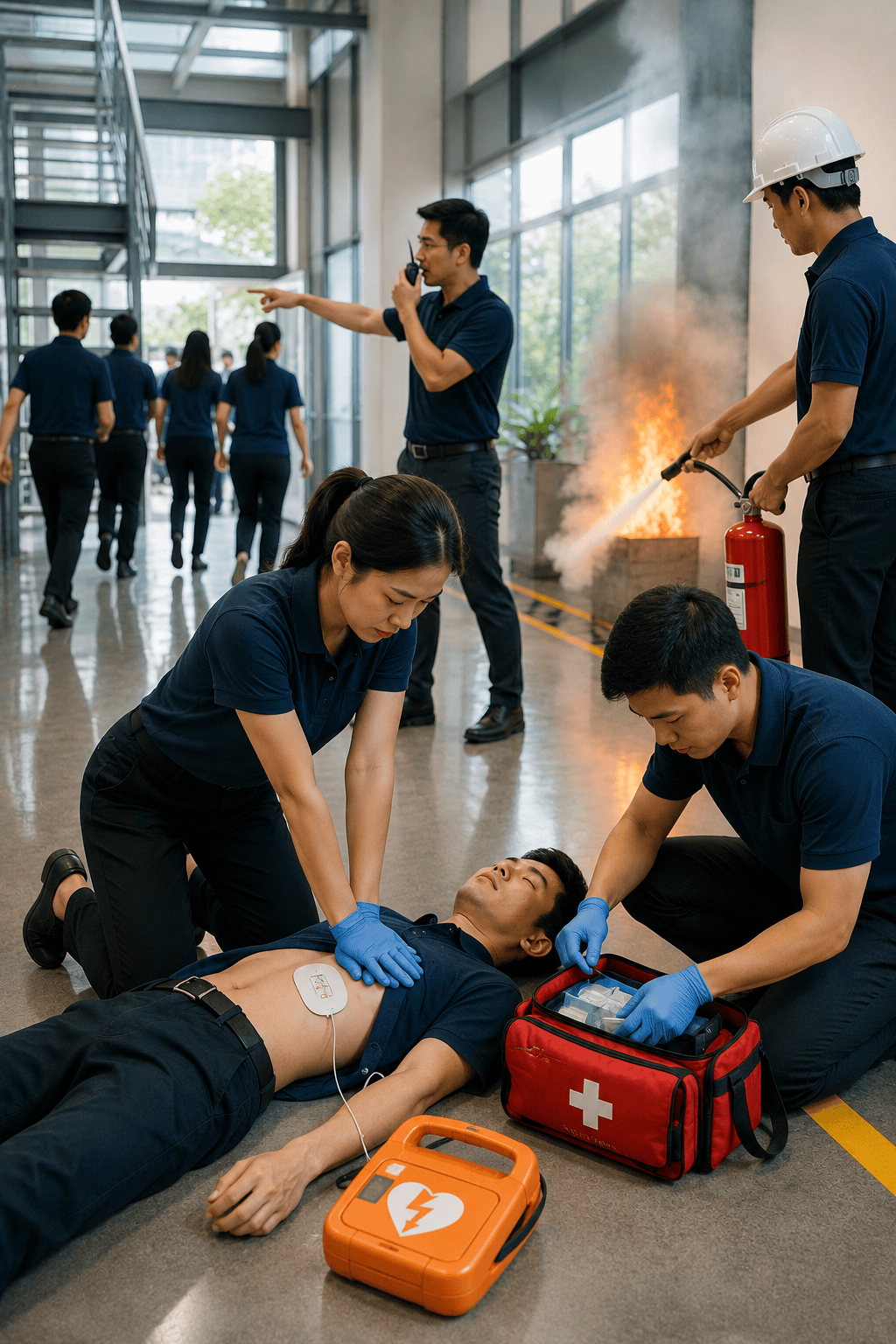
A “First Responder” is anyone present at the scene with the basic knowledge and skills to:
- Quickly assess the severity of a situation and ensure safety for themselves and their colleagues;
- Provide appropriate initial first aid while waiting for professional support;
- Activate the correct emergency response procedure (reporting, calling for medical help, evacuation, etc.);
- Stay calm, reassure, and provide emotional support to those affected.
Why should every employee be equipped with this mindset?
- Response speed determines outcomes. In an emergency, every minute matters — and people on-site always have a decisive time advantage over external responders.
- Safety is a collective responsibility, not an individual one. A safe workplace is not built by a handful of experts alone, but by the awareness and readiness of every individual within it.
- It fosters greater initiative and cohesion within an organization. Employees equipped with basic response skills feel more confident, more proactive, and more secure in their work environment.
How can someone become a First Responder?
- Take part in First Aid and CPR training programs;
- Participate in regular fire safety and emergency evacuation drills;
- Understand internal incident-reporting procedures and emergency contact points;
- Know the location of key safety equipment: fire extinguishers, first aid kits, evacuation maps;
- Build the habit of staying observant and speaking up whenever a safety risk is identified.
The Message
“You don’t need to be a medical expert to save a life — you just need to be present, properly equipped with knowledge, and willing to act.”
When every individual within an organization is ready to act at the right moment, the entire workforce becomes safer and more resilient in the face of the unexpected.