

Key Development
On the morning of September 3, 2026, the Ministry of Health (MOH) of Vietnam released a comprehensive policy response addressed to constituents in Ho Chi Minh City, detailing structural interventions designed to alleviate chronic overcrowding at central specialized hospitals, resolve local medical supply bottlenecks, and accelerate digital health integration:
-
Operationalizing the 3-Tier Technical Care Architecture: Enacted under the revised Law on Medical Examination and Treatment (effective January 1, 2025), Vietnam’s healthcare facilities have transitioned from geographic administrative tiers to three functional clinical strata: Initial Care, Basic Care, and Specialized Care. This functional stratification establishes a bi-directional referral pathway, directing acute complex pathology to tertiary centers while returning stabilized chronic disease cohorts to primary clinics for longitudinal management.
-
Activation of the Satellite Hospital Network Master Plan 2026–2030 (Decision 1068/QD-BYT): Issued on April 17, 2026, the strategy designates 54 core tertiary teaching hospitals to provide continuous clinical technology transfer to approximately 200 satellite municipal hospitals, tying facility performance to regional retention rates.
-
Nationwide Telemedicine Expansion (>1,500 Facilities): The national digital clinical consultation network now links over 1,500 healthcare facilities, enabling remote specialist consultations for complex cases at district health centers to minimize avoidable transfers.
-
Standardizing Primary Care Medical Equipment:
-
Circular No. 22/2026/TT-BYT (June 29, 2026): Establishes a mandatory standard equipment catalog comprising 159 specialized medical machines and diagnostic systems for commune- and ward-level health stations.
-
Circular No. 10/2026/TT-BYT (June 14, 2026): Regulates technical standards, utilization quotas, and decentralized procurement authorities for specialized healthcare technology.
-
Advancing legislative drafting for a standalone Law on Medical Devices alongside revisions to Decree 98/2021/ND-CP to secure supply chain transparency and prevent procurement disruptions.
-
-
Human Resource Deployment & Rural Medical Training:
-
Leveraging the National Target Program on Healthcare and Population 2026–2035 (National Assembly Resolution 262/2025/QH15 and Prime Ministerial Decision 37/2026/QD-TTg on counterpart funding).
-
The Volunteer Young Physicians Project has deployed 886 Specialist Level I physicians to underserved rural and island regions, with plans underway to train at least 500 additional specialists for primary healthcare stations. The “High-Quality Health Workforce Framework 2026–2035” will be submitted to the Government for formal enactment in Q3 2026.
-
-
Interoperable Electronic Health Records & Administrative Simplification: Implementing electronic personal health records (Decree 102/2025/ND-CP and Directive 17/CT-TTg) and Electronic Medical Records (EMR under Circular 13/2025/TT-BYT and Directive 04/CT-BYT), while reviewing inter-facility referral regulations to streamline patient transfer pathways.
Why It Matters
-
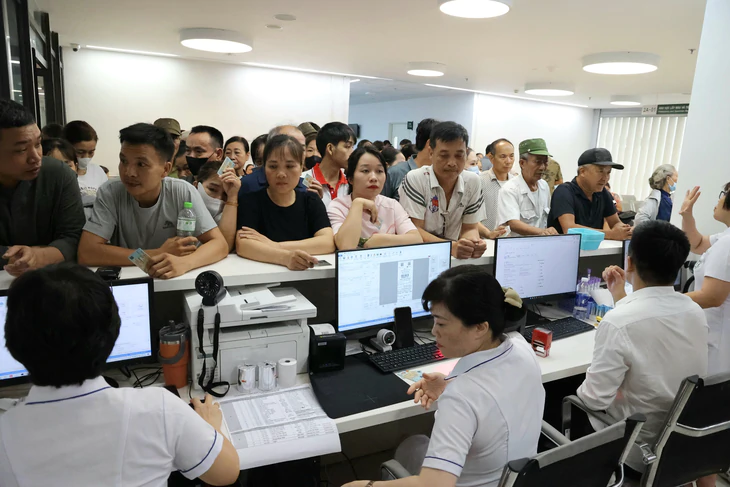
Addressing the Root Drivers of Tertiary Overcrowding: Overcrowding at central apex hospitals (such as Bach Mai, Cho Ray, and National Cancer Hospital K) stems primarily from patient skepticism regarding diagnostic accuracy and pharmaceutical availability at primary stations. Equipping commune clinics with the standardized 159-device catalog and deploying certified medical specialists restores public confidence in local care.
-
Remedying Local Procurement Friction: The Ministry clarified that gross national pharmaceutical supplies remain stable. Recent localized shortages were driven by administrative procurement planning deficiencies within individual hospital administrations. Revisions to the Law on Pharmacy and Decree 163/2025/ND-CP provide public hospitals with expedited import mechanisms and streamlined tender procedures.
-
Mandating Specialized Hospital Hubs in Every Province: Establishing at least one advanced tertiary facility in each province reduces the need for patients to travel to Hanoi or Ho Chi Minh City, lowering indirect healthcare expenditures for families.
Healthcare Insight Analysis
From the perspective of Healthcare Insight, the Ministry of Health’s policy release on September 3, 2026, illustrates Multi-Tier Health System Decentralization & Primary Care Modernization.
The strategic roadmap highlights three systemic governance principles:
-
Decoupling Clinical Capability from Administrative Boundaries: Transitioning from four administrative levels to three functional capability tiers allows well-equipped district health centers to deliver complex interventions without being constrained by legacy administrative boundaries.
-
Health Economics of Localized Chronic Disease Management: Non-communicable diseases (hypertension, type 2 diabetes, cardiovascular disease) account for over 70% of Vietnam’s national disease burden. Outfitting primary health stations with standardized diagnostics and routine medications allows chronic conditions to be managed locally, freeing up tertiary clinical capacity.
-
Digital Health Infrastructure as a Functional Gateway: Enforcing unified PACS, LIS, and EMR integration eliminates redundant diagnostic testing during hospital transfers and provides the technical foundation to eliminate unnecessary administrative transfer approvals.
Market Implications
-
Substantial Procurement Demands for Medical Device Manufacturers: The 159-equipment catalog specified under Circular 22/2026/TT-BYT will drive public procurement tenders for ultrasound machines, ECG systems, and point-of-care laboratory analyzers across more than 10,000 commune health stations through 2030.
-
Expansion Windows for Domestic Digital Health Integrators: Mandating universal EMR and telemedicine connectivity creates recurring integration opportunities for enterprise IT vendors (such as VNPT, Viettel, and FPT IS).
-
Channel Growth for Domestic GMP Pharmaceuticals: Domestic pharmaceutical manufacturers meeting WHO-GMP and EU-GMP standards will see expanded distribution volumes as social health insurance drug formularies are decentralized to community health clinics.
Policy & Operational Summary Matrix: Vietnam Primary Care Modernization Strategy
| Strategic Pillar | Regulatory Enactment & Policy Vehicle | Targeted Deliverables & Operational Metrics |
| Care Tier Realignment | Law on Medical Exam & Treatment 2023 | 3 Functional Tiers: Initial, Basic, Specialized. |
| Satellite Network Expansion | Decision 1068/QD-BYT (April 17, 2026) | 54 Core hospitals mentoring ~200 satellite centers. |
| Telemedicine Deployment | Nationwide digital clinical link | >1,500 Connected hospitals for remote consultations. |
| Equipment Standardization | Circular 22/2026/TT-BYT (June 29, 2026) | Standardized 159 medical device catalog for clinics. |
| Supply Chain Governance | Revised Pharmacy Law, Decree 163/2025/ND-CP | Accelerated rare-drug imports; transparent hospital bidding. |
| Clinical Workforce Scaling | Young Physicians Program & National Targets | 886 Specialists deployed; 500 more in training. |
| Digital Interoperability | Circular 13/2025/TT-BYT, Directive 04/CT-BYT | EMR, PACS, LIS integration; direct transfer pathways. |