

Key Development
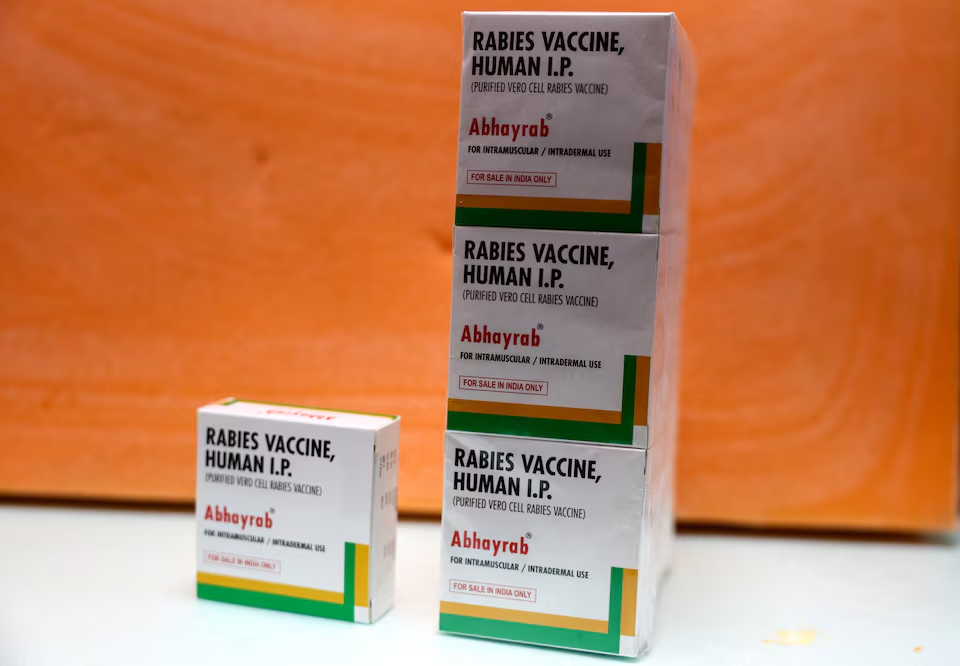
India’s pharmaceutical regulator is investigating vials labelled as Abhayrab, a widely used rabies vaccine, after samples from batch KE25012 failed a potency test and raised concerns that the products may be spurious rather than legitimately manufactured substandard vaccine.
The vials were reportedly seized from an unlicensed premises in Delhi. Indian Immunologicals Ltd. (IIL), the manufacturer of Abhayrab, said it did not manufacture the seized products and identified discrepancies involving the labeling, QR codes and vial-cap characteristics when compared with its official batch records. Indian authorities are now investigating the origin and distribution pathway of the suspect products.
The distinction is strategically important. If confirmed as counterfeit, this would represent more than a conventional manufacturing quality failure: it would indicate a breach of pharmaceutical supply-chain integrity involving a critical, time-sensitive biological product.
Why It Matters
- Rabies leaves virtually no margin for product failure. Once clinical symptoms develop, rabies is essentially fatal. Effective post-exposure prophylaxis therefore depends on timely access to authentic, potent vaccine and, where clinically indicated, rabies immunoglobulin.
- Counterfeit vaccines create a different risk profile from defective manufacturing. A manufacturing deviation can generally be traced through GMP systems and controlled recalls. Spurious medicines potentially involve unauthorized wholesalers, falsified packaging, diverted inventories and gaps in downstream distribution oversight.
- India represents a high-impact market. WHO cites recent Indian estimates of approximately 9.1 million animal bites annually and around 5,726 human rabies deaths per year, underscoring how important reliable post-exposure vaccination remains to the healthcare system.
- The incident has international implications. IIL exports Abhayrab to more than 40 countries, while the company holds a substantial position in India’s rabies vaccine market. Even when legitimate supply remains unaffected, regulators and procurement organizations may intensify authentication and traceability requirements following such events.
Healthcare Insight Analysis
The central issue is not simply whether one vaccine batch passed or failed laboratory testing. The more consequential question is whether healthcare systems can verify product authenticity from factory release to administration at the patient level.
Vaccines and biologics are particularly vulnerable to the consequences of weak distribution governance because their clinical effectiveness depends not only on manufacturing quality but also on correct storage, cold-chain management, authorized distribution and product traceability.
The Abhayrab case therefore highlights an emerging strategic priority for pharmaceutical companies: anti-counterfeit infrastructure must increasingly become part of quality management rather than remain primarily a packaging or security function.
Serialization, interoperable track-and-trace systems, tamper-evident packaging, authenticated QR verification and stronger distributor qualification can help create a more defensible supply chain. However, technology alone is insufficient. Regulators, manufacturers, hospitals, pharmacies and wholesalers need systems capable of rapidly reconciling questionable stock against legitimate manufacturing and distribution records.
For vaccine manufacturers, the reputational dimension is equally important. Even when counterfeit products originate completely outside the authorized supply chain, patients may initially associate a safety alert with the brand printed on the vial. Rapid forensic investigation and transparent communication therefore become critical components of brand-risk management.
Market Implications
The incident could accelerate regulatory attention toward serialization, distributor licensing and digital product authentication across India’s pharmaceutical market.
Government procurement programs and private healthcare providers may also strengthen requirements around supplier verification, batch traceability and authorized distribution channels—particularly for vaccines, biologics and other products where therapeutic failure can have irreversible consequences.
More broadly, the case reinforces an important industry shift: pharmaceutical quality is no longer defined solely by what happens inside a GMP-certified factory.
Increasingly, the integrity of the entire pathway from manufacturing line to patient is becoming part of the product itself.