

Key Development
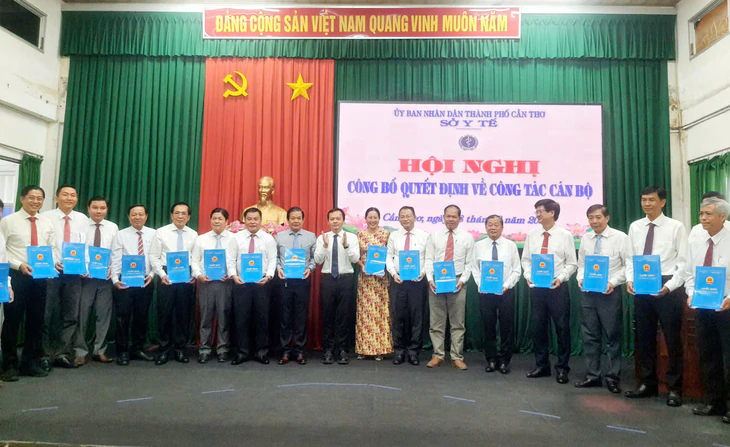
On August 28, 2026, the Can Tho Municipal Department of Health held an official ceremony to confer executive appointment decisions across 20 affiliated regional general hospitals. These institutions were formally reconstituted from 20 former regional health centers in accordance with organizational restructuring decrees issued by the Can Tho People’s Committee.
Scope of administrative restructuring and appointments:
-
Appointment decisions were conferred upon 19 hospital directors, 47 vice directors, and 451 heads and deputy heads of administrative and clinical departments (including chief accountants, chief nurses, chief midwives, and chief technicians).
-
Structurally, the majority of newly appointed hospital directors previously served as directors of the corresponding regional health centers (with the exception of Long My Regional General Hospital, led by an acting vice director).
-
The 20 institutions comprise: Binh Thuy, Cai Rang, Thoi Lai, O Mon, Thot Not, Vinh Thanh, Vi Thuy, Long My, Phung Hiep, Chau Thanh, Chau Thanh A, Cu Lao Dung, Ke Sach, Soc Trang, Vinh Chau, Nga Nam, My Xuyen, Long Phu, My Tu, and Thanh Tri.
-
Following this structural realignment, Can Tho administers 21 regional general hospitals, including 5 facilities classified as Grade II institutions: Thot Not, O Mon, Long My, Vinh Thanh, and Nga Bay.
-
Director of the Can Tho Department of Health, Assoc. Prof. Dr. Hoang Quoc Cuong, noted that this represents an extensive administrative reorganization designed to discontinue the combined health center model by transferring preventive healthcare functions, infrastructure, and personnel directly to commune- and ward-level health stations within September 2026.
Why It Matters
-
Separation of clinical delivery from public health mandates: Integrating curative medicine and public health (expanded immunization programs, vector control, population registries) within a single entity frequently produced administrative conflict and dispersed clinical investment. The updated model allows regional hospitals to concentrate on inpatient surgical and acute clinical capabilities, while primary commune stations manage preventive health and community-based primary care.
-
Alignment with the revised Law on Medical Examination and Treatment: Establishing dedicated general hospitals supports the national transition toward a three-tiered clinical capability model (initial, basic, and specialized care), providing district populations with secondary hospital infrastructure that helps mitigate patient transfers to central municipal facilities.
-
Transition from administrative compliance to enterprise governance: Leadership instructed hospital directors to shift toward digital management systems, transparent financial accounting, patient satisfaction metrics, and achieving Tier 2 financial autonomy (full operational cost recovery) in the near term.
Healthcare Insight Analysis
From the perspective of Healthcare Insight, the appointment of leadership across 20 regional general hospitals in Can Tho demonstrates Primary Healthcare Decentralization and Public Hospital Financial Autonomy.
The restructuring highlights three core healthcare management trends:
-
Operational specialization at the district level: Reallocating preventive healthcare responsibilities to commune-level health stations enables local tracking of chronic non-communicable diseases and municipal disease surveillance. Concurrently, regional general hospitals can dedicate capital budgets toward surgical suites, intensive care beds, and advanced diagnostic imaging.
-
The operational demands of Tier 2 financial autonomy: Operating as independent hospital units requires facilities to cover regular operating expenditures through clinical service revenues. Hospital leadership must manage healthcare economics, patient bed-occupancy rates, health insurance reimbursement schedules, and socialized clinical services.
-
Outcome-based management metrics: Establishing a 1-year performance milestone evaluating new clinical technique adoption, patient satisfaction, and staff retention introduces accountability frameworks into the regional public hospital sector.
Market Implications
-
Increased procurement of clinical and diagnostic equipment: 20 regional hospitals will initiate capital procurement for CT scanners, digital radiography systems, color Doppler ultrasound units, and laparoscopic surgical towers to retain local patient volume.
-
Realignment of pharmaceutical and medical consumable supply chains: Hospital formularies will reallocate expenditure toward acute therapeutics, cardiovascular medications, and specialized surgical consumables, while public immunization biologicals and epidemic chemicals transition to municipal preventive health centers.
-
Regional competition for qualified medical personnel: Facilities seeking accreditation upgrades and operational growth will implement targeted incentive packages to recruit and retain specialist physicians and specialized nursing staff across the Mekong Delta region.
Structural Summary Matrix: Leadership Reorganization Across 20 Regional Hospitals (Can Tho, 08/2026)
| Parameter | Operational Specification | Strategic Significance & Governance Scope |
| Governing authority | Can Tho Department of Health | Executed and conferred on August 28, 2026 |
| Restructured institutions | 20 Regional general hospitals | Reconstituted from integrated regional health centers |
| Total appointments conferred | 19 Directors, 47 Vice Directors, 451 Department Leads | Comprehensive executive team deployment |
| Grade II classified hospitals | 5 Facilities (Thot Not, O Mon, Long My, Vinh Thanh, Nga Bay) | Core regional clinical hubs |
| Preventive handover timeline | Transfer to commune stations within September 2026 | Separates acute care from preventive public health |
| Financial governance target | Achieve Tier 2 financial autonomy | Target complete operational cost self-sufficiency |
Source: https://tuoitre.vn/tp-can-tho-bo-nhiem-giam-doc-20-benh-vien-da-khoa-khu-vuc-100260828134648356.htm