

Key Development
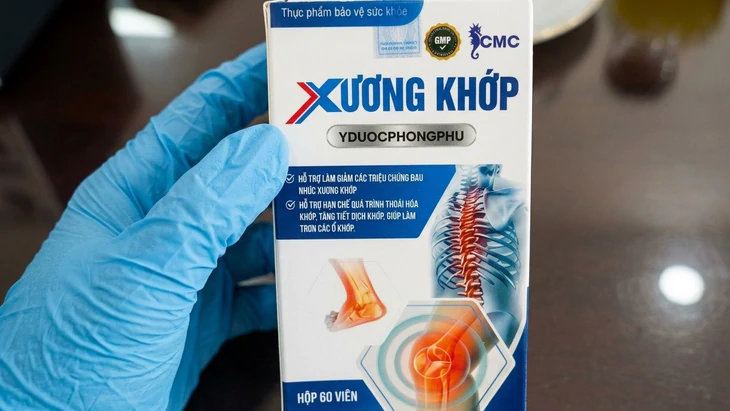
On September 9, 2026, public health authorities in Vietnam confirmed that the Quang Tri Center for Drug, Cosmetic, and Food Testing concluded quality compliance testing on commercial samples of YDUOCPHONGPHU joint health dietary supplement, procured through unannounced market surveillance at Kim Thoa Pharmacy (Dien Sanh Market, Dien Sanh Commune, Quang Tri Province).
Laboratory assays revealed severe product non-compliance, indicating deliberate formulation adulteration and complete absence of the declared active ingredient:
-
Commercial product identification:
-
Product Name: YDUOCPHONGPHU Joint Health Dietary Supplement (Box of 60 tablets).
-
Product Registration Number: 9352/2020/DKSP.
-
Batch Number: 012026; Manufacturing Date: January 20, 2026; Expiration Date: January 20, 2029.
-
Manufacturing Entity: Phong Phu Pharmaceutical JSC (Address: No. 55 Market Area, Quynh Do Village, Dai Thanh Commune, Hanoi).
-
-
Complete absence of declared active Glucosamine (0% active pharmaceutical equivalent):
-
According to official packaging labeling and approved internal product specifications, each tablet was declared to contain 200mg of Glucosamine sulfate 2NaCl (equivalent to 125.61mg of pure active Glucosamine) formulated to relieve joint pain, support synovial fluid production, and slow osteoarthritis progression.
-
Confirmatory analytical assays executed by the Quang Tri Testing Center and verified through independent cross-testing at the National Institute for Food Control (NIFC) yielded identical findings: no detectable traces of Glucosamine were identified within the formulation.
-
-
Microbial and fungal contamination exceeding statutory thresholds:
-
Total aerobic microbial counts, alongside total yeast and mold counts, exceeded permissible limits under national nutraceutical safety regulations by multiple orders of magnitude.
-
Average tablet mass deviated significantly below baseline product specifications, indicating systematic sub-filling during tableting operations.
-
-
Regulatory next steps: The Quang Tri testing agency escalated the findings to the Quang Tri Department of Health, the Vietnam Food Administration (Ministry of Health), and municipal market surveillance bodies to execute nationwide recalls, product seizures, and corporate punitive measures.
Why It Matters
-
Direct risk to chronic osteoarthritis patients: Degenerative joint disease is a leading cause of chronic mobility impairment among older adults. Exogenous glucosamine provides essential biochemical building blocks for glycosaminoglycans and proteoglycans required for articular cartilage repair and joint lubrication. Distributing biologically inactive tablets deprives patients of therapeutic management, allowing joint deterioration to progress unchecked.
-
Microbiological hazards and mycotoxin exposure risks: Excessive bioburden levels of aerobic bacteria, yeasts, and environmental molds pose significant risks of acute gastroenteritis and systemic toxicity. Ingesting mold-contaminated oral solids exposes vulnerable elderly cohorts to toxic secondary metabolites (mycotoxins) that impair hepatic and renal function.
-
Structural vulnerabilities in post-market nutraceutical monitoring: The findings expose operational loopholes under Decree 15/2018/ND-CP, where manufacturers obtain initial market registration through compliant pilot dossiers, but subsequent commercial batches eliminate high-cost active ingredients to maximize operational margins while distributing products into remote rural retail channels.
Healthcare Insight Analysis
From the perspective of Healthcare Insight, the complete absence of glucosamine in YDUOCPHONGPHU tablets on September 9, 2026, illustrates Economically Motivated Adulteration (EMA) and Compliance Failures in Dietary Supplement Manufacturing.
The enforcement data underscores three systemic industry realities:
-
The mechanics of deliberate ingredient omission: Glucosamine sulfate raw material constitutes the primary cost driver in joint supplement formulations. Omitting 100% of the active ingredient across commercial production runs points toward deliberate economic adulteration rather than unintentional manufacturing batch variation.
-
Systemic breakdown of manufacturing hygiene standards: Substantial bacterial and mold overgrowth points to severe environmental control failures at the manufacturing facility, including inadequate cleanroom airflow handling, unvalidated water loops, and unhygienic storage of bulk excipients prior to compression.
-
The indispensable role of decentralized provincial quality surveillance: Proactive sampling by provincial testing centers and rapid validation by the National Institute for Food Control (NIFC) remain essential to identify non-compliant products distributed outside tier-1 urban pharmacy networks.
Market Implications
-
Coordinated nationwide recall directives: The Vietnam Food Administration is expected to issue formal recall notices directing regional pharmacy chains, traditional retailers, and wholesale distributors to quarantine and destroy all distributed units of batch 012026.
-
Targeted cGMP facility audits of domestic supplement packagers: Regulatory inspectors will increase unannounced quality audits across contract supplement manufacturing plants in the Hanoi industrial corridor, focusing on raw material reconciliation, batch manufacturing records (BMR), and pre-release certificate of analysis (COA) verification.
-
Market flight toward certified, verified wellness formulations: Chronic joint disease consumers will increasingly shift purchasing toward established pharmaceutical-grade manufacturers holding WHO-GMP certifications or verified imported nutraceutical brands with authenticated supply chains.
Analytical Quality Comparison Matrix: YDUOCPHONGPHU Joint Tablet (Batch 012026)
| Quality Parameter | Declared Manufacturer Specifications | Laboratory Assay Results | Regulatory Assessment & Clinical Impact |
| Active Glucosamine content | 125.61 mg/tablet (200mg Glucosamine sulfate) | Non-detectable (0%) | Severe adulteration; complete lack of efficacy |
| Aerobic microbial count | Within permissible national limits | Exceeded limits by multiple times | Risk of infectious gastrointestinal inflammation |
| Total yeast and mold count | Within permissible national limits | Exceeded limits by multiple times | Potential exposure to toxic fungal mycotoxins |
| Average tablet mass | Conforming to approved internal standard | Significantly below standard | Quantitative sub-filling and material cut |
| Testing authority verification | Manufacturer self-declaration dossier | Quang Tri Testing Center & NIFC | Independently verified analytical non-compliance |