
Key Development
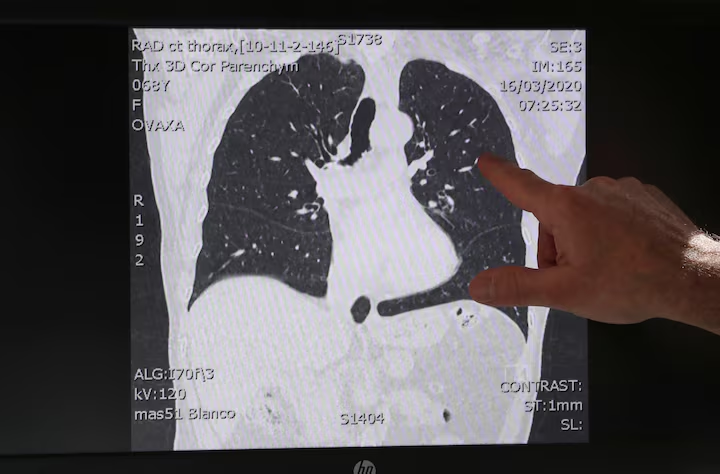
Roivant Sciences has delivered a significant clinical catalyst for its respiratory pipeline after mosliciguat met both primary and secondary endpoints in the Phase 2 PHocus study in pulmonary hypertension associated with interstitial lung disease (PH-ILD), a severe form of Group 3 pulmonary hypertension with substantial unmet treatment need.
In the 135-patient global study, mosliciguat produced a 56.3% placebo-adjusted reduction in pulmonary vascular resistance (PVR) at Week 16. Functional and cardiac biomarkers moved in the same direction: six-minute walk distance improved by 35.2 meters versus placebo, while NT-proBNP declined by 53.2%. Roivant has already initiated the Phase 3 PHrontier study, currently designed to enroll approximately 375 patients worldwide.
The market immediately recognized the potential implications. Roivant shares rose roughly 17% following the announcement, while a J.P. Morgan analyst cited by Reuters indicated that the data could support an opportunity above his previous US$1.5 billion risk-adjusted peak-sales estimate for PH-ILD.
Why It Matters
- A potentially differentiated mechanism: Mosliciguat is a once-daily inhaled soluble guanylate cyclase (sGC) activator, giving Roivant a mechanism distinct from the inhaled prostacyclin therapies that currently anchor the PH-ILD market.
- Multiple efficacy signals strengthen the Phase 2 readout: Improvements across PVR, exercise capacity and NT-proBNP make the dataset more strategically meaningful than success on a single surrogate endpoint alone.
- Convenience could become a competitive factor: A once-daily dry-powder inhaler could potentially reduce treatment burden compared with therapies requiring more frequent administration.
- The commercial opportunity is meaningful: Roivant estimates approximately 200,000 PH-ILD patients across the U.S. and Europe.
- Phase 3 execution now becomes the critical value inflection point: Strong Phase 2 results raise expectations, but durability, clinical outcomes, safety and reproducibility in a larger population will ultimately determine regulatory and commercial value.
Healthcare Insight Analysis
The deeper story is not simply that Roivant has another positive clinical readout. Mosliciguat illustrates how biotech asset selection and development execution can rapidly transform the economics of an overlooked molecule.
Roivant’s Pulmovant licensed worldwide rights to mosliciguat from Bayer for approximately US$14 million upfront, with up to US$280 million in development, regulatory and sales milestones plus tiered royalties.
That structure now looks increasingly important. If Phase 3 confirms the efficacy profile, Roivant could have converted a relatively modest upfront investment into a late-stage respiratory asset with potential blockbuster economics.
Strategically, mosliciguat may also matter beyond monotherapy. Pulmonary hypertension treatment has increasingly moved toward mechanism-based combinations. If PH-ILD follows a similar evolution, a differentiated sGC activator could potentially complement rather than merely replace existing therapies. That would expand the addressable opportunity while changing competition from a simple “winner-versus-incumbent” model toward a multi-drug treatment architecture.
Market Implications
For Roivant, PHocus materially strengthens pipeline diversification and increases the importance of Pulmovant within the group.
For United Therapeutics and other pulmonary-hypertension developers, the result signals that competition in PH-ILD could increasingly shift toward differentiated mechanisms, dosing convenience and combination strategies rather than incremental reformulations alone. United Therapeutics generated US$452.6 million from the Tyvaso franchise in Q2 2026, illustrating the commercial significance of the inhaled pulmonary-hypertension market.
For biopharma investors, the case reinforces a broader industry lesson: value creation does not always require discovering a molecule internally. Identifying underdeveloped assets, securing global rights at disciplined economics and executing focused clinical development can produce substantial strategic value.
The next question is therefore no longer whether mosliciguat has shown activity. It is whether Roivant can reproduce that signal at Phase 3 scale — and turn clinical differentiation into a new commercial standard in PH-ILD.