

Key Development
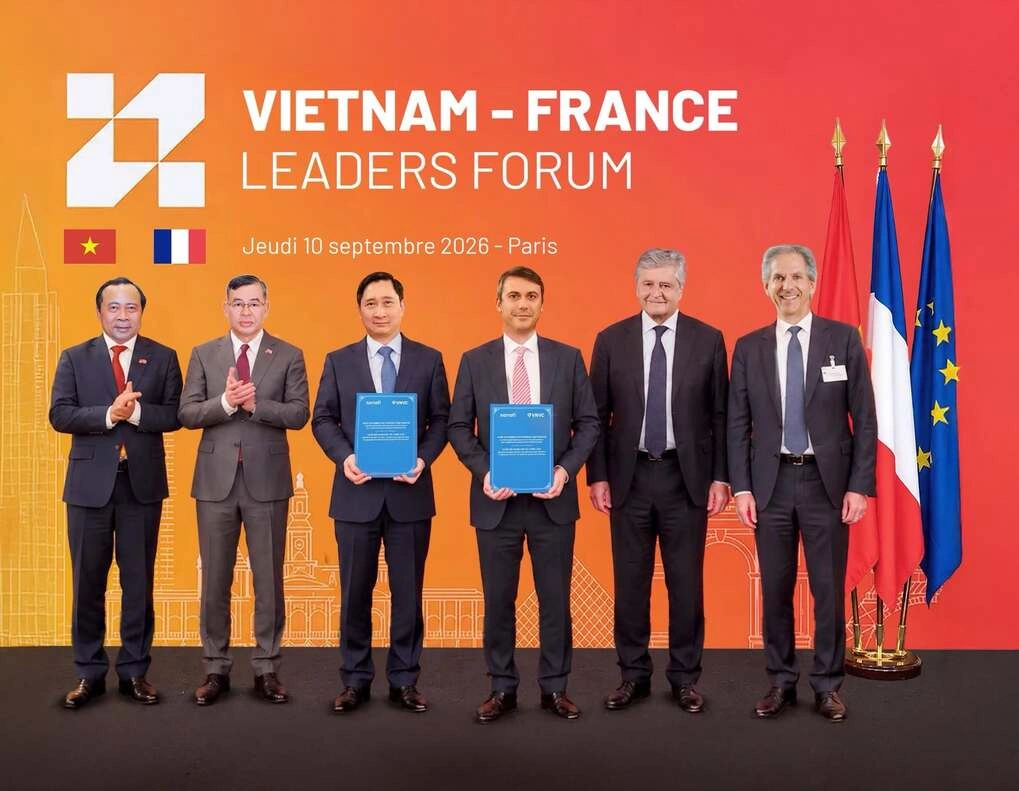
Vietnam is moving closer to a significant shift in its vaccine industry: from primarily accessing international products to building domestic manufacturing capabilities for higher-value, technologically advanced vaccines.
VNVC and Sanofi have prioritized three vaccines for production in Vietnam: a six-in-one vaccine containing an acellular pertussis component, seasonal influenza vaccine, and meningococcal vaccine. Under the current roadmap, VNVC’s facility is expected to be completed in 2027, begin production in 2028 and move toward commercialization from 2029. Its first phase represents an investment of more than VND2.5 trillion with designed capacity of up to 120 million doses annually.
More importantly, this is developing into more than a standalone manufacturing project. Sanofi is also working with Vietnam’s National Institute for Control of Vaccines and Biologicals between 2026 and 2029 on professional training and advanced vaccine-testing techniques — suggesting that localization is extending into quality control and regulatory capability.
Why It Matters
- Supply security: Domestic manufacturing could reduce exposure to international supply-chain disruptions for vaccines with significant local demand.
- Moving up the value chain: The strategic value lies not simply in operating production lines, but in absorbing manufacturing know-how, testing capabilities, quality systems and eventually R&D expertise.
- Alignment with national policy: Next-generation vaccines are classified among Vietnam’s strategic technology products, while the country aims to master production technologies for 15 vaccines by 2030 at standards comparable with international benchmarks.
- Regional opportunity: If the facility achieves its targeted WHO-GMP, EU-GMP and FDA-cGMP standards, it could provide a foundation for Vietnam to participate more deeply in ASEAN and global vaccine supply chains.
Healthcare Insight Analysis
The most important signal from the Sanofi–VNVC partnership is a shift from “buying vaccines” to “building vaccine capabilities.”
In vaccine manufacturing, physical production capacity is only one layer of the competitive advantage. The harder barriers involve biological processes, validation, quality assurance, raw-material control, cold-chain infrastructure, batch testing and regulatory compliance across different markets.
For that reason, the project’s long-term success should not be measured only by the number of doses produced after 2028. More meaningful indicators will be how much of the underlying technology Vietnamese teams can genuinely master, how much value is created domestically and whether the platform can eventually support additional vaccines and biologics.
The development also aligns closely with Vietnam’s broader pharmaceutical strategy. By 2030, the country aims for domestically produced vaccines to meet 100% of demand from the Expanded Programme on Immunization and 30% of the commercial vaccination market, while building capabilities to become a regional center for higher-value pharmaceutical manufacturing.
Market Implications
For multinational pharmaceutical companies: The Sanofi–VNVC model could provide a reference point for localization strategies centered on technology transfer rather than conventional import-and-distribution arrangements.
For Vietnamese manufacturers: Competitive requirements will rise. Entering vaccines and biologics will demand investment beyond physical plants — including GMP systems, QA/QC, regulatory science, biotechnology talent and R&D.
For the healthcare ecosystem: Expansion of domestic vaccine manufacturing could stimulate demand across upstream and supporting industries, including materials, cold-chain logistics, quality testing, clinical research and specialized workforce development.
For the market: Local manufacturing may ultimately strengthen supply resilience and improve production economics, but lower prices are not automatic. Outcomes will depend on scale, localization depth, procurement mechanisms and the effectiveness of technology transfer.
If execution matches ambition, this could become more than a story about three vaccines. It could serve as an early test of a much larger strategy: transforming Vietnam from a fast-growing healthcare market into a regional node for advanced biopharmaceutical manufacturing.
Source: https://vnexpress.net/viet-nam-se-tu-chu-san-xuat-ba-vaccine-the-he-moi-cua-phap-5119102.html