
Key Development
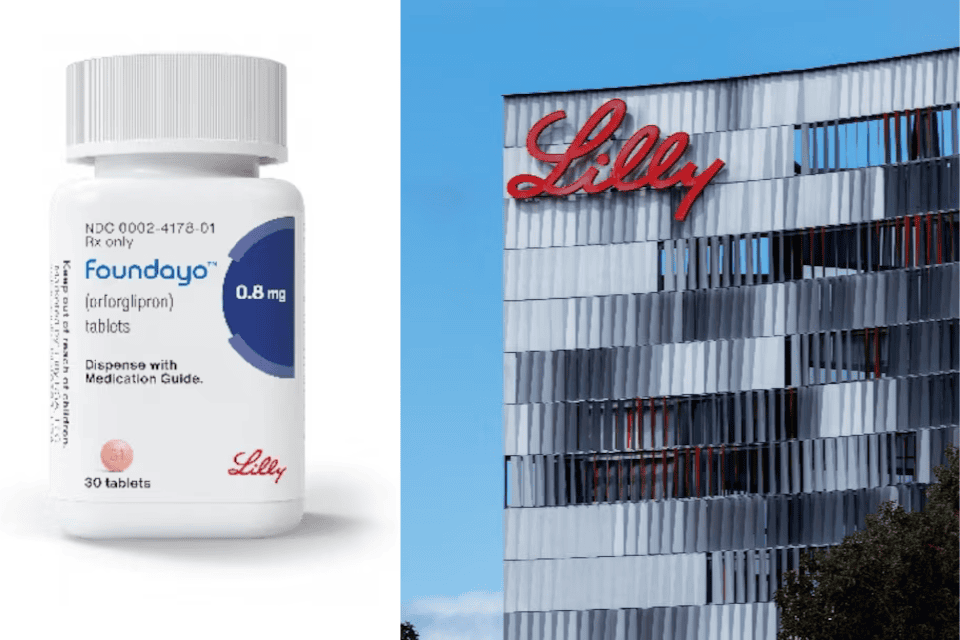
Roughly five months after its U.S. launch, Eli Lilly’s Foundayo (orforglipron) has captured more than 30% of new patients starting oral obesity treatment, according to the company. The figure should not be interpreted as a 30% share of the entire oral obesity market, but it provides an important signal of Foundayo’s momentum among new treatment starts. Novo Nordisk said in August that its Wegovy pill accounted for an estimated 90% of the overall U.S. oral obesity market.
The FDA approved Foundayo on April 1, 2026, for chronic weight management in adults with obesity or overweight with at least one weight-related comorbidity. The once-daily oral GLP-1 can be taken with or without food, reducing some of the administration complexity that can influence patient experience with oral therapies.
More importantly, Foundayo’s uptake comes as the GLP-1 market enters a different competitive phase. The question is becoming less about which drug produces the highest headline weight-loss percentage and increasingly about which company can reach the largest patient population through the right combination of efficacy, convenience, affordability and reimbursement.
Why It Matters
- Novo’s first-mover advantage is facing a credible challenge. Wegovy pill retains a large overall oral-market position, but Foundayo’s share of new patients indicates Lilly is building momentum rapidly.
- Oral GLP-1s could expand the category rather than merely substitute injections. Novo expects oral therapies to account for more than one-third of GLP-1 weight-loss use by 2030. Analysts cited by Reuters expect the U.S. obesity-treatment market alone to exceed $100 billion annually by then.
- Convenience may not automatically outweigh efficacy. Early experience from the Medicare obesity pilot indicates that many patients continue to choose injectable therapies. Separate clinical trials have shown higher headline weight-loss percentages for Zepbound and injectable Wegovy than current oral options, although cross-trial comparisons should be interpreted cautiously.
- Access is becoming a decisive competitive variable. Eligible Medicare participants can obtain obesity treatments through the current pilot for a $50 monthly copay, while employer-sponsored coverage remains increasingly uneven as payers struggle with rising GLP-1 spending.
Healthcare Insight Analysis
The 30% figure is best understood as a customer-acquisition signal, not evidence that Lilly has overtaken Novo in total oral market share.
That distinction matters because obesity treatment is evolving from a relatively straightforward contest between blockbuster injectable products into a multi-segment therapeutic ecosystem. Patients increasingly have choices based on efficacy, route of administration, out-of-pocket cost, insurance coverage and the practical burden of staying on therapy for years.
Within that environment, Foundayo gives Lilly a strategically differentiated asset. As an oral, non-peptide small-molecule GLP-1, it offers a different manufacturing and delivery model from injectable peptide therapies and potentially broadens the addressable population to patients unwilling to use injections. FDA labeling also allows the drug to be taken with or without food.
However, oralization does not automatically create market dominance. Early Medicare experience suggests that when financial barriers are reduced, many patients still select injectable products, in part because of perceptions around efficacy.
That makes the next stage of competition particularly significant. Lilly and Novo are no longer competing molecule against molecule. They are increasingly competing through portfolio architecture — combining injectable and oral therapies with pricing, direct-to-consumer distribution and reimbursement strategies designed to keep patients within their treatment ecosystems.
Market Implications
For pharmaceutical companies, Foundayo’s early traction strengthens the investment case for oral small-molecule incretin programs and raises the competitive threshold for emerging obesity assets.
For payers and employers, greater therapeutic competition could eventually provide additional leverage in pricing negotiations. That pressure matters as the proportion of surveyed U.S. employers covering GLP-1 drugs for weight loss fell from 72% in 2025 to 60% in 2026 amid concerns over healthcare expenditure.
For investors, prescription share alone will increasingly be insufficient. The more informative metrics will include new-to-brand starts, persistence, payer access, net pricing and cannibalization between oral and injectable products.
The GLP-1 race is therefore moving into a new chapter: leadership may ultimately depend less on owning one dominant drug and more on building the broadest, most accessible obesity-treatment ecosystem.