

Key Development
A factory designed to produce 100–120 million vaccine doses annually has limited strategic value unless the operator can also master the processes, quality systems and regulatory capabilities required to turn technology into validated products. That is the more important layer behind the latest Pfizer–VNVC cooperation.
On September 22, 2026, Pfizer and VNVC exchanged a cooperation document in New York aimed at strengthening vaccination, disease prevention and Vietnam’s healthcare preparedness. The agreement builds on cooperation launched in March 2025, when Pfizer began supporting VNVC with knowledge-sharing and capability development related to internationally compliant vaccine manufacturing.
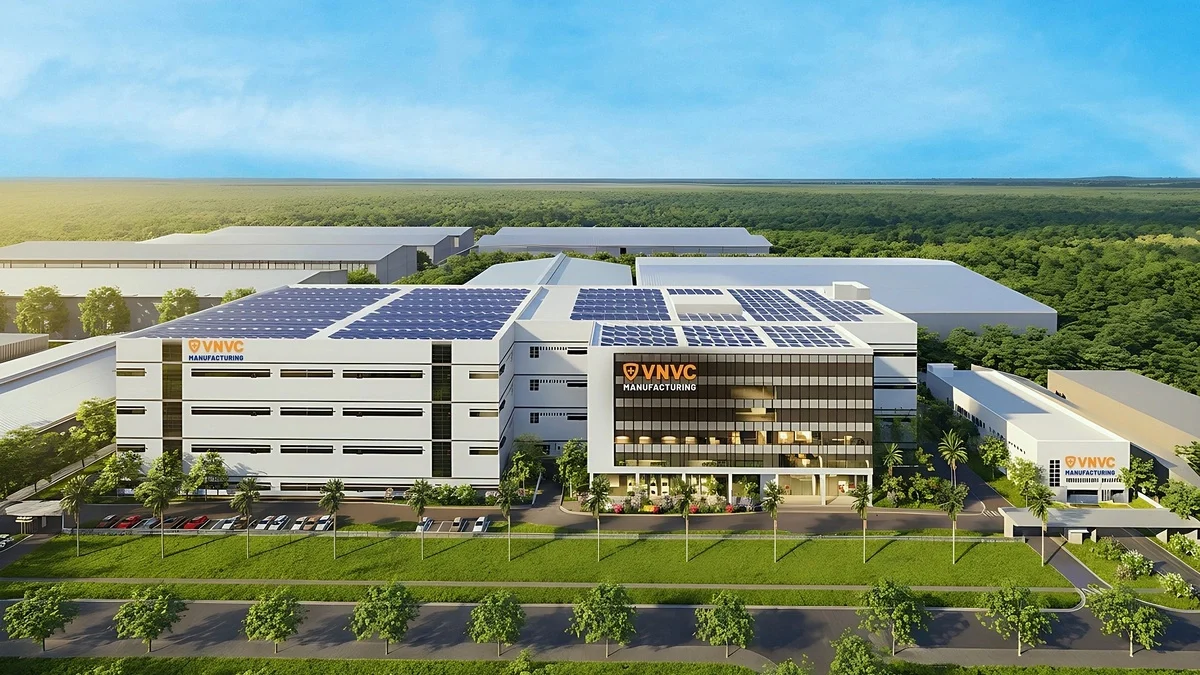
In parallel, VNVC is investing more than VND2.5 trillion in the first phase of its Vaccine and Biological Products Manufacturing Plant in Tay Ninh. The facility covers more than 26,000 square meters and is designed for approximately 100–120 million doses per year, with the ambition of meeting standards such as WHO-GMP, EU-GMP and FDA-cGMP. VNVC targets operations from late 2027, initial production in 2028 and commercialization of next-generation vaccines from 2029.
Why It Matters
- The factory itself is not the only bottleneck. Vaccine manufacturing depends on process know-how, analytical methods, quality control, validation, biosafety, cold chain and regulatory documentation. Technology absorption therefore matters as much as physical infrastructure.
- Vietnam is moving from vaccine procurement toward absorptive capacity. National policy targets mastery of technologies for 15 vaccines by 2030 and aims to raise locally produced vaccines toward international standards.
- VNVC is building a multi-partner manufacturing model. Beyond Pfizer, the company has cooperation with Sanofi, GSK, RDIF and other international partners. Sanofi has already identified three next-generation vaccines as priorities for future production in Vietnam.
- This is also a supply-security strategy. Local production can reduce exposure to global allocation constraints during outbreaks or supply disruptions, but only if critical manufacturing steps, testing and input materials are localized deeply enough.
Healthcare Insight Analysis
Healthcare Insight believes the simplest interpretation — “Pfizer and VNVC are building a VND2.5 trillion vaccine factory together” — would overstate what has actually been announced.
The plant is VNVC’s investment. The Pfizer–VNVC cooperation currently focuses publicly on vaccination capacity, preventive healthcare and continued capability building related to vaccine manufacturing. No specific Pfizer vaccine has yet been publicly confirmed for technology transfer or local production at the Tay Ninh facility.
That distinction matters because “local vaccine manufacturing” can mean very different things.
At the most basic level, a company may import bulk vaccine and conduct fill-finish locally. A deeper model includes upstream manufacturing, purification, analytical testing and quality-system transfer. The highest-value model involves co-development, process ownership, regulatory capability and the ability to move a vaccine from development through clinical evaluation and commercialization.
Vietnam’s policy direction is increasingly aimed at this deeper level: moving from technology receipt toward co-development and eventually independent development of next-generation vaccines.
For VNVC, that means the most important KPI is not nominal annual capacity.
More meaningful indicators will be how many manufacturing steps are localized, how much testing can be performed domestically, how many products successfully complete validation and regulatory approval, and whether the plant becomes credible enough to serve multiple international partners.
That multi-partner strategy is particularly important.
If one manufacturing platform can accommodate vaccines from Sanofi, Pfizer, GSK and others, VNVC reduces dependence on a single product franchise. The asset begins to look less like a one-product factory and more like a national vaccine manufacturing platform.
But that remains an ambition rather than a proven outcome.
Market Implications
VNVC: its potential advantage lies in combining three layers — demand from a nationwide vaccination network, domestic manufacturing capacity and international technology partners.
Pfizer: the partnership deepens its position within Vietnam’s preventive-health ecosystem and creates optionality for future manufacturing collaboration, although no specific local-production program has yet been disclosed.
Global vaccine manufacturers: a high-standard facility connected to a large downstream vaccination network could make Vietnam more attractive for licensing and technology-transfer agreements.
Policymakers: success should be measured not by the number of factories built, but by the number of technologies genuinely mastered, the strength of local regulatory capability and Vietnam’s participation in regional or global vaccine supply chains.
The two most important signals to watch are whether Pfizer later identifies a specific vaccine or production process for transfer, and whether the Tay Ninh facility reaches its 2027–2029 operational milestones as planned.
If both happen, Vietnam’s transition will become much more significant than simply “producing vaccines domestically.” It will demonstrate that the country can absorb, industrialize and eventually build upon global vaccine technology.