

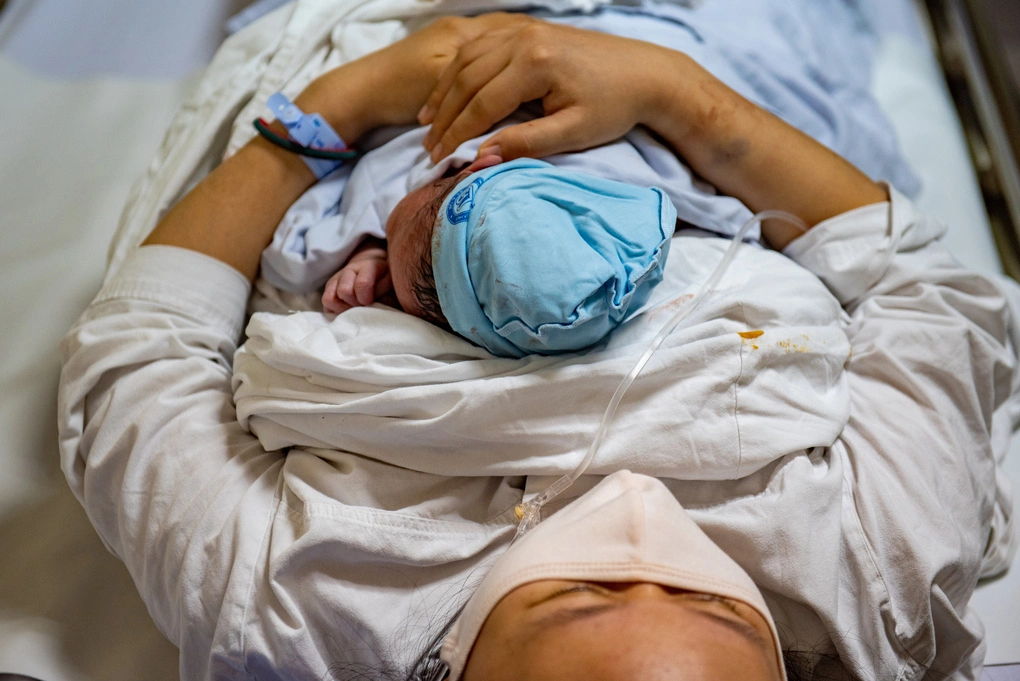
Key Development
Vietnam’s Ministry of Health is proposing a significant expansion of reproductive law: a surviving wife could use her deceased husband’s sperm, or embryos previously created by the couple, to pursue assisted reproduction.
The proposal appears in an updated draft of the Law on Donation, Retrieval and Transplantation of Human Tissues and Organs published on October 6, 2026. According to VnExpress, the framework would also cover sperm retrieval when the husband has been declared brain-dead or circulatory-dead. Current Vietnamese law does not provide a clear pathway for posthumous retrieval and reproductive use of sperm.
The proposal follows broader reform of fertility regulation. Decree 207/2025/ND-CP, effective October 1, 2025, already expanded access to assisted reproduction, including pathways for single women to receive sperm or embryos under defined conditions.
Why It Matters
- This is posthumous reproduction, not simply another IVF indication. It introduces a direct tension between the surviving partner’s reproductive autonomy and the deceased person’s reproductive intent.
- Consent becomes the central governance issue. ASRM considers posthumous reproductive use most ethically defensible when the deceased left explicit written authorization.
- Parentage rules may require harmonization. Vietnamese family law currently presumes a child born within 300 days after termination of the marriage to have been conceived during the marriage; posthumous conception can occur years later.
- Fertility clinics would inherit new legal obligations around disposition instructions, chain-of-custody, counseling and long-term storage.
Healthcare Insight Analysis
Healthcare Insight believes the most important point is that medical capability has moved faster than legal architecture.
Technically, sperm and embryos can be cryopreserved for long periods.
The difficult question is who can authorize their use after one genetic parent has died.
Posthumous reproduction actually involves three separate decisions:
retrieval → storage → reproductive use.
Those decisions should not automatically collapse into one.
A surviving spouse may urgently request sperm retrieval shortly after an unexpected death. But preserving reproductive material in that narrow time window does not necessarily answer the later and much more consequential question of whether a child should be conceived from it.
ASRM explicitly distinguishes retrieval from subsequent reproductive use. ESHRE has likewise argued that partner-based posthumous reproduction is most defensible when the deceased provided written consent, the surviving partner receives substantial counseling and sufficient time is allowed for grieving before treatment.
That creates an important question for Vietnam.
VnExpress reports that the draft centers the surviving wife’s request, but the article does not describe a separate requirement for documented prior reproductive consent from the deceased husband. If the final legislative text also leaves that question unresolved, it would represent a major governance issue rather than a minor procedural omission.
The second challenge is the legal identity of the future child.
Vietnamese family law currently provides a 300-day rule after the end of a marriage for determining presumptive parentage. But cryopreserved sperm or embryos may be used years later.
That creates downstream questions around:
legal fatherhood → birth registration → inheritance → family benefits → other property and personal rights.
International reproductive-medicine guidance identifies parentage and inheritance as core legal issues precisely because jurisdictions treat children conceived after death differently.
The third challenge is operational.
Every fertility center storing sperm or embryos would eventually need explicit disposition instructions at the time of cryopreservation:
destroy after death, continue storage, authorize use by the spouse, or follow another legally permitted option.
That shifts consent from a one-time treatment signature into lifecycle governance of reproductive material.
This could become especially important for fertility preservation before cancer therapy, where patients may store sperm or embryos while facing serious illness.
Market Implications
IVF providers: stronger consent architecture, cryostorage governance, audit trails and legal counseling become competitive and compliance capabilities.
Fertility preservation: clearer posthumous rules could increase attention to advance reproductive planning before gonadotoxic treatment.
Legal and insurance services: fertility care may increasingly intersect with estate planning and family-law counseling.
Regulators: assisted reproduction, family law, civil registration and inheritance rules will need to operate as one system.
ANALYTICAL MATRIX
| Dimension | Opportunity | Risk | Requirement |
| Reproductive autonomy | Continue an existing parental project | Conflict with deceased’s wishes | Explicit consent |
| IVF | Broader reproductive options | Disputed gamete use | Chain-of-custody |
| Parentage | Recognition of new family pathways | Legal ambiguity | Updated parentage rules |
| Child rights | Genetic continuity | Inheritance/property uncertainty | Clear legal status |
| Governance | Standardized storage policy | Decisions during acute grief | Counseling + waiting period |
If implemented carefully, the reform could expand reproductive choice while preserving the deceased person’s autonomy.
But success should not be measured by the number of posthumous IVF procedures performed.
A stronger benchmark is whether every case can answer four questions before treatment proceeds:
Did the deceased consent?
Has the surviving partner received independent counseling?
Will the resulting child have clear legal status?
Can the entire decision and custody trail be audited?
Only when those questions are resolved does posthumous reproduction move from a technically possible procedure to a mature reproductive-health framework.
Source: https://vnexpress.net/bo-y-te-de-xuat-cho-vo-dung-tinh-trung-chong-da-mat-de-sinh-con-5129398.html