

Key Development
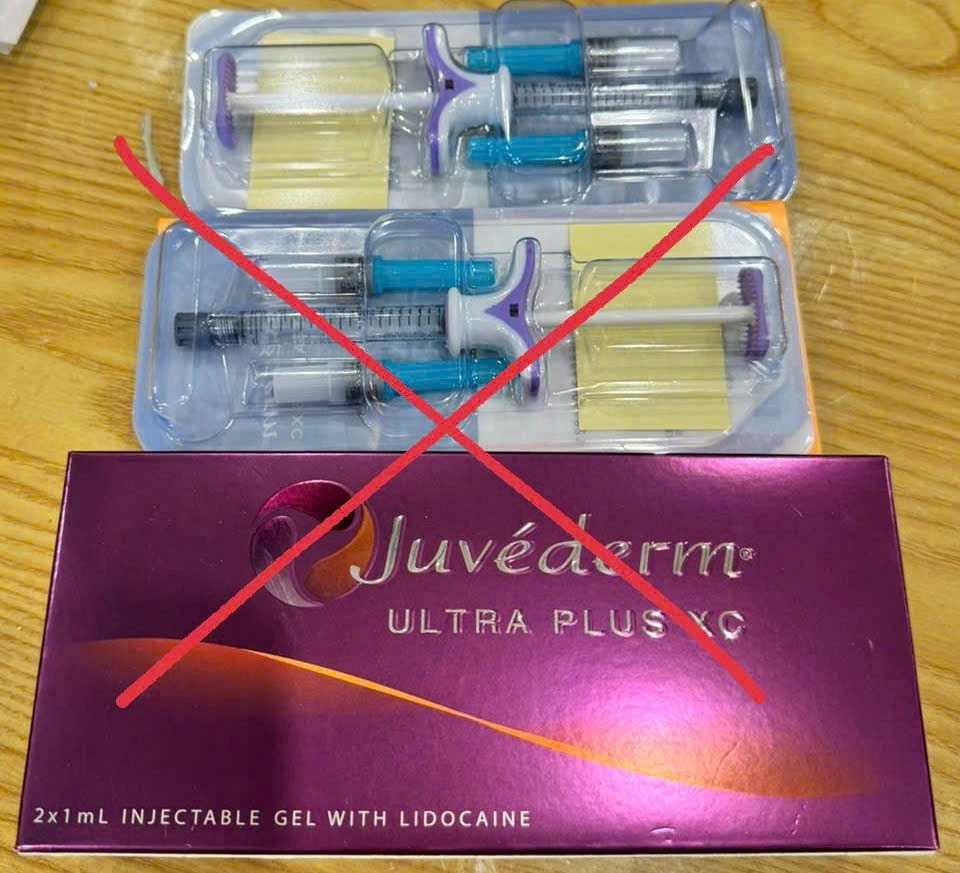
Hanoi police have charged 21 defendants in an investigation into alleged illegal trading involving fillers, botulinum-toxin products, mesotherapy products, local anesthetics and other products used in aesthetic procedures. Investigators allege the network sold millions of products between 2025 and August 2026, generating more than VND500 billion in revenue.
Police reported seizing 122,972 medical-device and pharmaceutical products valued at more than VND74 billion across searched locations in Hanoi and Ho Chi Minh City. Investigators allege that some products were acquired as unfinished goods, bulk materials, empty containers and packaging before being divided, labeled and distributed. The businesses involved were also alleged to lack required pharmaceutical qualifications, operating authorizations and formal distribution authorization from legitimate importers.
An important boundary remains: this is an ongoing criminal investigation. The alleged conduct and individual roles described by investigators have not yet been established by a final court judgment.
Why It Matters
- This is a patient-safety issue, not merely a grey-market issue. Dermal filler injection can cause necrosis, blindness or stroke if material inadvertently enters a blood vessel; uncertain product provenance adds further questions around composition, sterility and storage.
- The alleged commercial scale is material. More than VND500 billion in sales would indicate that unauthorized distribution can reach industrial rather than informal scale.
- Supply-chain opacity is the core vulnerability. WHO notes that falsified and substandard medical products often exploit long distribution chains and intermediaries whose credentials are not adequately verified.
- Vietnam is already moving toward stronger device-supply-chain management, including interconnected databases and a roadmap for Unique Device Identification.
Healthcare Insight Analysis
Healthcare Insight believes the most important number in this case is not VND500 billion.
The deeper issue is that an injectable medical product can become disconnected from its official chain of custody before reaching a patient.
A mature system should be able to answer:
Who imported it? → which batch? → which distributor? → where was it stored? → which clinic purchased it? → who administered it? → which patient received it?
When that chain breaks, multiple safety functions weaken simultaneously.
Regulators struggle to conduct recalls.
Clinicians investigating adverse events cannot confidently establish product provenance.
Patients have little ability to verify what was actually injected.
Traceability should therefore be understood as clinical safety infrastructure, not simply anti-counterfeit technology.
WHO’s 2025 review of national traceability systems describes their ability to follow medical products from final-stage manufacture through to the location where they are administered, allowing earlier detection of supply-chain integrity problems. Traceability cannot entirely prevent falsified products from entering a market, but it can materially improve detection and response.
Injectable aesthetics make this especially important because quality cannot be judged from appearance.
Professional packaging cannot establish:
correct ingredient → correct concentration → correct storage → authentic batch → legitimate import channel.
The case also highlights another regulatory gap: product compliance and provider compliance cannot operate as separate worlds.
A legitimate product can still cause serious harm if injected by an inadequately trained provider.
Conversely, even a highly trained clinician cannot compensate for a contaminated, improperly repackaged or unidentified injectable.
The long-term architecture should therefore connect:
authorized product + authorized distributor + authorized facility + qualified injector + patient record.
One possible endpoint is procedure-level digital verification: the clinic scans the product and batch before injection, with the information automatically linked to the patient’s record, the facility and the professional performing the procedure.
Then a recall becomes searchable rather than investigative.
For manufacturers and authorized distributors, this could also change competition.
Today, legitimate products absorb regulatory registration, storage, pharmacovigilance and authorized-distribution costs while unauthorized channels may bypass those investments and compete primarily on price.
Stronger traceability could turn regulatory compliance from a cost disadvantage into a market-access moat.
Market Implications
Authorized manufacturers/importers: stronger provenance controls could reduce leakage to unauthorized parallel channels.
Aesthetic clinics: product sourcing increasingly becomes part of clinical governance rather than a back-office purchasing issue.
Distributors: batch-level records, storage integrity and authorization status may become commercially decisive.
Regulators: enforcement can gradually move from warehouse raids toward continuous supply-chain visibility and anomaly detection.
ANALYTICAL MATRIX
| Dimension | Current Vulnerability | Emerging Requirement | KPI |
| Provenance | Difficult to verify | Batch-level traceability | Traceable-product share |
| Distribution | Multiple intermediaries | Authorized-channel mapping | Distributor compliance |
| Procedures | Product/provider records separated | Linked verification | Verified procedures |
| Recall | Reactive investigation | Near-real-time tracing | Time-to-trace |
| Patient | Limited verification | Digital product check | Verification rate |
The strategic question is therefore not simply:
“How can authorities seize more illegal products?”
It is:
“How can the system make it extremely difficult for an unidentified injectable to move from warehouse to patient without creating a verifiable digital trail?”
If Vietnam can solve that problem, this case could become more than another enforcement episode.
It could accelerate a shift toward an aesthetic-medicine market in which product provenance is treated as part of the clinical standard of care.
Source: https://vnexpress.net/ong-trum-buon-filler-botox-doanh-thu-500-ty-dong-bi-bat-5129468.html