

Key Development
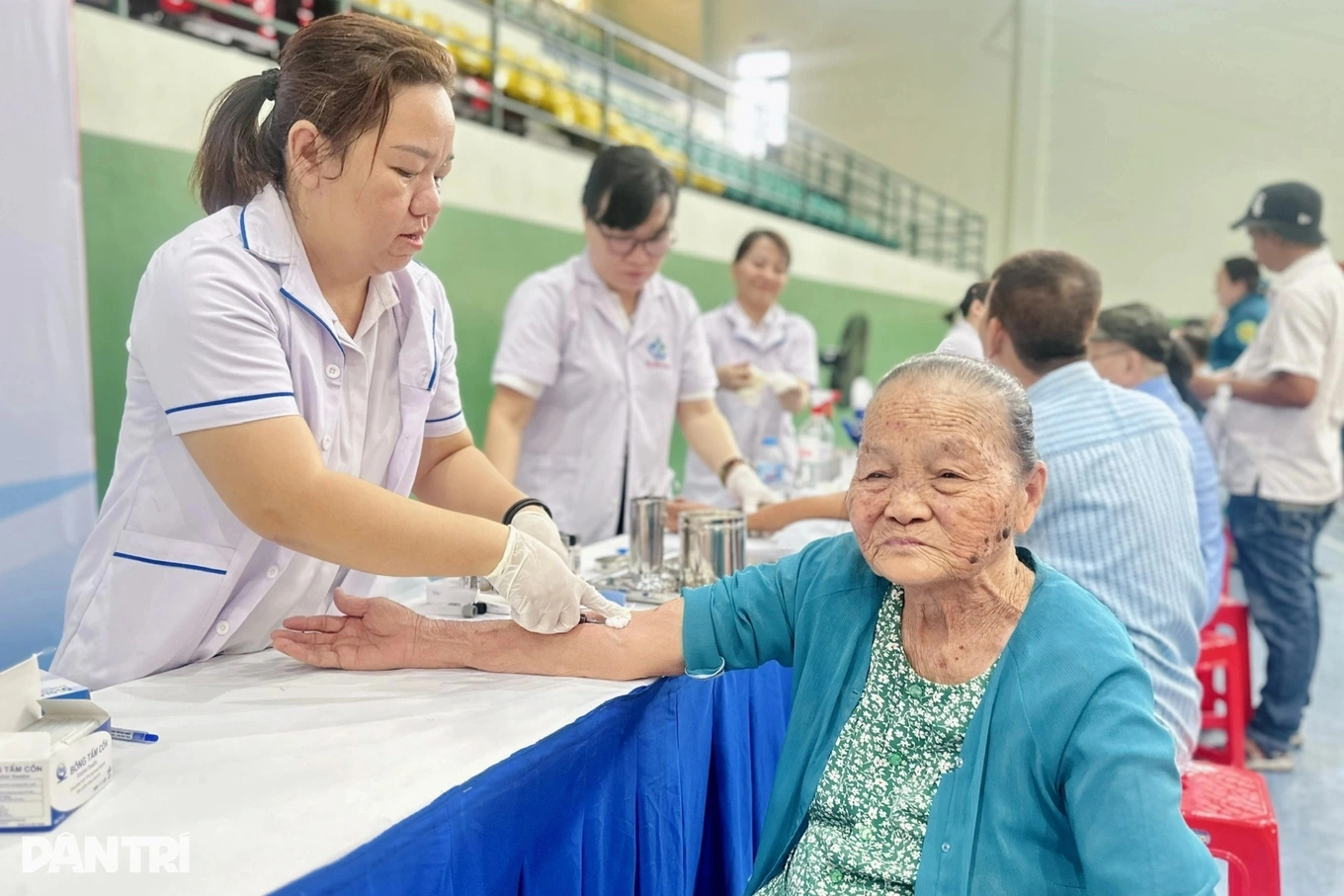
An analysis of Ho Chi Minh City’s mass health-screening data identified hypertension in 339,371 of 663,306 people aged 60 and older with analysable information — 51.16%. The municipal health authority explicitly cautioned that this should not be treated as the prevalence of hypertension among all older residents. Records were consolidated from four sources — medical history, blood pressure measured during screening, preliminary diagnosis and confirmed diagnosis — meaning some individuals still require repeat measurement and formal assessment.
Among adults aged 18–59, 18.75% were recorded with hypertension; across all analysed adults aged 18 and above, the proportion was 25.89%, or 779,713 of 3.01 million people. By October 10, 2026, HCMC’s wider population-screening initiative had already generated more than six million examination visits and over 5.37 million electronic health records.
Why It Matters
- HCMC is assembling a population-health dataset large enough to support risk segmentation rather than episodic care alone.
- Hypertension is not primarily a screening problem. WHO estimates that 16.9 million Vietnamese adults aged 30–79 had hypertension in 2024, while only 15% had their blood pressure controlled.
- Older adults concentrate chronic-care demand, often combining hypertension with diabetes, cardiovascular, renal and other age-related conditions.
- National policy is moving toward longitudinal management. From 2026, older adults are entitled to at least one free annual health examination or screening, while the 2030 target is for at least 90% to have major noncommunicable diseases detected, treated and managed.
Healthcare Insight Analysis
Healthcare Insight believes the strategic milestone is not the 51.16% figure itself.
It is the possibility of asking, at individual level:
Who is diagnosed?
Who is treated?
Who is controlled?
Who only had one elevated reading?
Who has disappeared from follow-up?
That is the transition from a screening database to a chronic-disease registry.
If the program stops at detection, HCMC could create a new kind of backlog: hundreds of thousands of residents with a risk signal but no confirmed diagnosis, no treatment initiation or no subsequent monitoring.
The value is created only when the funnel closes:
screen → confirm → stratify cardiovascular risk → treat → maintain adherence → remeasure → control.
WHO’s 2025 country profile shows why the end of that funnel matters. Among Vietnamese adults aged 30–79 with hypertension, an estimated 51% have been diagnosed and 32% treated, but only 15% are controlled.
The bottleneck is therefore no longer simply awareness.
It is continuity of care.
That shifts strategic importance toward community-level primary care.
WHO has documented an example in HCMC where an older hypertension patient who previously needed to travel more than 10 kilometres for follow-up can now receive checks and medication at a nearby commune health station.
At scale, the same operating model could be digitized.
Electronic health records could support a citywide hypertension control dashboard:
diagnosed → treated → controlled → overdue for follow-up.
That would convert a one-off public-health campaign into an operating system for chronic-disease management.
This distinction also matters commercially.
The next wave of demand is unlikely to come only from annual health examinations. It will include generic cardiovascular medicines, repeat pharmacy dispensing, validated home blood-pressure devices, remote follow-up, adherence programs and primary-care analytics.
The important commercial unit therefore becomes not simply a newly identified patient.
It becomes a patient retained in care for years.
There is also a major data-quality lesson in the 51.16% figure.
Because the dataset mixes medical history, a single screening measurement and diagnostic information, the numerator is appropriate for identifying people needing attention but not for estimating citywide epidemiologic prevalence.
That is not a weakness of the program.
It reflects a distinction that healthcare leaders increasingly need to make between data for population action and data for epidemiological inference.
The first can trigger follow-up immediately. The second requires a different study design.
Market Implications
Primary care: commune and ward health stations become chronic-care management nodes rather than screening points alone.
Pharma: commercial value shifts toward persistence, refill and sustained disease control.
Digital health: registries, automated recalls and risk stratification may offer more health-system value than stand-alone wellness apps.
Pharmacies and devices: medication adherence and validated home BP monitoring could become important extensions of community care.
ANALYTICAL MATRIX
| Dimension | Current Signal | Bottleneck | KPI to Watch |
| Screening | >6m visits | Incomplete/heterogeneous data | Complete-record rate |
| Detection | 51.16% of analysed ≥60 group flagged | Not all formally diagnosed | Confirmation rate |
| Treatment | Large addressable need | Loss to follow-up | Treatment initiation |
| Control | Low nationally | Adherence + titration | BP control rate |
| Digital layer | >5.37m e-health records | Interoperability/updating | Overdue follow-up |
HCMC has demonstrated that it can find a very large hypertension-risk population.
The harder test is whether the health system can keep those people engaged until blood pressure is actually controlled.
At that point, the most meaningful KPI will no longer be how many people were screened — but how many strokes, heart-failure events and renal complications were prevented because the chronic-care pathway did not break.