

Key Development
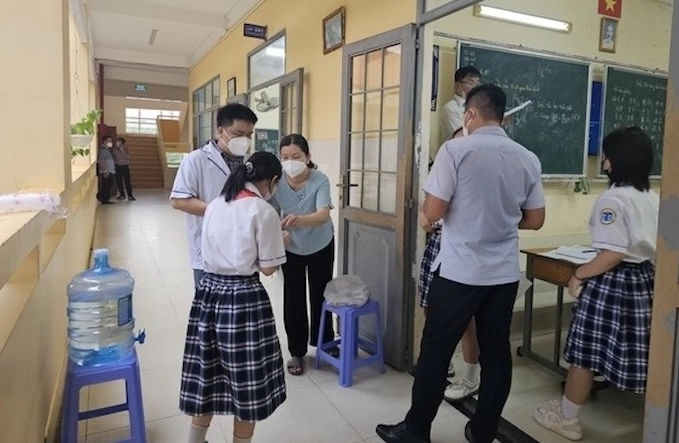
Three students at Hai Ba Trung Secondary School in Ho Chi Minh City’s Hiep Phuoc commune were diagnosed with serogroup B meningococcal disease, including one fatality on October 14, 2026. Beyond the immediate clinical tragedy, the cluster highlights a critical weakness that healthcare systems must continuously address: rapidly progressing infectious diseases leave little time between initial symptoms and life-threatening complications.
The first patient, born in 2014, developed initially nonspecific symptoms before progressing to septic shock and multiple organ failure. Two additional students were hospitalized and, according to the October 16 public update, were stable under treatment. Authorities initiated contact tracing, targeted antibiotic prophylaxis, laboratory testing and school-based surveillance.
The school remained operational under risk-based monitoring. According to the Pasteur Institute in Ho Chi Minh City, serogroup B accounted for more than 98% of reported meningococcal cases in southern Vietnam between 2014 and 2025, making serogroup-specific prevention a particularly relevant regional consideration.
Why It Matters
- Early recognition is critical, because invasive meningococcal disease can progress rapidly from nonspecific symptoms to severe infection.
- Schools are important public-health surveillance settings, requiring effective communication between families, educators and healthcare providers.
- Serogroup-specific vaccine protection matters, because meningococcal vaccines do not all cover the same bacterial groups.
- Targeted antibiotic prophylaxis helps protect close contacts, while unnecessary mass antibiotic use creates avoidable clinical and antimicrobial-stewardship concerns.
- Outbreak response quality depends on coordination, not simply hospital treatment capacity.
Healthcare Insight Analysis
Healthcare Insight believes this cluster demonstrates why infectious-disease preparedness must extend beyond hospital emergency departments.
The decisive public-health advantage is often the ability to recognize risk, identify exposed individuals and coordinate action before additional patients require intensive care.
Meningococcal disease presents a difficult surveillance challenge.
Early symptoms can resemble common infections.
Severe deterioration may occur quickly.
Close contacts require timely assessment.
Laboratory confirmation informs targeted intervention.
Schools need consistent, evidence-based guidance.
These elements create an operational chain:
early recognition → clinical referral → laboratory confirmation → contact tracing → targeted prophylaxis → continued surveillance.
A failure at any stage can reduce the effectiveness of the response.
The Ho Chi Minh City case is particularly relevant because surveillance data indicate substantial historical dominance of serogroup B in southern Vietnam.
That does not establish the risk of future outbreaks at any individual school.
However, it provides a rationale for examining whether prevention programs, vaccine education and clinical preparedness reflect local epidemiology.
Vaccine availability alone is not equivalent to effective population protection.
Coverage depends on the vaccine’s serogroup profile, age eligibility, immunization access and actual uptake.
For healthcare providers, the strategic priority is therefore appropriately targeted prevention rather than generalized vaccination assumptions.
Antibiotic prophylaxis presents a parallel challenge.
Prompt preventive treatment of identified close contacts is supported by international guidance, but this does not justify indiscriminate antibiotic distribution to all students.
The appropriate intervention depends on exposure assessment and health-authority instructions.
The healthcare system must balance:
rapid protection of exposed individuals + appropriate antimicrobial use + reliable monitoring.
Another important consideration is school continuity.
Automatically closing an entire school may not always be required. Decisions should follow epidemiological assessment, exposure patterns and the ability to maintain safe operations.
For healthcare leaders, the most meaningful indicators are not simply the number of cases detected.
They include time from symptom recognition to clinical assessment, speed of contact identification, timely prophylaxis and follow-up completion.
Public-health readiness is ultimately measured by response speed, accuracy and continuity—not the visibility of emergency measures.
Market Implications
Hospitals and emergency departments: need reliable triage and referral pathways for rapidly progressing infections.
Vaccination providers: have an opportunity to strengthen evidence-based education on meningococcal serogroups, vaccine eligibility and preventive care.
Vaccine manufacturers: may see increased attention to serogroup B prevention, although individual clusters cannot establish nationwide commercial demand.
Public-health authorities and schools: should reinforce exposure assessment, contact tracing and risk communication protocols.
Healthcare investors and service providers: may find opportunities in diagnostic access, immunization management and interoperable public-health monitoring systems.
ANALYTICAL MATRIX
| Dimension | Current Signal | Opportunity | Key Risk |
| Disease surveillance | Three confirmed school cases | Faster cluster identification | Delayed recognition |
| Clinical response | One fatality; two patients stable as reported | Stronger emergency referral | Rapid deterioration |
| Vaccination | Serogroup B identified | Targeted preventive education | Coverage gaps |
| Exposure management | Contact tracing and prophylaxis | Interrupt secondary transmission | Missed close contacts |
| School preparedness | Risk-based operations | Coordinated response protocols | Confusion and misinformation |
The most important lesson from this meningococcal cluster is not that every school faces an imminent outbreak. It is that low-frequency, high-severity infections require systems capable of acting quickly when cases emerge.
For Vietnam’s healthcare ecosystem, the opportunity lies in connecting schools, public-health agencies, vaccination services and hospitals into a more responsive prevention network.
Medical treatment remains essential, but the full value of preparedness is created before and after the hospital encounter.
The broader healthcare signal is clear:
infectious-disease resilience depends not only on treating severe cases, but on detecting danger early and protecting the people most likely to be exposed.
Source: https://vnexpress.net/3-hoc-sinh-tp-hcm-mac-nao-mo-cau-mot-em-tu-vong-5133257.html