

Key Development
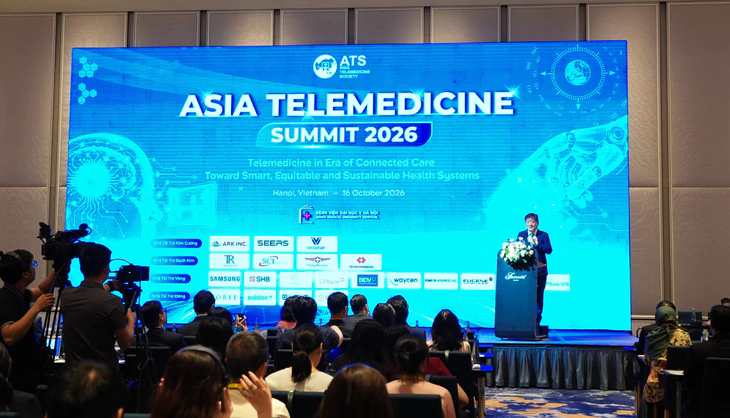
IVI Group has presented an integrated digital healthcare ecosystem at the Asia Telemedicine Summit 2026 (ATS 2026), combining teleconsultation, hospital information systems, electronic medical records and AI-assisted clinical workflows. Beyond a technology showcase, the development highlights a strategic question facing Vietnam’s healthcare industry: can digital solutions move beyond individual applications to deliver continuity across the entire patient journey?
Held in Hanoi on October 16, 2026, the summit brought together more than 400 healthcare specialists, researchers and industry representatives, according to the event report. Organized by Hanoi Medical University Hospital in collaboration with the Asia Telemedicine Society, the conference focused on connected, accessible and sustainable healthcare.
IVI Group, a member of One Mount, presented a five-stage care model involving three business units: IVIE – Bác Sĩ Ơi, supporting appointment booking and remote consultations; ISOFH, providing hospital information system (HIS) and electronic medical record (EMR) capabilities; and IVIRSE, developing AI-assisted patient intake and professional consultation tools. The demonstration also included AI-generated clinical summaries subject to physician review.
Why It Matters
- Interoperability is emerging as a decisive healthtech capability, connecting patient-facing applications with hospital information infrastructure.
- Telemedicine creates greater value when linked to in-person services, referrals and ongoing clinical follow-up.
- AI-assisted documentation may reduce administrative workload, but accuracy, clinical supervision and data protection remain essential.
- Integrated technology ecosystems could reshape hospital procurement, shifting attention from individual software functions to end-to-end performance.
- Commercial adoption requires evidence of operational value, not merely platform demonstrations or ambitious technology roadmaps.
Healthcare Insight Analysis
Healthcare Insight believes IVI Group’s presentation reflects an important evolution in Vietnam’s digital healthcare market.
The next competitive advantage in healthtech may not be the number of functions within an application, but the ability to move clinical information safely and accurately across disconnected points of care.
Healthcare has historically operated through fragmented interactions.
Patients book appointments.
Doctors collect medical histories.
Hospitals perform examinations and tests.
Specialists provide consultations.
Patients return for follow-up.
When these activities take place across separate systems, information may need to be entered repeatedly or may become unavailable at critical moments.
Digital healthcare infrastructure must therefore solve a continuity problem, not merely a convenience problem.
The potential value chain is:
patient access → clinical intake → connected medical records → specialist collaboration → follow-up → continuous care.
1. The commercial opportunity lies in connecting existing healthcare systems
Standalone teleconsultation applications can improve accessibility, particularly for patients who need initial guidance or follow-up appointments.
But their value may be limited when information collected during a remote consultation cannot be integrated into subsequent hospital care.
A patient may still repeat medical history, carry paper records or undergo avoidable administrative steps.
Connecting telemedicine to HIS and EMR systems could help address these limitations.
Digital healthcare value increases when clinical information becomes reusable across appropriate care settings.
IVI Group’s model attempts to bridge patient-facing services and hospital infrastructure through its different technology units.
However, the presentation does not establish that every participating application is fully interoperable with every hospital system.
Integration must be demonstrated through actual deployment, technical compatibility and verified clinical workflows.
2. AI should be measured by clinical workflow performance, not automation volume
The showcased tools include AI-assisted symptom collection and automated summaries of medical consultations.
These functions may help physicians organize information and reduce repetitive documentation.
But healthcare AI introduces specific risks.
A summary can omit relevant symptoms.
Clinical details can be misinterpreted.
Information may be associated with the wrong patient.
Sensitive records require controlled access.
Errors can propagate into subsequent decisions.
Generating a clinical summary is not equivalent to producing a clinically validated medical record.
The physician-review step described in the system is therefore important.
It preserves professional oversight before automatically generated content is accepted or used in patient care.
For hospital executives, the meaningful indicators include documentation time, correction rates, information completeness and clinical-user satisfaction.
AI adoption should follow a measurable sequence:
workflow identification → controlled deployment → clinician validation → performance monitoring → operational scaling.
3. Interoperability could become a stronger competitive barrier than software features
Healthcare platforms often compete on appointment booking, video consultations or user interfaces.
These features are visible to customers and can be replicated by competitors.
Connecting electronic medical records with hospital operations, professional consultations and patient follow-up is more difficult.
It requires data standards, identity management, cybersecurity, integration engineering and coordination with hospital stakeholders.
That creates both opportunity and cost.
The more deeply a platform integrates into clinical operations, the greater its potential value—but also the higher the implementation responsibility.
For healthtech companies, recurring revenue may depend on software maintenance, technical support, system upgrades and long-term institutional relationships.
Yet deeper integration can also increase deployment complexity and dependence on hospital-specific requirements.
The strongest providers will need to demonstrate both scalability and operational reliability.
4. A conference showcase is not evidence of commercial success
ATS 2026 provides IVI Group with an opportunity to present its technology to healthcare leaders and potential partners.
But the number of conference participants does not indicate customer adoption, contracted revenue or proven clinical benefits.
Similarly, the stated emphasis on AI, blockchain, IoT and big data represents a technology strategy rather than confirmation that each technology has delivered measurable healthcare improvements.
For investors, evaluation should move toward:
contracted hospital deployments → active clinical users → workflow efficiency → patient outcomes → recurring revenue.
The next phase of digital healthcare competition will depend on whether integrated technology can improve healthcare delivery under real operating conditions.
Market Implications
IVI Group: has an opportunity to differentiate through integration across patient applications, hospital systems and AI-supported services, but must demonstrate deployment quality and commercial scalability.
Hospitals: should prioritize interoperability, data governance, measurable workflow improvements and vendor accountability when selecting digital health solutions.
Healthtech companies: may face growing pressure to build connected infrastructure rather than isolated patient-facing applications.
Telemedicine providers: could benefit from closer integration with diagnostic services, specialist referral pathways and longitudinal follow-up.
Healthcare investors: should assess hospital contracts, implementation costs, software retention, cybersecurity exposure and operational outcomes rather than technology announcements alone.
ANALYTICAL MATRIX
| Dimension | Current Signal | Opportunity | Key Risk |
| Digital health integration | IVIE, ISOFH and IVIRSE ecosystem | End-to-end care connectivity | Complex implementation |
| Telemedicine | Remote consultation and booking | Broader access to care | Fragmented referrals |
| Hospital infrastructure | HIS and EMR integration capabilities | Clinical data continuity | Interoperability limitations |
| Clinical AI | Symptom intake and summary tools | Lower administrative burden | Inaccuracy and privacy risks |
| Commercial development | ATS 2026 technology showcase | Hospital partnerships | Unproven adoption and ROI |
IVI Group’s participation in ATS 2026 is not simply about introducing more digital healthcare tools. It reflects an attempt to connect patient access, clinical information and hospital operations within a common care pathway.
The strategic opportunity is significant, but integration only creates value when systems exchange information reliably, clinicians can use the results safely and hospitals see measurable operating improvements.
For Vietnam’s healthcare ecosystem, the next stage of digital transformation should be evaluated through data continuity, clinical workflow quality and sustainable implementation economics.
The broader industry signal is clear:
the future of digital healthcare will be shaped less by how many applications a company develops and more by how effectively those applications work together to support continuous, safe and measurable patient care.