

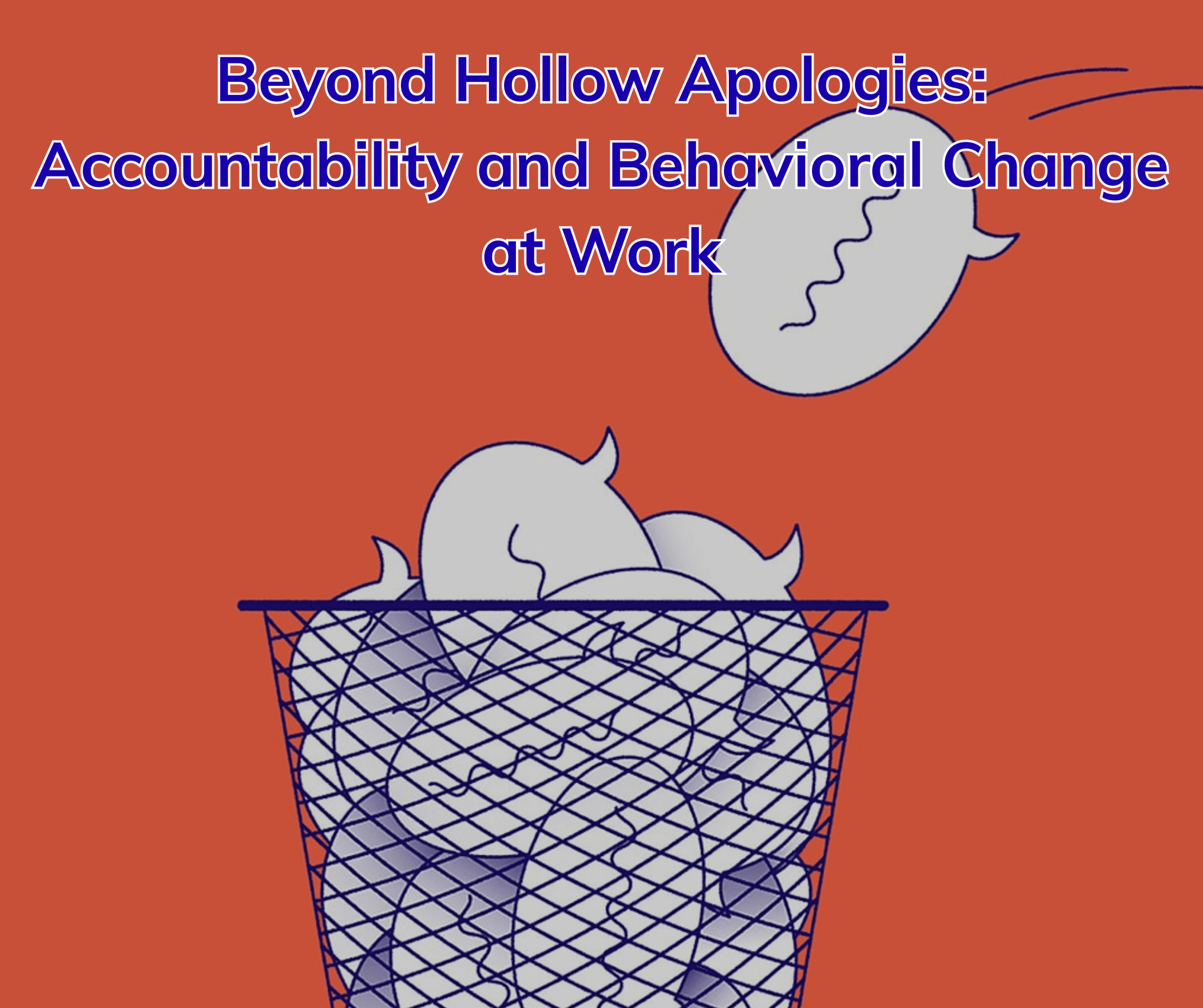
Executive Summary In organizational leadership, apologies are often used as tools for conflict de-escalation. However, a paradox exists: many apologies, despite appearing emotionally sincere, end up deteriorating professional relationships. The root cause lies in the “sorry, not sorry” phenomenon—where verbal remorse lacks a tangible commitment to behavioral change. For an emotionally mature leader, remorse is insufficient; the true standard is consistent, observable improvement.
1. The Consequences of Empty Promises Research across diverse industries indicates that repetitive apologies for the same offenses—such as micromanagement, broken promises, or undermining behavior—inflict deep psychological harm.
-
Erosion of Trust: When problematic behavior persists after an apology, recipients feel betrayed and frustrated. This often leads to “quiet quitting,” where employees reduce information sharing, withdraw effort, or seek new opportunities outside the firm.
-
Impact Over Intent: Victims are seldom consoled by “good intentions” behind a mistake. They evaluate sincerity based on “revealed preferences”—observable actions over time rather than post-hoc justifications or predictions.
2. Strategies for the Offender: The Accountability Framework To make an apology meaningful, the transgressor must implement rigorous self-management steps:
-
Cease External Attribution: Rationalizing mistakes through “stress” or “impossible timelines” hinders the internalization of the need for change. Acceptance of full responsibility is the prerequisite for behavioral correction.
-
Proactive Follow-up: An apology should not be the final word. Leaders should practice “feedback-seeking” by asking affected parties: “Have I demonstrated the changes I promised?” or “Have I slipped back into old habits?”
-
The Integrity Principle: Do not apologize if there is no intent to change. If a behavior is necessary (e.g., intervening in poor-quality work), offer an explanation of the necessity rather than a disingenuous apology that prioritizes temporary comfort over long-term truth.
3. The Role of the Recipient and Management Relationship repair is a collaborative process facilitated by organizational oversight:
-
For the Recipient: It is vital to “name the pattern” rather than treating offenses as isolated incidents. Communicating the emotional impact—such as a loss of respect or trust—can provide the “emotional jolt” required for the offender to commit to real change.
-
For the Manager: Leaders must make it clear that they evaluate behavioral standards, not intentions. Scheduling regular follow-ups after a rift ensures that the offender remains on track and the offended party feels supported by the organization.
Source: https://sloanreview.mit.edu/article/stop-making-hollow-apologies-at-work/