

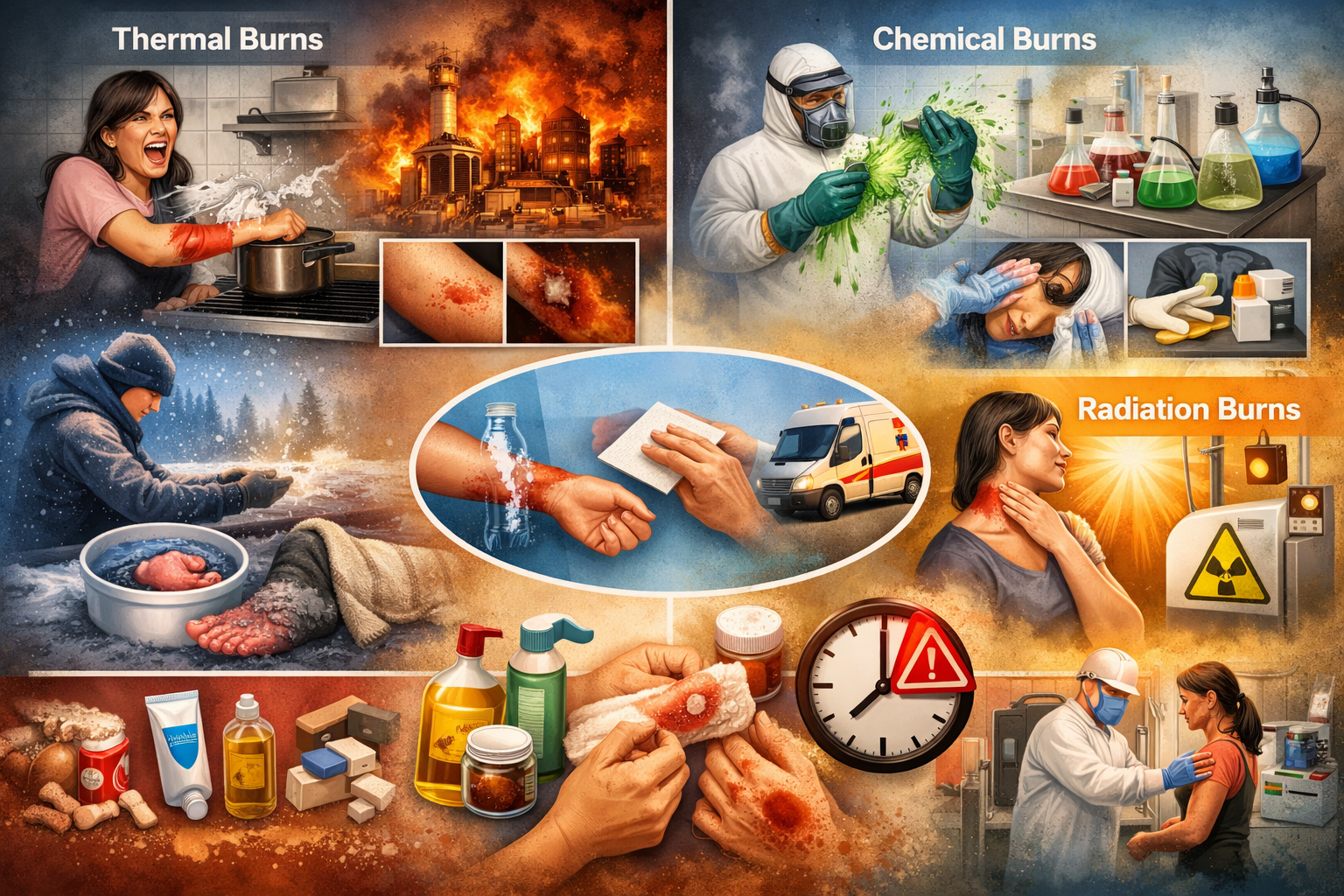
Burns are among the most common accidents in daily life and the workplace. From kitchens and factories to laboratories, the risk of burns is always present if prevention and first aid knowledge are insufficient. Among them, thermal burns and chemical burns are the most common—and also the most frequently mishandled—leading to severe injuries and long-term complications.
A. Thermal Burns
1. Common causes
- Fire, hot coals, heated metal
- Boiling water, hot oil, steam
- Contact with high-temperature surfaces
2. Burn severity
- First-degree: Redness and pain (mild sunburn-like injury)
- Second-degree: Blistering, severe pain
- Third-degree: Deep tissue damage, white or charred skin, possible loss of pain sensation
3. Proper first aid
- Cool the burned area immediately under clean, cool running water for 15–20 minutes
- Remove clothing or jewelry around the burn if not stuck to the skin
- Cover lightly with a clean, sterile dressing
- Do NOT apply toothpaste, oil, grease, fish sauce, or folk remedies
- Do NOT break blisters
Seek medical care if the burn is deep, extensive, or located on the face, hands, feet, or genitals
B. Chemical Burns
1. Common causes
- Strong acids and alkalis (e.g. sulfuric acid, sodium hydroxide)
- Industrial cleaning agents and solvents
- Laboratory and factory chemicals
Chemical burns can continue to damage tissue even when pain is no longer obvious.
2. Proper first aid – A CRITICAL, LIFE-SAVING STEP
- Rinse immediately with large amounts of clean water for at least 20–30 minutes
- Remove contaminated clothing, gloves, and shoes
- If chemicals enter the eyes: rinse gently and continuously
- Do NOT attempt to neutralize chemicals with other substances
- Do NOT delay rinsing to identify the chemical
Always seek medical attention after first aid, even if the injury appears mild
C. Radiation Burns
Radiation burns are often overlooked but can cause hidden and prolonged skin damage, especially in medical, industrial, or high–sun-exposure environments.
1. Common causes
- Ionizing radiation in medical treatment (radiotherapy), industry, or laboratories
- Prolonged exposure to ultraviolet (UV) radiation from sunlight
- Radiation-emitting devices without proper safety control
Unlike thermal burns, radiation burns may not appear immediately. Symptoms often develop hours or even days later.
2. Initial management according to safety recommendations
- Stop exposure to the radiation source immediately
- Cover the affected area with a clean, dry dressing
- Monitor symptoms and seek medical evaluation
- Do not apply creams or medications without medical advice
- Do not underestimate delayed skin symptoms
Radiation burns always require medical monitoring, even if initial damage seems minor.
D. Cold Burns (Frostbite / Cold Injury)
Cold burns occur when skin and tissue are exposed to extremely low temperatures, causing freezing injury that may lead to tissue death if improperly managed.
1. Common causes
- Prolonged exposure to cold environments
- Dry ice, industrial refrigerants, liquid nitrogen
- Applying ice packs directly to the skin for too long
2. Signs and symptoms
- Pale, hard, numb skin
- Intense pain as the skin begins to rewarm
- Severe cases: blistering, darkened skin
3. Initial management according to safety recommendations
- Move the victim away from the cold environment
- Rewarm gradually using warm (not hot) water
- Cover the affected area lightly
- Do not massage or rub the injured area
- Do not use hot water, open flames, or direct heat sources
Seek medical evaluation if deep injury or persistent pain is present
Initial Burn Management – Safety Guidelines
3 actions to take IMMEDIATELY
- Stop contact with the burn source (heat, flames, chemicals, radiation, extreme cold)
- Cool or rinse immediately with clean water
- Thermal burns: 15–20 minutes
- Chemical burns: at least 20–30 minutes
- Cold burns: gradual rewarming with warm (not hot) water
- Cover lightly and seek medical care: if the burn is deep, extensive, or located on high-risk areas (face, hands, feet, genitals)
Common first-aid mistakes
- Applying inappropriate substances (toothpaste, oils, grease, fish sauce, unverified medications)
- Breaking blisters or peeling damaged skin including rubbing cold-injured areas
- Delaying proper action: Waiting to “neutralize” chemicals.
- Underestimating radiation burns because symptoms appear later
Burn Prevention – Don’t Wait Until an Accident Happens
- Provide first aid training for employees and family members
- Use appropriate personal protective equipment when working with heat, chemicals, radiation, or cold environments
- Label, store, and handle chemicals properly for easy identification and emergency access
- Ensure emergency eyewash stations, safety showers, and fire extinguishers are available and regularly inspected
- Control radiation exposure risks through shielding, limited exposure time, and strict safety procedures
- Avoid direct contact with extreme cold sources (dry ice, refrigerants, liquid nitrogen) and never apply ice directly to the skin
Burns are not just skin injuries they can have long-term effects on health, work ability, and quality of life. Proper first aid in the first few minutes can determine the outcome. One timely and correct action can prevent unnecessary and lasting harm.
Holidays are only truly safe and complete when we are prepared with the knowledge to respond to emergencies.