

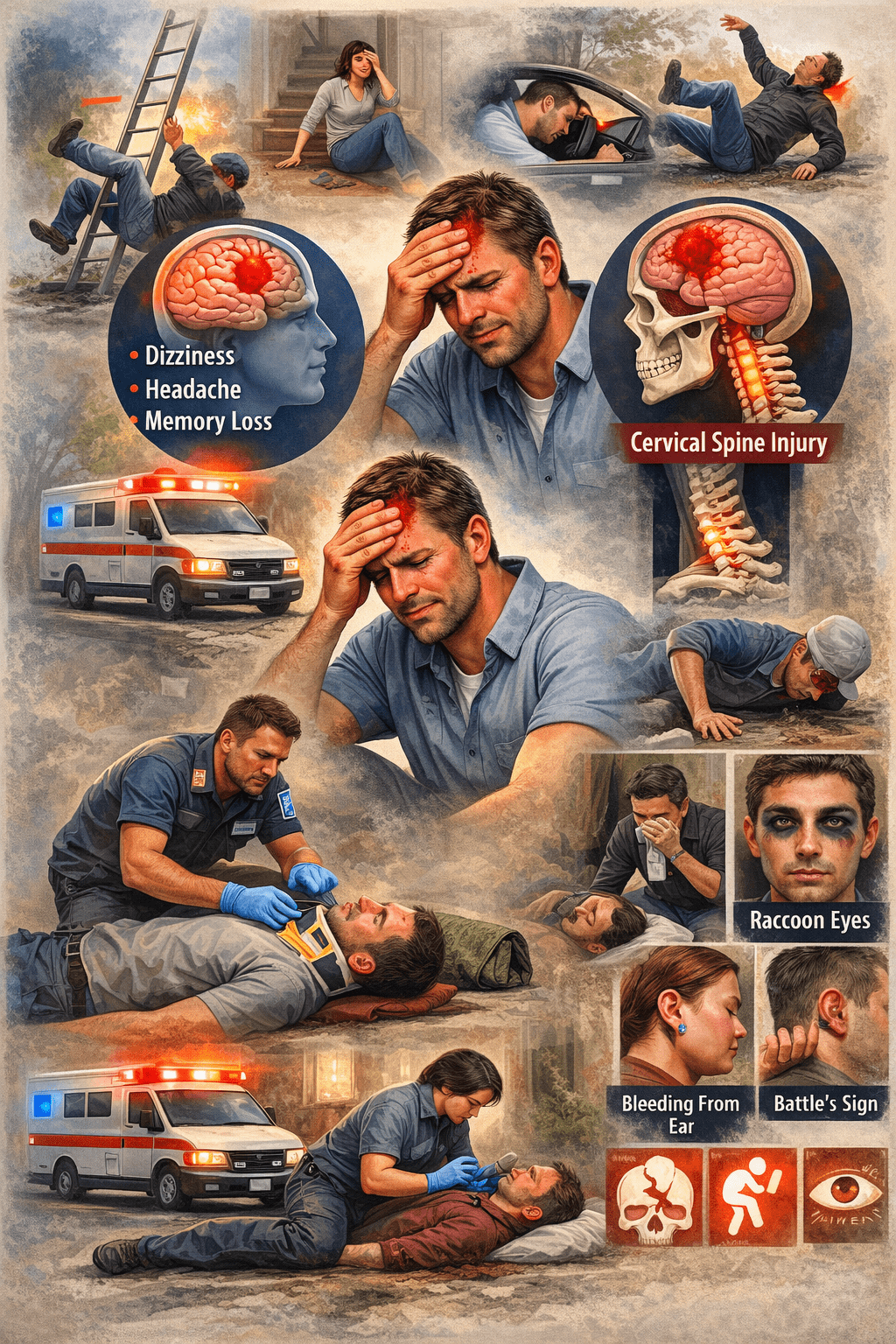
Falls are one of the most common causes of injury at home, in the workplace, and during daily activities.
In many cases, the injured person may stand up immediately after a fall and feel “fine.” However, head injuries may present with delayed symptoms, especially when there has been impact to the head or neck.
A seemingly minor fall may still result in:
- Concussion
- Intracranial bleeding
- Cervical spine injury
Proper initial assessment and monitoring for warning signs are essential for early detection of potentially serious complications.
High-Risk Mechanisms of Injury
Certain fall scenarios increase the risk of severe injury:
- Falls from a height greater than 1 meter
- Falls down stairs or from ladders
- Motor vehicle accidents
- Direct impact to the head
In these situations, early medical evaluation is recommended. The injured person should be presumed to have a possible cervical spine injury and handled with caution during movement.
Key Pathophysiological Risks to Consider
1. Concussion
A concussion is a temporary disturbance of brain function caused by head trauma. Common symptoms include:
- Dizziness
- Headache
- Short-term memory loss
- Nausea
- Difficulty concentrating
Symptoms may appear several hours after the injury.
2. Intracranial Bleeding
Bleeding within the skull may occur after a significant head impact. This condition can initially progress without obvious symptoms. Warning signs include:
- Worsening headache
- Nausea or vomiting
- Confusion
- Unusual drowsiness or loss of consciousness
- Altered mental status or behavioral changes
Intracranial bleeding is a serious condition requiring prompt medical evaluation.
3. Cervical Spine Injury
A fall involving significant impact may cause injury to the cervical spine. Improper movement of the injured person may:
- Cause weakness or paralysis of the limbs
- Worsen spinal cord injury
Common Mistakes After a Fall
- Immediately helping the person stand up
- Allowing the person to continue working or moving right away
- Ignoring a head impact because “there is no visible bleeding”
- Giving strong pain medication immediately after injury
- Failing to monitor for delayed symptoms
Many complications from head injuries do not appear immediately.
Recommended First Aid Response
1. Ensure Scene Safety
- Check the surrounding environment
- Ensure there are no ongoing hazards that could cause additional injury
2. Initial Assessment (Primary Assessment)
Perform an ABC assessment (Airway – Breathing – Circulation)
- Check responsiveness
- Observe breathing
- Look for bleeding
If the person is unconscious but breathing, place them in the recovery position.
3. Minimize Movement if Cervical Spine Injury is Suspected
Signs suggesting a possible cervical spine injury include:
- Neck pain
- Numbness or weakness in the arms or legs
- Falls from height
- High-impact collisions
In these cases, avoid moving the head and neck until medical professionals arrive.
4. Control Bleeding
- Apply gentle pressure with clean gauze or cloth
- Avoid firm pressure if a skull fracture is suspected
5. Post-Injury Monitoring
The injured person should be monitored for at least 24 hours following a head injury. Watch for the following warning signs:
- Increasing headache
- Repeated vomiting
- Confusion or disorientation
- Unusual drowsiness
- Seizures
If the person wishes to sleep:
- Ensure they are responsive before sleeping
- Check periodically for normal breathing and responsiveness
Difficulty waking the person is a medical emergency.
Possible Signs of Skull Fracture
The following signs may suggest a basilar skull fracture. Immediate medical evaluation is required if any of these occur:
- Bleeding or fluid leaking from the ear or nose
- Bruising around the eyes (“raccoon eyes”)
- Bruising behind the ear (“Battle’s sign”)
- Activate Emergency Services Immediately If
- The person loses consciousness, even briefly
- Repeated vomiting occurs after the injury
- Severe or worsening headache develops
- Seizures occur
- Unequal pupil size is observed
- Weakness or numbness in the limbs appears
- The person becomes difficult to awaken
Key Principles After a Fall
- Assess level of consciousness
- Protect the head and neck
- Monitor for abnormal symptoms
Prevention at Home and in the Workplace
- Keep floors dry and free of slipping hazards
- Use protective equipment when working at heights
- Install handrails and adequate lighting on stairways
- Provide training on fall recognition and response for employees
Appropriate action in the first few minutes after a fall can significantly reduce the risk of serious complications from head injuries.