

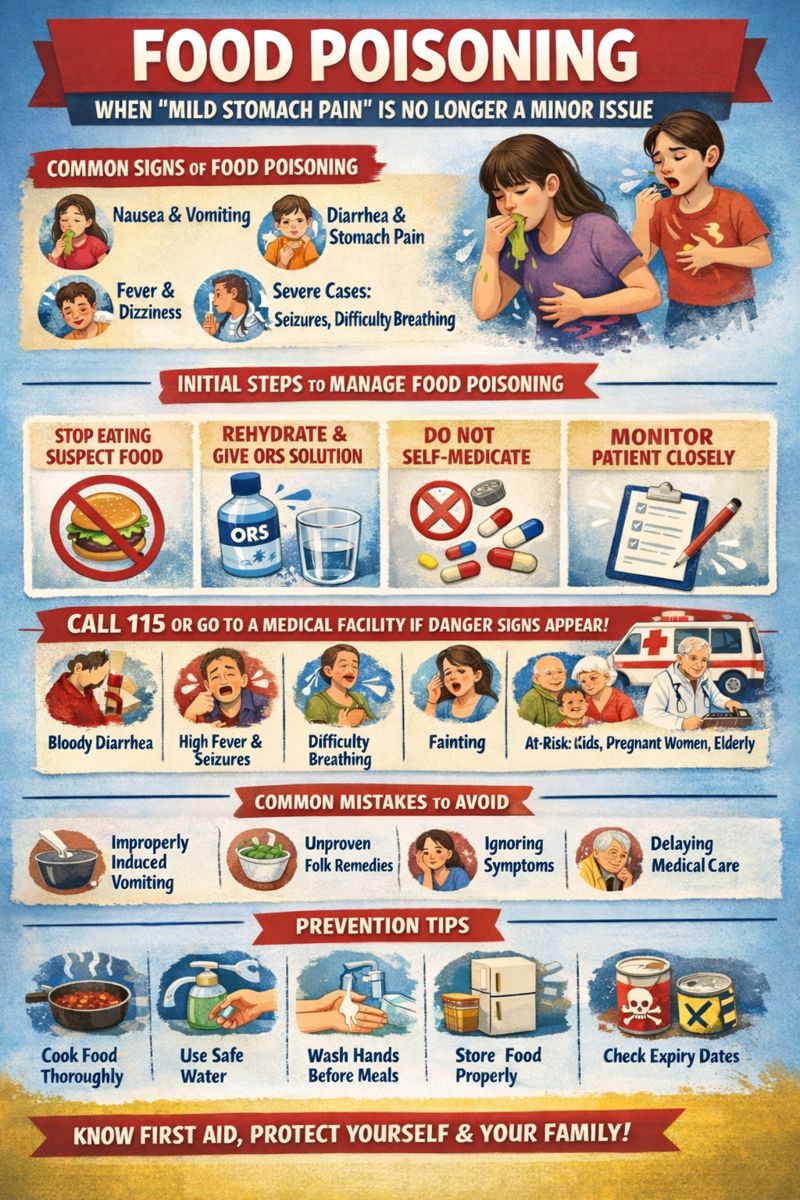
Food poisoning can occur at any meal and affect anyone. Delayed or improper management may lead to serious consequences, especially for children, the elderly, and people with underlying health conditions. So what is the correct response when food poisoning is suspected?
COMMON SIGNS OF FOOD POISONING
A person with food poisoning may experience one or more of the following symptoms, which can appear within minutes to hours—or even days—after eating:
-
Nausea and persistent vomiting
-
Abdominal pain, diarrhea, frequent bowel movements
-
Fever, extreme fatigue, dizziness
-
Headache, excessive sweating
-
Severe cases: seizures, difficulty breathing, altered consciousness
INITIAL STEPS TO MANAGE FOOD POISONING
1. Stop consuming the suspected food immediately
-
Do not continue eating it
-
Keep a sample of the food (if available) to assist doctors with diagnosis
2. Rehydrate and replace electrolytes
-
Give small sips of clean water or oral rehydration solution (ORS)
-
Avoid ice water, milk, and carbonated soft drinks
-
Dehydration is the greatest risk in food poisoning
3. DO NOT self-medicate
-
Do not take anti-diarrheal or anti-nausea medications without medical advice
-
Do not take antibiotics on your own
-
Do not force food intake
-
Incorrect medication use may cause toxins to remain in the body longer
4. Closely monitor the patient’s condition
Pay special attention to:
-
Frequency of vomiting and diarrhea
-
Signs of dehydration: dry lips, reduced urination, lethargy
-
Changes in consciousness
5. CALL EMERGENCY SERVICES OR GO TO A MEDICAL FACILITY IMMEDIATELY if any danger signs appear:
-
Uncontrollable, persistent vomiting
-
Bloody diarrhea
-
High fever, seizures
-
Difficulty breathing, fainting
-
Food poisoning in children, pregnant women, or the elderly
COMMON MISTAKES TO AVOID
-
Inducing vomiting improperly
-
Using unverified folk remedies
-
Underestimating symptoms (“It was just a small amount, it’ll be fine”)
-
Not seeking medical care when symptoms worsen
PREVENTING FOOD POISONING
-
Use food with clear and reliable origins
-
Eat thoroughly cooked food; drink boiled or safe water
-
Wash hands before eating and food preparation
-
Store food at proper temperatures
-
Do not use expired food or food with unusual odors
-
Provide food safety and first-aid training for staff
Food poisoning is not merely a common digestive upset it can become a medical emergency if handled incorrectly or too late. Equipping yourself with proper first-aid knowledge helps protect yourself, your family, and the community in emergency situations.