

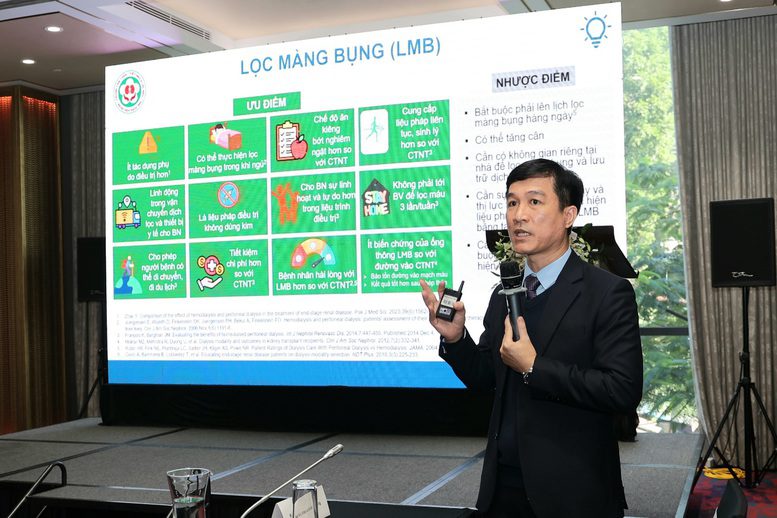
Current statistics indicate that Vietnam has approximately 800,000 patients with end-stage renal disease requiring replacement therapy, yet only 5% to 10% have access to appropriate medical treatments. During a workshop on transforming kidney treatment models held on January 8, medical experts analyzed the feasibility of peritoneal dialysis (PD) as a means to alleviate the burden on the hospital system.
Currently, hemodialysis accounts for 75% of treatment choices but is causing severe overcrowding in major cities. To operate a hemodialysis unit for 300 patients, a medical facility must invest in 50 dialysis machines, specialized water systems, and a staff of about 50 personnel working three continuous shifts. In contrast, peritoneal dialysis allows patients to perform the procedure at home after training, saving medical manpower and reducing hospital visit frequency to once every one or two months.
Representatives from specialized hospitals noted that this method offers equivalent effectiveness to hemodialysis while enabling patients to maintain their daily routines, studies, and employment. From a regulatory perspective, the Ministry of Health is considering the establishment of socio-economic technical standards and management mechanisms for home-based medical equipment to facilitate health insurance professional payments. Integrating peritoneal dialysis into the primary healthcare system is expected to provide significant support for patients in remote and rural areas.