

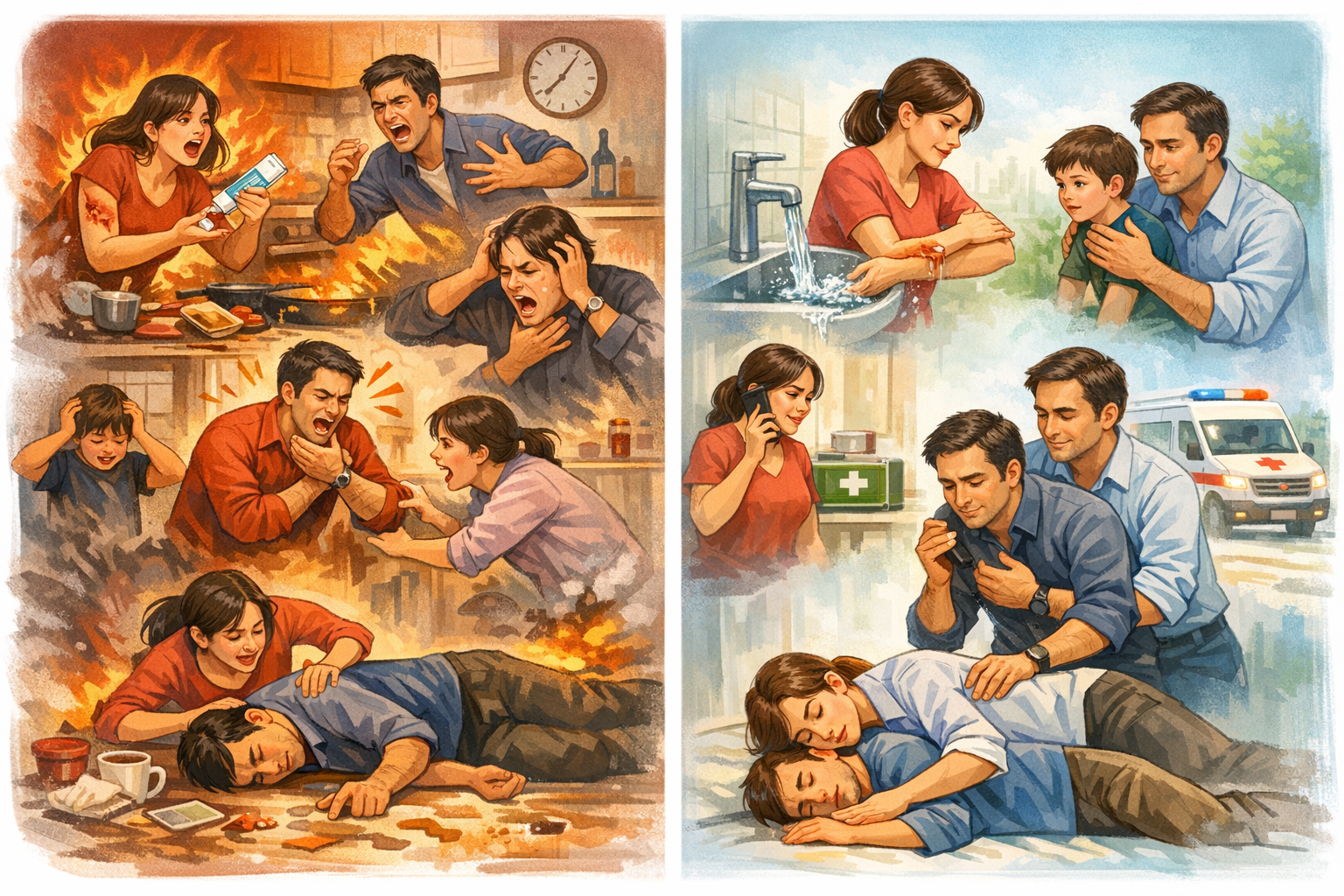
When an unexpected incident occurs—such as collapse, choking, burns, or injury—the first reaction of those nearby is often emotion, not skill.
Panic, shouting, acting on instinct, or following unverified “folk remedies” can cause a situation to worsen within minutes.
In contrast, a calm and appropriate response can reduce injury and help keep the victim safe until medical assistance arrives.
In emergencies, staying calm is not a natural reflex—it is a skill that can be learned.
Panic – a Human Reaction, but One That Carries Risk
During family emergencies, especially during Tết, panic often leads to:
- Doing many things at once, but none of them correctly
- Over-intervention or improper handling
- Delaying emergency calls because “it may not be serious”
- Following advice without scientific or medical basis
Panic does not make victims safer—it often wastes critical response time.
Proper Response – No Medical Degree Required, but Knowledge Is Essential
Responding properly does not require you to be a healthcare professional.
What truly matters is:
- Correctly recognizing the level of urgency
- Knowing what to do immediately and what must never be done
- Staying calm to protect both the victim and yourself
Common Situations & Proper Responses
When a Family Member Is Choking
Panic often leads to:
- Finger-sweeping the throat when the object is not visible
- Giving water
- Performing emergency techniques incorrectly
Proper response:
- If the person can cough or speak → encourage strong coughing
- Do not insert fingers into the throat if the object is not visible
- If the person cannot breathe → call for help and perform back blows and abdominal thrusts if properly trained
When Burns Occur During Cooking
Panic often leads to:
- Applying toothpaste, oil, or grease
- Breaking blisters
- Delaying cooling while searching for “treatments”
Proper response:
- Stop contact with the heat source immediately
- Cool the burned area under clean running water for 15–20 minutes, or until the burning sensation decreases or subsides.
- Cover lightly with a clean dressing and monitor
When a Family Member Suddenly Feels Dizzy or Collapses
Panic often leads to:
- Immediately trying to lift the person
- Shaking or calling loudly
- Giving food or drink before assessing the condition
Proper response:
- Ensure the surrounding area is safe
- Check consciousness and breathing
- If unconscious but breathing → place in the recovery position
- If not breathing → call emergency services and begin CPR if trained
- Call 115 for guidance and emergency assistance
Quick Checklist – Stay Calm to Respond Correctly
What to Do
- Pause briefly to assess the situation
- Ensure safety for yourself and the victim
- Call emergency services early if danger signs are present
- Provide basic first aid within the scope of your training
Common Mistakes
- Panicking and acting on instinct
- Applying unverified “folk remedies”
- Delaying medical assistance
- Intervening beyond one’s knowledge or training
Preparation Reduces Panic
Panic often comes from lack of preparation. Families can be more proactive by:
- Ensuring at least one family member has basic first aid knowledge
- Agreeing in advance who will call emergency services and who will assist
- Saving emergency contact numbers and locations of nearby medical facilities
- Remembering that simple, correct actions are better than doing many things incorrectly
Proper first aid in the first few minutes can reduce risks, protect loved ones, and support subsequent medical treatment.
Prepare early – Respond correctly – Stay safer in every emergency.