

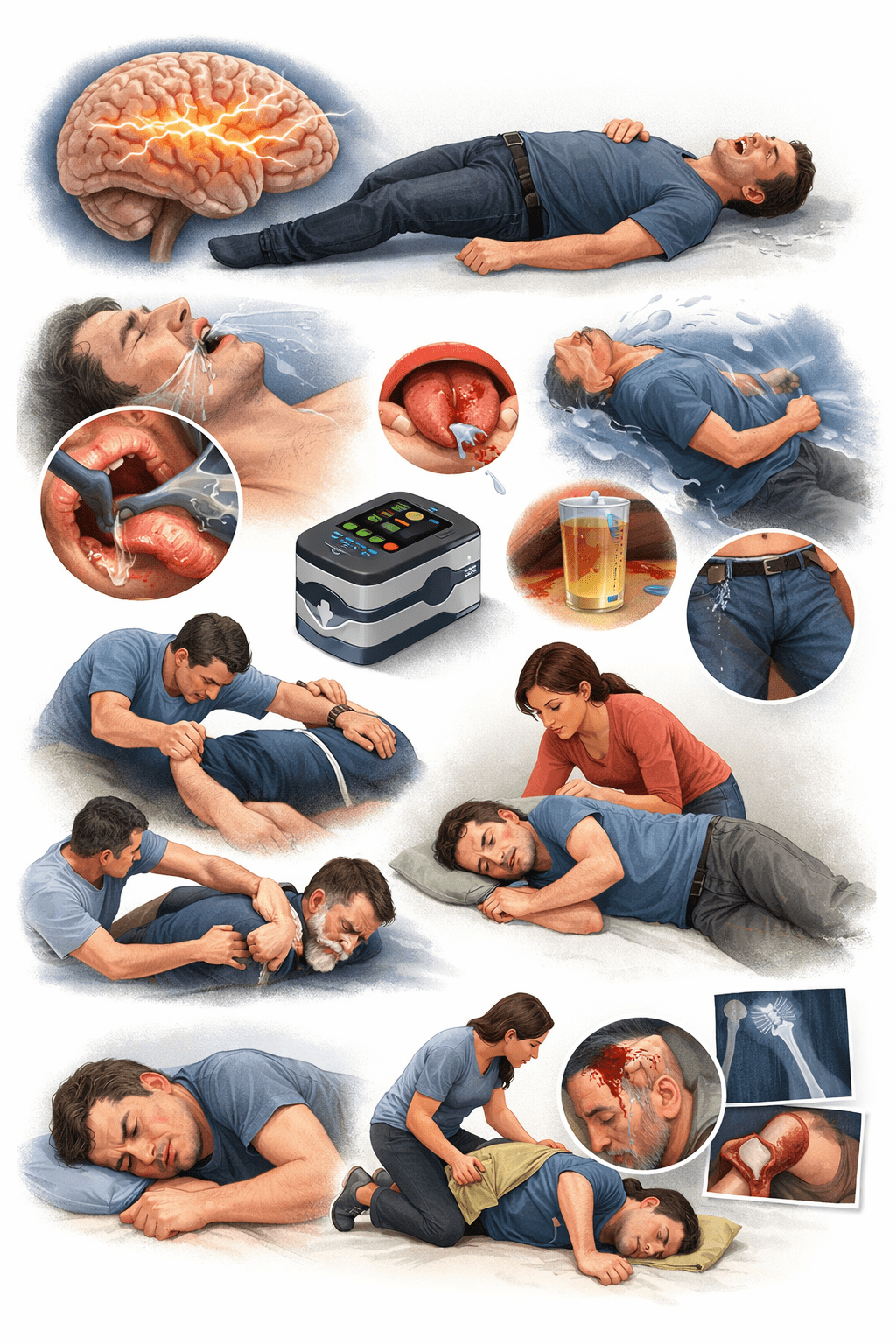
A seizure is caused by sudden, abnormal electrical activity in the brain, resulting in transient neurological dysfunction. The most commonly observed type in community and workplace settings is the generalized tonic–clonic seizure, characterized by:
- Sudden loss of consciousness
- Tonic phase (generalized muscle stiffening)
- Clonic phase (rhythmic jerking movements)
- Possible cyanosis
- Tongue biting
- Urinary incontinence
Most generalized tonic–clonic seizures are self-limiting and resolve within 1–3 minutes.
The primary danger is not the seizure itself — but airway compromise, hypoxia, and secondary trauma.
Key Pathophysiological Concerns
1. Airway Compromise
- Loss of protective airway reflexes
- Risk of aspiration of saliva, blood, or vomitus
2. Transient Hypoxia
- Irregular or ineffective breathing during the tonic phase
- Brief apnea may occur
3. Secondary Injury
- Head trauma
- Fractures from impact
- Joint dislocation due to forceful restraint
4. Post-ictal State
- Confusion
- Drowsiness
- Agitation
- Reduced responsiveness
The post-ictal phase may last from several minutes to hours.
Common Harmful Interventions
- Inserting objects into the mouth (spoons, chopsticks, cloth, etc.)
- Forcing the jaw open during muscle rigidity
- Physically restraining the limbs
- Giving fluids or medications before full recovery of consciousness
- Initiating chest compressions while the patient still has a pulse and is actively seizing
There is no medical evidence supporting “tongue swallowing.”
Most dental injuries and aspiration events occur due to inappropriate intervention.
Evidence-Based First Aid Management
1. Ensure Scene Safety
- Remove nearby hard or sharp objects
- Cushion the head
- Loosen tight clothing around the neck
2. Do NOT Restrain Movements
- Allow the seizure to proceed naturally. Intervene only to prevent external injury.
3. Time the Seizure
- Note the time of onset
- A seizure lasting 5 minutes or longer is considered status epilepticus and requires immediate emergency medical response
4. After the Seizure Stops
- Assess ABC (Airway – Breathing – Circulation)
- Check airway patency
- Evaluate spontaneous breathing
- Assess pulse
If breathing spontaneously → place the patient in the recovery position (side-lying) to reduce aspiration risk.
If no breathing and no pulse are detected after the seizure has ended, initiate CPR and activate emergency medical services immediately.Continue to monitor respiratory status and level of consciousness. Provide reassurance during the post-ictal phase.
Activate Emergency Medical Services Immediately If:
- The seizure lasts ≥ 5 minutes
- Recurrent seizures occur without regaining consciousness between episodes
- It is a first-time seizure
- The seizure occurs in pregnancy
- The patient has known cardiovascular disease or diabetes
- There was associated head trauma
- Breathing remains abnormal or absent after the seizure
Clinical Key Points
- Patients do not swallow their tongue.
- Jaw clenching is a physiological muscle contraction during the tonic phase.
- Aspiration risk increases if the patient remains supine while vomiting.
- Status epilepticus is a life-threatening neurological emergency.
Risk Reduction in Workplace & Community Settings
- Ensure medication adherence in individuals with epilepsy
- Avoid sleep deprivation and excessive alcohol intake
- Maintain glycemic control in diabetic individuals
- Provide seizure recognition and response training for staff
Core Principles
- Stay calm.
- Protect the airway.
- Prevent secondary injury.
- Monitor systematically.
These principles form the foundation of safe seizure management in community and workplace environments.