

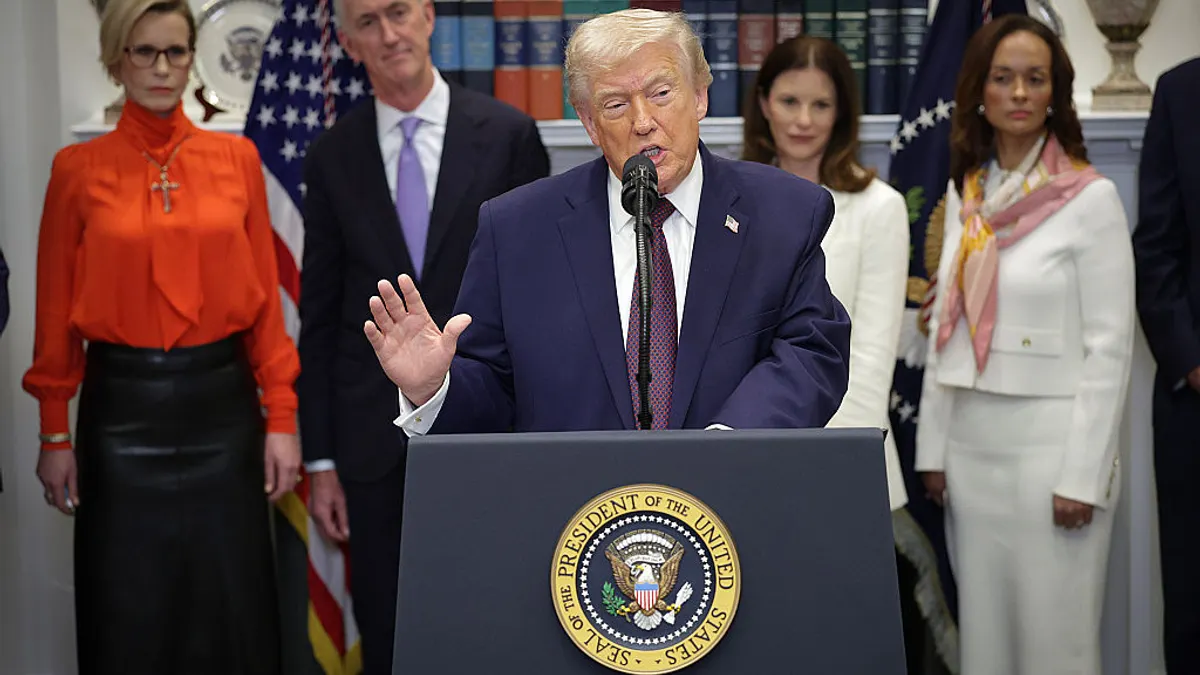
In a major step toward implementing the “Most-Favored-Nation” (MFN) pricing policy, the Trump administration has announced individual agreements with nine prominent drugmakers: Amgen, Bristol Myers Squibb, Boehringer Ingelheim,Genentech, Gilead Sciences, GSK, Merck & Co., Novartis, and Sanofi. Under these accords, the companies have agreed to offer significant rebates on select medications for chronic conditions, including diabetes, asthma, HIV, and various cancers.
In exchange, these manufacturers will receive a three-year reprieve from impending import tariffs, which had previously posed a significant threat to industry supply chains. Furthermore, certain firms, such as GSK and Merck, committed to contributing active pharmaceutical ingredients to a national strategic reserve to bolster domestic self-sufficiency.
While political officials framed the deals as a landmark victory for patient affordability, Wall Street analysts noted that the price reductions primarily target drugs nearing patent expiration or those already subject to heavy existing rebates.Consequently, the net impact on corporate sales and bottom lines is expected to be manageable. Global markets reacted favorably to the news, as pharmaceutical indexes continued their upward trend, reflecting investor relief that major regulatory and trade uncertainties have been temporarily mitigated.