

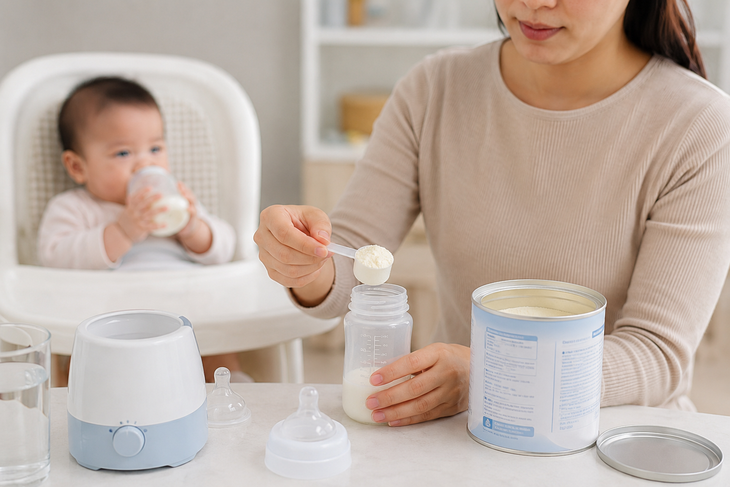
The French government has officially confirmed the voluntary preventive recall of an infant formula batch executed by Novalac following a cluster of pediatric gastrointestinal complaints. Crucially, French regulatory oversight and laboratory diagnostics verified that ongoing biological screenings have failed to isolate any active pathogen within the product, while explicitly uncovering the manufacturing malfunction that triggered visible sensory alterations in the formula.
The documented processing over-heating anomalies, clinical testing readouts, and broader historical industry contamination context feature:
-
Thermal Processing Faults and Diagnostic Negative Screening Profiles:
-
Manufacturing Over-Heating Root Cause: Reacting to dynamic parent notifications regarding atypical product coloration and odor, Novalac disclosed that a segment of batch number 183403 (manufactured on production lines in Germany) was subjected to an extended thermal heating window during processing. This prolonged pasteurization cycle altered the organic chemical color matrix and baseline flavor profile of the formula.
-
Negative Biological Screening Readouts: As of June 9, 2026, the French food safety authority (Anses) alongside the SignalConso portal logged a combined 12 tracking complaints involving acute vomiting and diarrhea tied to Novalac Allernova AR (batch 183403). Although one infant required hospitalization, stool metrics isolated an independent adenovirus infection driving the gastroenteritis, a pathogen with zero epidemiological transmission links to milk components. Parallel chemical assays run by Novalac verified the complete absence of bacterial pathogens or dangerous biochemical residues, explicitly clearing the batch of cereulide toxin contamination. French state authorities maintained that the market extraction operates purely as a proactive, corporate safety precaution.
-
-
Contextual Evolution of the Global Cereulide Contamination Crisis:
-
The December 2025 Recalls: The current Novalac intervention unfolds amid heightened European consumer anxiety regarding infant nutrition following a massive structural supply-chain failure in December 2025. During that historical baseline, global dairy conglomerates including Nestlé, Danone, and Lactalis executed massive product withdrawals spanning approximately 60 countries due to systemic threats of cereulide poisoning.
-
Upstream Supplier Contamination: The source of the severe 2025 contamination wave was traced back to a specific manufacturing oil enriched with arachidonic acid (ARA), sourced globally from a single upstream supplier operating in China. The regulatory failure sparked fierce criticism from international consumer protection advocacy groups over corporate reporting latency and state watchdog over-reliance on manufacturer self-policing protocols.
-
Collateral Impact on Aptamil Lines: Tying directly into this multi-national safety backdrop, French manufacturer Danone recently initiated a voluntary recall of a distinct batch of Aptamil First Infant Formula within the United Kingdom jurisdiction after detecting verified traces of cereulide toxin. This intervention prompted the Vietnam Food Safety Administration under the Ministry of Health to mandate an immediate urgent review of all active domestic Aptamil import pipelines.
-
Source: https://tuoitre.vn/phap-thu-hoi-sua-novalac-sau-loat-ca-tre-roi-loan-tieu-hoa-20260613122237239.htm