

Key Development
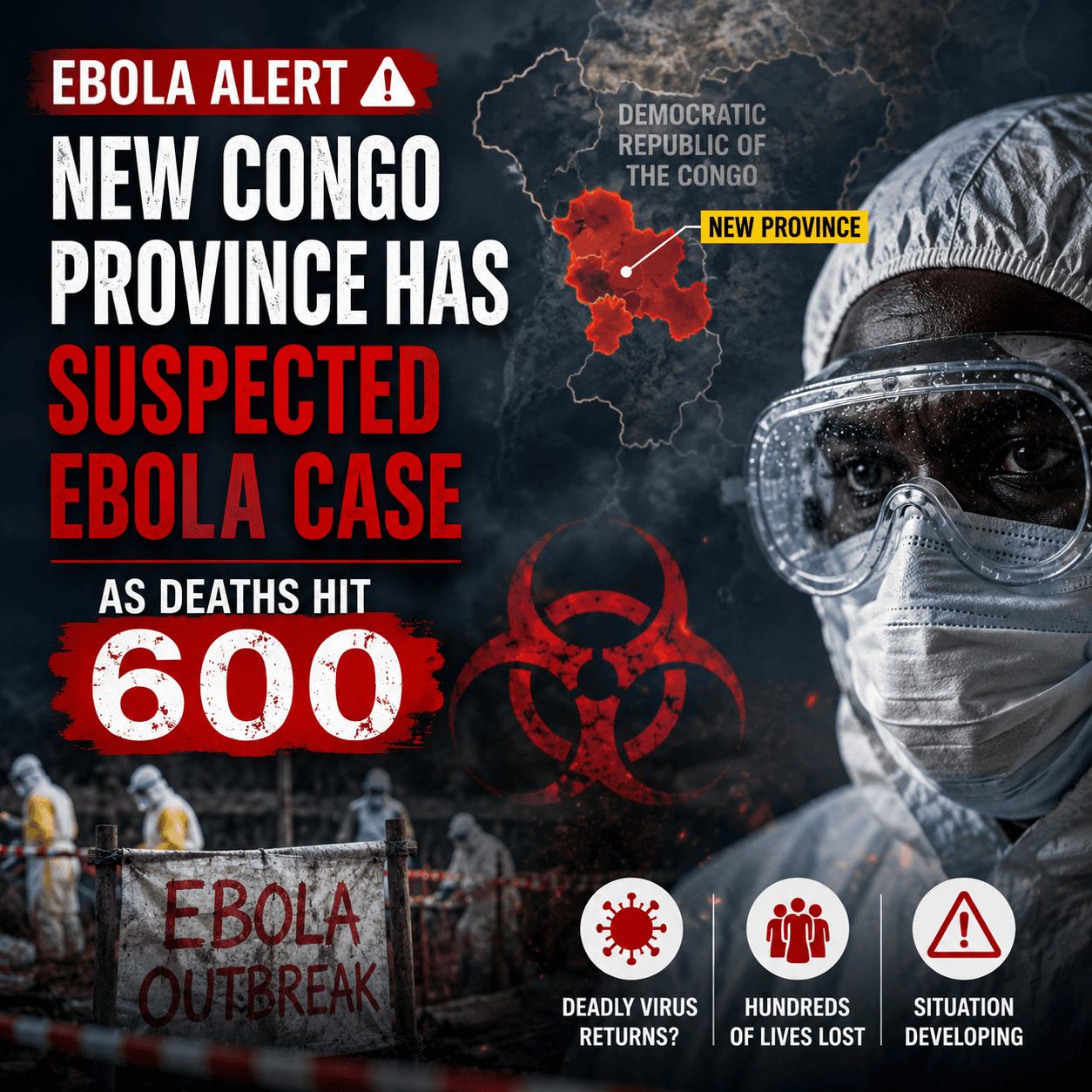
The Democratic Republic of Congo (DRC) has confirmed a suspected Ebola case in Tshopo Province, extending the country’s latest outbreak into a fourth province as infections continue to rise. Since the outbreak was declared on May 15, authorities have reported 1,759 confirmed cases and 600 deaths, while health officials continue investigating additional suspected infections outside the original outbreak zone.
This is the DRC’s seventeenth recorded Ebola outbreak, but it differs from many previous emergencies in one important way. The virus responsible is Bundibugyo ebolavirus, a relatively rare Ebola species for which there are currently no licensed vaccines or approved targeted therapies. Although the global health community has made significant progress developing vaccines and monoclonal antibody treatments against Zaire ebolavirus, those medical advances provide limited support for the strain currently circulating in eastern Congo.
At the same time, operational challenges are becoming increasingly severe. Frontline healthcare workers in Ituri have threatened to strike after months without pay, while researchers have only recently begun enrolling patients in the first clinical studies evaluating potential Bundibugyo-specific treatments. As the outbreak expands geographically, both scientific and operational capacity are coming under growing pressure.
Why It Matters
- The outbreak highlights a critical weakness in global Ebola preparedness. Medical countermeasures have advanced significantly for Zaire ebolavirus, but far fewer options exist for other Ebola species that remain capable of causing major public health emergencies.
- The expansion into a fourth province suggests containment is becoming more difficult. Population displacement, insecurity, and frequent movement across mining regions increase the likelihood of sustained community transmission.
- The threat of strikes among frontline healthcare workers demonstrates that outbreak response depends on more than vaccines and medicines. A shortage of financial support can quickly undermine surveillance, patient care, and emergency operations.
- Clinical trials are now taking place while the outbreak is still accelerating. This reflects both the urgency of the situation and the challenge of generating robust clinical evidence during an active public health crisis.
- The outbreak may influence future global investment priorities by strengthening the case for broad-spectrum Ebola platforms instead of products designed for a single virus species.
Healthcare Insight Analysis
The most significant lesson from this outbreak is not simply the number of infections or fatalities. It is the gap between the virus currently spreading and the medical tools available to contain it.
Following the major Ebola outbreaks over the past decade, governments, regulators, and pharmaceutical companies invested heavily in vaccines, monoclonal antibodies, and emergency response systems. Those investments dramatically improved preparedness against Zaire ebolavirus, which was responsible for the largest and deadliest outbreaks in recent history. However, far less attention was given to other Ebola species that have always remained a potential threat.
The current outbreak illustrates the consequences of that imbalance. Global preparedness has become highly effective against one strain while remaining comparatively vulnerable to another. This does not represent a scientific failure. Instead, it reflects the reality that research funding often follows the pathogen responsible for the previous crisis rather than preparing for the broader family of emerging threats.
The situation also exposes another weakness that receives far less attention than vaccines or therapeutics. Healthcare workers remain the foundation of every outbreak response. Laboratory capacity, surveillance systems, and new medicines cannot achieve meaningful impact if frontline staff are unable to continue working because of delayed salaries or inadequate operational support. The effectiveness of any emergency response depends as much on resilient health systems as it does on scientific innovation.
Taken together, these developments suggest that future preparedness strategies should be evaluated not only by the availability of new medical technologies, but also by their ability to respond rapidly across multiple virus species while maintaining a sustainable healthcare workforce.
Market Implications
For pharmaceutical companies, the outbreak reinforces the strategic value of developing pan-ebolavirus vaccines and therapeutics capable of protecting against multiple Ebola species. Platform technologies that can be rapidly adapted to emerging variants are likely to receive greater attention from governments and international health organizations seeking more resilient biodefense capabilities.
Public health agencies and global funding organizations may also reassess how preparedness resources are allocated. Future investments are likely to place greater emphasis on broad-spectrum countermeasures, flexible clinical trial infrastructure, and stronger operational support for frontline healthcare systems rather than concentrating resources on a single high-profile pathogen.
The implications extend beyond healthcare. Eastern Democratic Republic of Congo remains one of the world’s most important sources of critical minerals, including coltan and gold. If transmission continues to spread and movement restrictions become more extensive, disruptions to mining operations and regional supply chains could emerge as an additional economic consequence of the outbreak. The situation highlights how infectious disease preparedness has become closely linked to global industrial resilience and economic security.